
HOME | ABOUT US | MEDIA KIT | CONTACT US | INQUIRE
HOME | ABOUT US | MEDIA KIT | CONTACT US | INQUIRE
The Quiet Divide Within Kansas City Industrial Spaces.
On paper, Kansas City’s industrial market looks like it’s humming along just fine.
Vacancy is low. Absorption is solid. Deals are getting done in the region’s most active corridors. By the headline numbers,
this is a market doing exactly what business owners want it to do—steady, predictable, resilient.
But step inside the buildings themselves, and a different story emerges. It’s not one market. It’s two. And the dividing line isn’t geography—it’s the height of the ceiling above your head.
In the first quarter of 2026, the Kansas City industrial market delivered what most metros would envy: roughly 1.8 million square feet of net absorption, vacancy trending downward, and leasing activity hovering near or above 3 million square feet, depending on the data source.
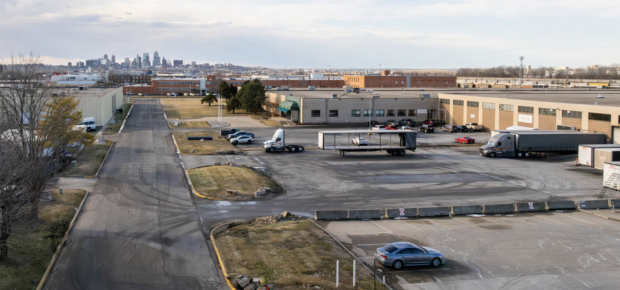
Those numbers suggest equilibrium. Stability, even. Yet beneath those aggregates lies a structural shift that’s becoming harder to ignore—a growing separation between modern distribution facilities and the region’s vast inventory of older Class B warehouse space.
Cushman & Wakefield’s Q1 MarketBeat data captures the divergence in stark terms. Vacancy in Class B warehouses has climbed past 10 percent, the highest level in more than a decade, after sitting at just 2.4 percent at the end of 2022. Modern distribution space, by contrast, has moved in the opposite direction, with vacancy falling to roughly 7.3 percent after peaking near 13 percent in 2024.
That spread isn’t just statistical noise. It’s the physical manifestation of how tenants are rethinking operations in real time.
Or, as Dan Jensen of Kessinger Hunter puts it, it comes down to what the business actually needs.
“The national logistics firms work well in high cube buildings and that is what most of the new ones are,” he says.
The Ceiling Is the Story
For tenants—particularly logistics operators, distributors and manufacturers— the appeal of modern space is no longer aesthetic. It’s operational.
Second- and third-generation buildings in this market typically offer 20- to 24-foot clear heights. Newer construction pushes well above that, often paired with sprinkler systems that allow for higher stacking of product and more efficient use of cubic volume. That difference—eight feet, sometimes more—can fundamentally change throughput.
Mark Long of Newmark Zimmer frames the decision even more bluntly: if a tenant needs those capabilities, there is no
middle ground.
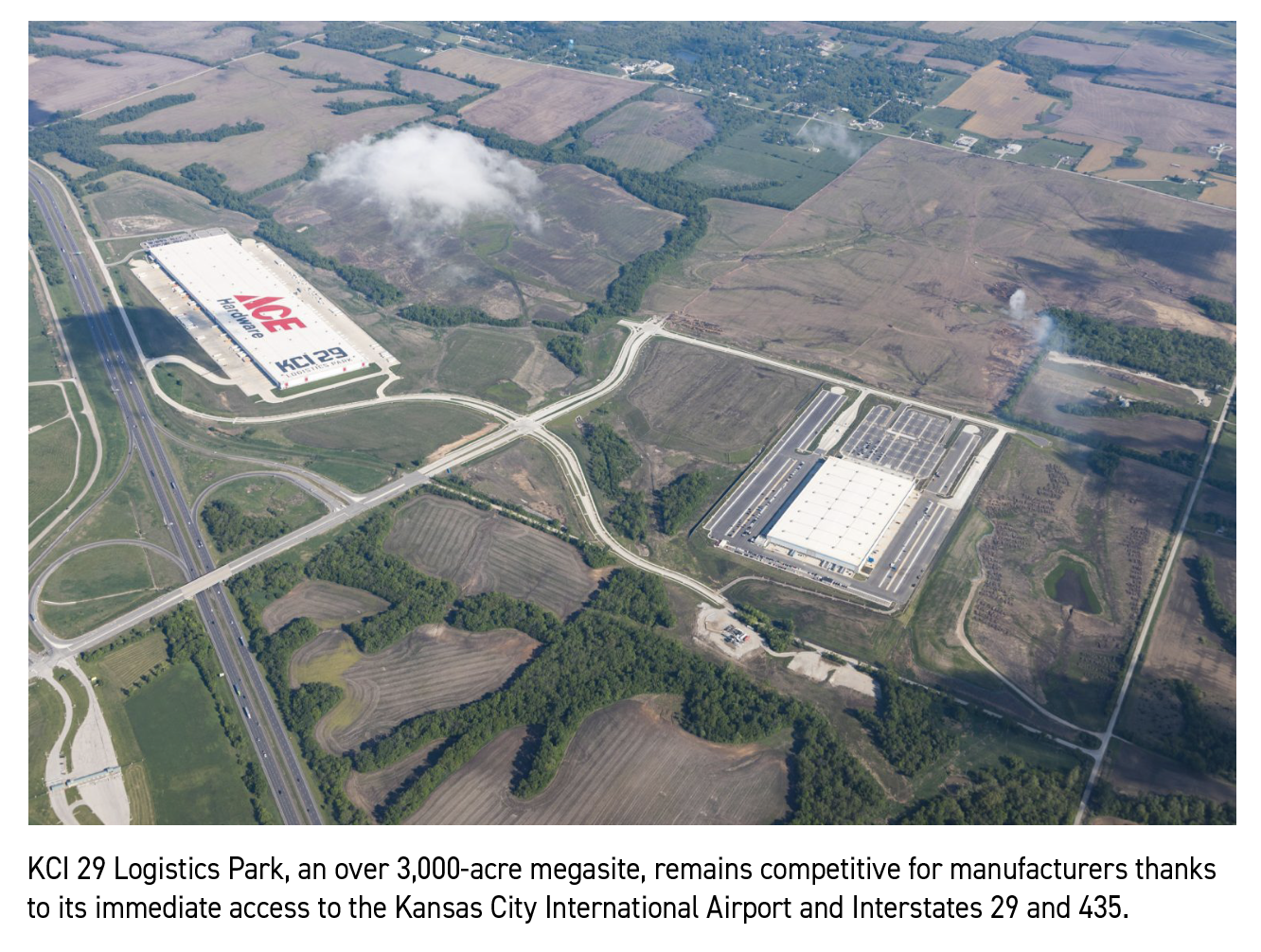 “If the user needs 32-foot ceilings, they are going to relocate to a modern building,” he says. “Modern buildings provide for a considerably more throughput.”
And in this context, throughput is everything: It dictates labor efficiency, inventory turns, automation potential and, increasingly, competitive advantage. Which is why tenants aren’t simply chasing newer buildings—they’re chasing what those buildings allow them to do.
Yet Whitney Kerr Jr. of Cushman & Wakefield cautions against viewing the market as a simple stampede toward anything new.
“When I work with clients, what I find is they are much more interested in their exact needs than just getting the newest building out there,” he says. For many users, he notes, a well-maintained building with 22-foot clear heights, functional parking and the right location remains the better operational fit.
“Getting maximum benefits and efficiency out of high-speed distribution spaces requires investment,” Kerr says. “Not everybody needs that.”
Not All Old Space Is Obsolete
That doesn’t mean Kansas City’s older inventory is headed for wholesale obsolescence. Far from it. The region carries roughly 41.8 million square feet of Class B warehouse space, much of it embedded in central, land-constrained locations that would be nearly impossible to replicate today. And for a wide swath of users, those buildings still work.
“Class B warehouses that are located in good, central locations age like fine wine,” Long says. “The good assets have lots of utility for several users.”
Those users tend to be less dependent on vertical storage, heavy automation or large truck courts. They value proximity—to labor, to customers, to support services—over physical specifications.
Jensen reinforces that point from a leasing perspective: “Older product is often closer to support services and employee base.” In other words, the calculus isn’t simply old vs. new. It’s fit vs. misfit.
If the building aligns with the operation, it can remain viable for decades. If it doesn’t, no amount of rent discounting will close the gap. Kerr argues that the future of Class B space may depend less on age than on functionality.
The buildings that remain competitive, he says, will be those with reasonable truck access, manageable parking demands and locations closer to established labor pools and population centers. “Even if you only need 24-foot clear height, you want to be in clean space with good lighting, dock doors that work, and stuff like that,” he says.
That distinction may become increasingly important for mid-sized users. While speculative development still largely targets national tenants seeking 400,000 square feet or more, Kerr says developers have shown growing willingness—at least temporarily—to demise buildings for tenants seeking 55,000 to 80,000 square feet.
Still, he expects that flexibility to narrow once the market regains momentum. “New construction is primarily aimed at larger, national firms,” Kerr says.
A Market That Lifts—and Drops—All Boats
What’s changed over the past 18 months is less about the existence of Class B space and more about how it performs under different market conditions.
 In a tight market, Jensen says, the distinction matters less. “In tight markets, a rising tide lifts all boats,” he notes. “Second-generation rents go up with new rates.”
That’s exactly what Kansas City experienced during the post-pandemic surge, when record absorption compressed vacancy across all asset classes and pushed tenants into whatever space was available. But that environment has shifted.
“In a soft market,” Jensen adds, “the second-generation product will lose tenants to aggressive new product that is starved for tenants.”
That dynamic is beginning to play out. As new speculative buildings come online—and as developers compete to lease them—older properties face pressure not just on occupancy, but on pricing and concessions.
Discipline in Development
One factor keeping the imbalance from widening too quickly is something Kansas City hasn’t always been known for: restraint.
“Our market is performing well,” Long says. “KC is operating as efficiently as any of the top 30 industrial markets in the U.S.”
Vacancy in the mid-4 percent range, combined with roughly 3.2 million square feet of absorption over the past four quarters, points to a market that has largely kept supply in check.
“New development in recent years has been muted with developer discipline,” he says.
That discipline, however, is beginning to ease. Long expects roughly 4.5 million square feet under construction by summer, with new speculative projects emerging to meet what developers still see as durable demand.
Kerr describes the current environment as “half-in, half-out” on speculative development. Developers appear willing to move cautiously, but a handful of successful lease deals could quickly accelerate activity.
“We have some projects that are going up, and if we see just a couple of leases get done in those I think we could see developers start moving really fast,” he says.
Recent deliveries illustrate why. A nearly 200,000-square-foot speculative building delivered in Q1 was fully leased at completion—a signal that, when the product matches tenant expectations, absorption can happen quickly.
Geography Still Matters
Even within this bifurcated market, location continues to shape outcomes. Johnson County and Platte County have emerged as clear leaders, driven by large-format deals, strong rent growth and a concentration of newer product. Those submarkets are capturing a disproportionate share of modern distribution demand, particularly from logistics and e-commerce users.
North Kansas City and other pockets with heavier concentrations of older inventory are seeing more strain, with vacancy rates pushing higher and leasing velocity slowing. That doesn’t make them obsolete—but it does make them more sensitive to shifts in tenant behavior.
And with more than 279 million square feet of total industrial inventory in the metro, even modest shifts in where tenants choose to locate can move large volumes of space.
The Landlords’ Dilemma
For owners of Class B assets, the question is no longer whether change is coming—it’s how to respond to it. There is no one-size-fits-all strategy.
“It’s hard to generalize,” Long says. “There are B assets that are very desirable and valuable and there are others that struggle.”
Some properties benefit from irreplaceable locations and can continue operating with minimal intervention. Others may require targeted upgrades—lighting, loading access, parking configurations—to remain competitive. And some may simply no longer align with market needs. The challenge is identifying which is which before vacancy becomes entrenched.
“If it works, it works,” Long says. “But if the user needs those modern features, they’re going to relocate.”
That binary reality is forcing more owners into proactive decision-making—whether that means reinvesting, repositioning or, in some cases, considering redevelopment. Kerr says many of the most effective improvements are neither glamorous nor especially complicated.
“People want space that shows well,” he says. “Repair the doors, make sure the lights and sprinklers have been given a thorough maintenance tune up, stuff like that.” In a leasing environment where speed matters, he says, presentation increasingly affects velocity. Prospective tenants want to walk into a building and feel they could be operational almost immediately.
“By making those investments right away, you increase your chances of getting a deal done in 45 days as opposed to 180 days,” he says.
He also points to another emerging issue for older industrial stock: excessive office buildout. “The days of having big office footprints in industrial buildings are going away, for the most part,” Kerr says, particularly in leased space where tenants increasingly prioritize warehouse functionality over administrative square footage.
What It Means for Tenants
For businesses evaluating their own footprints, the implications are immediate. The cost equation has shifted. Legacy space may offer lower base rents, but it can carry hidden operational costs—inefficiencies in layout, limits on automation, higher labor requirements or energy usage. Modern facilities, while commanding premium rents, often deliver measurable gains in productivity and scalability.
That trade-off is becoming harder to ignore. The decision is no longer just about occupancy cost. It’s about operational strategy. And in a market where competition increasingly hinges on speed, efficiency and adaptability, the building itself has become part of the business model.
For all the attention on rising Class B vacancy, it’s important to keep the broader context in view: Kansas City’s industrial market is not in distress. It is evolving. The explosive growth of 2022 and 2025—driven in part by large, one-off manufacturing and build-to-suit projects—has given way to a more measured phase. Demand remains healthy, but more selective. Supply is growing, but still disciplined.
What’s changing is the way tenants define value. And that shift is exposing differences that were always there, but temporarily masked by the intensity of post-pandemic demand. In fact, the historical performance of Class B inventory suggests the category has remained more durable than current vacancy figures alone might imply.
Kerr notes that from 2016 through 2025, the Kansas City market absorbed roughly 65 million square feet of modern distribution space while delivering about 71 million square feet of new product—a massive wave of development that nonetheless coincided with periods when Class B vacancy fell as low as 2.4 percent.
“That figure did hit double digits in early 2026, so that’s a bit worrying,” he says, “but it shows Class B space has been resilient and there still is demand.”
Over the next 12 to 18 months, the market’s trajectory will hinge on a few key variables: how quickly new speculative supply is absorbed, whether leasing activity continues to hold near current levels, and how aggressively Class B owners adapt to changing tenant expectations.
If demand remains steady, the market can continue to support both segments—modern and legacy—without significant disruption. If supply begins to outpace demand, the divide will widen. Either way, the direction is clear.
“Our market can’t just bring in 65 million square feet of tenants into new construction space and not expect some older space to be phased out,” Kerr says.
Phased out, though, does not necessarily mean eliminated. The future for older industrial product may simply be narrower, more specialized and more local—serving users in the 25,000- to 125,000-square-foot range who value proximity, functionality and affordability over the specifications demanded by national logistics operators.
Kansas City’s industrial market is no longer defined solely by how much space is available. It’s defined by what that space can do.
And in that equation, not all square footage is created equal.
PUBLISHED MAY 2026