
HOME | ABOUT US | MEDIA KIT | CONTACT US | INQUIRE
HOME | ABOUT US | MEDIA KIT | CONTACT US | INQUIRE
How Kansas City’s executive community is living, working, playing, while building what comes next
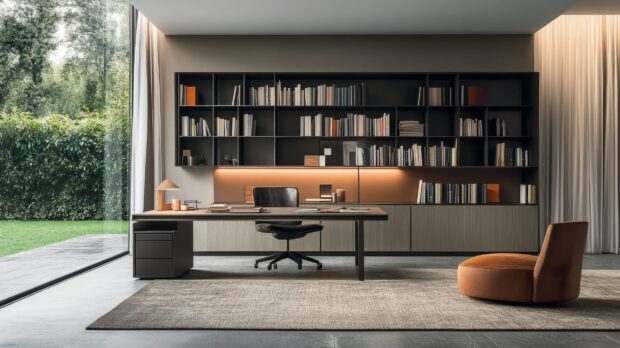
Forget the stark white walls and minimalist cold of the past decade. The luxury home in 2026 is warm, purposeful, and deeply personal—and Kansas City’s high-end homebuilders and remodelers say clients are rethinking every square foot of their estates with fresh intention. The overriding aesthetic movement has a name: quiet luxury. It leans into organic textures, artisan craftsmanship, and calming palettes. Fluted wood cabinetry, hand-troweled plaster walls, raw stone accents, and wide-plank white oak floors are anchoring spaces with character and warmth. Earth-toned neutrals—camel, mushroom, oatmeal, olive—dominate upscale kitchens and living areas, offering a soothing contrast to clean modern lines.
The temporary home office is now a permanent, purpose-built executive suite. Today’s high-end builds include acoustic wall panels, custom cabinetry for dual-monitor setups, and concealed video-call backdrops that project polish without revealing clutter. Some homes include a secondary workspace for a spouse or partner. Glass walls and pivoting doors allow these spaces to feel open yet private on demand. In kitchens, the dual-kitchen concept is gaining ground: a showpiece ‘social kitchen’ for entertaining guests sits alongside a tucked-away prep kitchen where caterers and household staff operate out of sight.
Bathrooms have shed their utilitarian identity entirely and emerged as private wellness sanctuaries. Expect oversized steam showers with aromatherapy and chromotherapy, sculptural freestanding tubs, radiant heat floors, and circadian lighting that shifts with the time of day. Materials like limestone, travertine, and large-format porcelain panels deliver a spa-like continuity. Beyond the bathroom, finished lower levels are being reimagined as self-contained guest suites with kitchenettes and private entrances—ideal for the demands of multigenerational living many executives now navigate. Wine walls, whiskey dens, and dedicated home fitness studios with cold-plunge pools and infrared saunas round out the picture. Looking toward 2027, smart home integration is moving from ‘bolt-on’ to embedded: AI-driven systems that adjust lighting, temperature, and ventilation based on occupancy and preference are becoming standard specifications in new custom builds.
Interiors That Perform
Interior design for Kansas City’s executive class has moved decisively away from the showroom aesthetic and toward something richer: environments that tell a story about the people who live and work in them. The top designers working in the market describe 2026 clients as more directional than at any point in recent memory—they arrive with clear ideas, reference images, and strong opinions about material provenance. What they want, broadly, is texture over flatness, warmth over cool neutrality, and craftsmanship over production finish.
The living spaces most in demand reflect a philosophy that leading designers describe as ‘layered restraint’—multiple tactile elements coexisting in a palette that reads calm rather than busy. Conversation pits and deep-banquette seating arrangements, briefly out of fashion, are coming back with conviction. Entertaining has shifted away from the formal dining room and toward experiences distributed through the home: a cocktail nook in a library alcove, a card table in the game room, a bar in the study. The dinner party is back—not the stiff, place-card version, but an intimate, unhurried gathering centered on genuine connection.
Tablescaping reflects this ethos: earthy handmade ceramics, linen runners, seasonal cuttings, and mixed candleholders create a setting that is personal and layered rather than magazine-perfect. Hosts in 2026 are using their good china on ordinary Tuesdays. For home offices, the design conversation centers on lighting as performance: fixture placement follows sightlines, with layered sources calibrated to support concentration across a full workday. Acoustic treatments have moved from being purely functional to a design element in their own right—woven panels, felt-backed bookshelves, and textile-covered ceilings are appearing in executive home offices of significant ambition. The pipeline for 2027 suggests continued investment in outdoor living as a true interior extension: retractable walls, covered terraces with full outdoor kitchens, and heated stone flooring that makes the patio a four-season room.
The Office Re-Imagined
The executive suite is undergoing its most significant transformation in a generation—and the changes are philosophical before they are physical. The corner office, as a statement of hierarchy, is quietly giving way to something more nuanced: workspace that signals authority through quality rather than square footage, and through integration with the team rather than separation from it. Major Kansas City employers investing in corporate renovations are hearing this from their C-suites: the office must justify the commute, and for executives who set the cultural tone, that imperative is especially acute.
What’s replacing the traditional suite is a high-performance environment that borrows from residential design and luxury hospitality. Biophilic elements—living walls, natural stone, high-quality wood, abundant daylight—are no longer reserved for lobby statements; they’re now built into private executive spaces at the specification level. The sensory experience of the workspace matters: ventilation, acoustics, lighting, and ergonomics are now treated as interdependent systems, not separate line items. Height-adjustable desks, systems furniture calibrated to micro-movement, and task seating engineered to reduce fatigue across a ten-hour day are baseline expectations.
Data is reshaping the floor plan. Occupancy sensors and desk-booking analytics now generate detailed pictures of how space is actually used—and organizations consistently find that prime zones run at 80 percent capacity while others barely break 20. The intelligence is driving smarter allocation: fewer static private offices, more high-quality focus rooms and bookable suites that serve multiple functions throughout the week. Global office utilization reached 53 percent in early 2026, up from 38 percent in 2024—but that still means nearly half of available space sits empty on any given day, putting pressure on every square foot to deliver. Looking to 2027, Kansas City developers and corporate real estate advisors anticipate continued investment in hospitality-grade executive environments that feel less like an institutional office and more like a private members club.
Dressing the Part—Differently
The executive wardrobe in 2026 is not so much relaxed as it is recalibrated—precision replacing rigidity, intention replacing prescription. The power suit hasn’t disappeared, but it has evolved: lighter canvassing, softer shoulders, breathable performance fabrics. Navy and charcoal remain the most versatile anchors, but the way they’re worn has changed. A blazer over a fine-knit crew neck rather than a dress shirt and tie. Tailored trousers paired with a refined sneaker on days that don’t demand leather. The structured formality that once defined the C-suite uniform is giving way to what fashion editors are calling ‘considered polish.’
Performance fabrics—stretch weaves, moisture-wicking blends, wrinkle-resistant constructions originally developed for athletic wear—have migrated decisively into executive suiting and business shirts. The appeal is practical: a Kansas City CEO hosting a breakfast meeting, flying to Chicago for an afternoon session, and attending an evening event doesn’t want a wardrobe change; they want materials that hold up through the full arc of a demanding day. The silhouettes of 2026 reflect the broader aesthetic moment: slightly relaxed through the torso, tapered but not tight in the leg. Oversized blazers, worn deliberately rather than sloppily, have crossed from fashion-forward to accepted executive territory.
The watch conversation among KC executives has shifted alongside the attire. The statement timepiece remains a fixture, but the preference has migrated toward understated craft over overt luxury branding—independent watchmakers, rare limited editions, pre-owned pieces with provenance. This mirrors the ‘quiet luxury’ thread running through residential design and travel: it’s not about less investment, but about more discernment. Custom tailoring has made a meaningful resurgence, with bespoke and made-to-measure options increasingly accessible through local and regional tailors. For 2027, expect greater crossover between athletic technical wear and executive dress—brands that began in performance sports are entering the tailored-clothing market with significant investment.
After Hours: Leisure & Hobbies
The executive hobby in 2026 carries more weight than it used to. For a generation that watched hustle culture consume everything it touched, the deliberate cultivation of a non-work pursuit has become a statement about values—and a competitive differentiator in a world where authentic personal identity matters more than ever in business relationships. What people pursue in their unstructured hours tells a story about how they think, how they manage uncertainty, and what they find genuinely engaging.
Racquet sports are having a moment, and padel is the headliner. Combining elements of tennis and squash on a smaller enclosed court, padel is the fastest-growing sport in the world by court count and player base, and it is now accelerating in the United States—courts doubled between 2022 and 2024 and continue to expand. Country clubs and athletic facilities are adding pickleball courts as members request them. The social dimension—doubles-format, fast learning curve, high-engagement rallies—makes it ideal for the business-relationship context. Formula One has captured a new executive demographic, fueled by media exposure and sprint race formats. Private track experiences and race-attendance hospitality packages are a meaningful category in the premium travel market.
The outdoors remain powerful: fly fishing, backcountry skiing, and gravel cycling attract executives who want physical challenge with meditative return. Creative pursuits—woodworking, wheel-thrown ceramics, private wine education—are gaining ground among those who want a mastery experience outside the domain where they already hold authority. The culinary category is especially strong: private cooking instruction, curated pantry subscriptions, and small-group dining experiences at James Beard-caliber tables are no longer fringe interests. In Kansas City, a city with a genuine culinary identity, the private-dining and food-culture scene provides rich territory for all of these pursuits.
Dining In, Elevated
The dinner party is back—with a very different brief. The stuffy, formally orchestrated gathering of another era has been replaced by something more immersive and less scripted: a home environment designed to make guests feel they’ve entered a distinct world, an experience they couldn’t replicate at any restaurant. The hosts setting this pace in Kansas City are investing in their homes as entertainment spaces, and their design decisions reflect that intent.
The dual kitchen—a showpiece ‘social kitchen’ where the chef’s work is visible, and the counter is a gathering point, alongside a separate prep-and-catering kitchen—has emerged as the signature investment of serious hosts. Conversation pits and built-in banquettes encourage lingering. Bars are designed to disappear into the architecture when not in use. The formal dining room, when it exists at all, is giving way to multiple smaller gathering zones distributed through the home: a long garden table on the covered terrace, a low table in the library, bar seating at a bespoke counter. The philosophy is to give guests permission to self-select their experience.
Food and beverage choices carry increasing weight. Hosts are investing in private wine cellars managed by sommeliers, curated spirits collections with genuine rarity, and bespoke catering relationships with chefs who can produce a restaurant-quality experience in a residential setting. The cocktail program has become a statement: house-made syrups, high-provenance spirits, and elevated non-alcoholic options. Kansas City’s growing hospitality talent pool—deepened by a food-and-beverage culture that punches well above the city’s size—means the caliber of private entertaining experiences has risen significantly. For 2027, expect investment in dedicated high-fidelity listening rooms to become a recurring feature of executive entertaining spaces, alongside the culinary infrastructure.
Health & Fitness
The language around executive fitness has shifted fundamentally. Where it once centered on looking good and managing stress, it now centers on longevity—extending healthspan, not just lifespan, with the same rigor and data discipline applied to business strategy. Biohacking has moved from Silicon Valley fringe to mainstream executive practice, and the infrastructure that serves it has grown accordingly.
The 2026 executive wellness regimen is increasingly data-driven and personalized. Wearable devices—Oura Ring, WHOOP, and newer biosensor platforms—generate continuous biometric streams, but the real value comes from the human expertise that interprets them. A new category of concierge health service has emerged: practitioners who review an executive’s biomarker data and translate it into specific guidance on nutrition, recovery, training load, and sleep architecture. The global luxury wearables market hit $87 billion in 2025 and is on track to reach $96 billion this year. Men are now 36 percent more likely to prioritize wellness investments than five years ago, with spending up eight percent or more in 2026.
The home fitness suite has evolved from a treadmill in a spare bedroom to a serious performance environment: commercial-grade strength equipment, dedicated recovery modalities (infrared sauna, cold plunge tub, percussive therapy), and smart training platforms that deliver coaching through screens. Concierge medicine and functional medicine clinics serving Kansas City’s business leadership have significantly expanded their diagnostic capabilities, offering advanced bloodwork panels, metabolic testing, and early-detection imaging previously available only at dedicated longevity clinics in major coastal cities. The pipeline for 2027 points toward AI-powered coaching subscriptions that synthesize wearable data, dietary inputs, and training logs into daily actionable guidance—a category currently priced at $500 to $5,000 annually.
Luxury-Level Travel
Luxury travel in 2026 has reorganized itself around two scarce commodities: time and access. The traveler who can afford anything has already stayed at the best hotels and visited the canonical destinations. What they’re buying now is experiences that can’t be replicated—and the frictionless mobility infrastructure to reach them. Both trends are shaping how Kansas City’s executive class approaches travel in ways that would have seemed extraordinary just a decade ago.
Private aviation has completed its evolution from luxury indulgence to strategic tool. The corporate leader who once viewed a fractional card as an occasional extravagance now treats charter or fractional access as a productivity investment—flights in which the cabin functions as a mobile executive suite, every minute of transit focused. Two-to four-hour routes are the most popular segment, as private aviation increasingly serves time-sensitive regional business travel. At the same time, ultra-long-range jets capable of 12- to 16-hour nonstop flights are in high demand among executives with genuinely global responsibilities. The interiors of premium private aircraft have been redesigned as recovery environments: lower cabin altitude, enhanced air quality, quieter cabins, and flexible seating that supports sleep on overnight segments.
On the experiential side, luxury travel advisors report that their highest-spending clients—those booking $50,000-and-above trips—are up 35 percent from 2024. Slovenia, South Korea, and lesser-known Mediterranean destinations are emerging as alternatives to over-trafficked Italy and Japan routes of recent years. Wellness travel has evolved from spa retreats toward regenerative experiences: forest immersion programs, medical-longevity retreats, and ‘hushpitality’ escapes that emphasize quiet, nature, and nervous system reset. Ritz-Carlton’s three superyachts and Four Seasons’ branded private jets have established a new standard in which the journey itself becomes the destination. For Kansas City executives, the improved connectivity of Kansas City International Airport has meaningfully reduced the friction of reaching global departure hubs.
Let the Games Begin
Kansas City has always been a sports town. The Chiefs and Royals have shaped the city’s identity and its corporate entertainment calendar for decades. But 2026 marks a genuine inflection point in the local sports landscape—one with significant implications for how the executive class engages with live events.
The FIFA World Cup has arrived, and Kansas City is not a passive host. As one of the tournament’s official host cities—with Arrowhead Stadium serving as a match venue and the city designated as a team base camp for England and Argentina—Kansas City is experiencing a scale of international soccer attention it has never previously received. Sporting Kansas City’s ‘Soccer Capital Summer’ series, centered at a newly renovated Sporting Park where a $10 million plaza upgrade includes a 47-foot video screen, is drawing premium engagement from the local business community that has discovered the sport’s social and entertaining dimensions. The World Cup moment is catalyzing longer-term interest in Sporting KC as a corporate entertainment venue.
The Royals premium experience at Kauffman Stadium remains a cornerstone of KC corporate entertainment, with signature suites starting around $2,500 per game and field-level Dugout Suites beginning at $4,375—each including in-suite catering, private entry, and premium parking. But the bigger conversation involves what comes next: in April 2026, the Royals confirmed a new downtown ballpark at Crown Center, developed in partnership with Hallmark Cards, with $2 billion in private investment, a 2027 target for groundbreaking, and a 2030 opening. The 34,000-seat Populous-designed facility will anchor a new ballpark district adjacent to the Crossroads—potentially the most significant transformation of downtown Kansas City’s entertainment and real estate landscape in a generation. At Arrowhead, the Chiefs’ 80 luxury suites continue to command among the highest per-game premium prices in the NFL, while the athletic programs at the University of Missouri, University of Kansas and K-State athletics attract significant executive engagement in their own right across the region.
PUBLISHED JUNE 2026