
HOME | ABOUT US | MEDIA KIT | CONTACT US | INQUIRE
HOME | ABOUT US | MEDIA KIT | CONTACT US | INQUIRE
First-in-the-nation tax reform, a $160 million federal innovation engine, and a new statewide front door for advanced manufacturing give Missouri’s pitch to producers something rare in economic development: receipts.
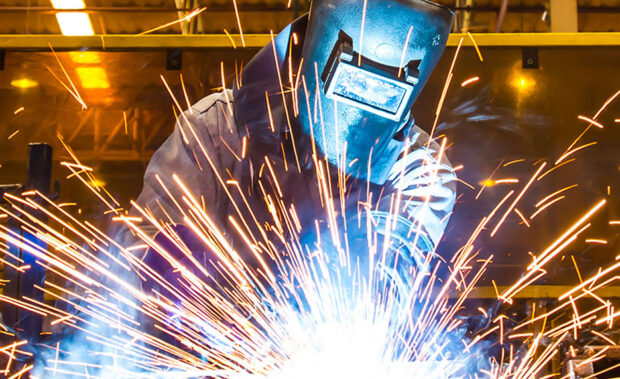
An outsider in a manufacturing firm may ask a simple question—Why Missouri?—and open the door to a conversation that has grown considerably more interesting over the past 16 months. What was once a case built on geography and workforce—still true, still valuable—is now a case built on ribbons cut, legislation enacted, and federal dollars competitively won.
Consider what has happened since early in 2025:
• Missouri became the first state in the nation to eliminate its capital-gains tax.
• The National Science Foundation selected a University of Missouri-led coalition for what may be the largest research award in state higher-education history.
• A new statewide advanced-manufacturing facility opened its doors in Rolla.
• And the aerospace sector delivered a generational win—Boeing’s F-47 fighter contract and the return of its Defense, Space & Security headquarters to St. Louis, a story large enough to warrant its own treatment elsewhere in this report.
Here, the focus is the broader base those headlines sit atop: a manufacturing economy that spans autos, food and beverage, electrical equipment, and advanced materials, and the policy architecture built to grow it.
Higher Education: From Supporting Role to Headline
The publicly funded four-campus University of Missouri System has long been an underappreciated asset in the state’s manufacturing story. That is getting harder to overlook.
In July 2026, the NSF selected the Critical Materials Crossroads Engine—initiated by the UM System in 2022 and led by UMKC—for up to $160 million in federal funding, one of just 12 Regional Innovation Engines awards nationwide and potentially the largest award in Missouri higher-education history.
The initiative, backed by a coalition of more than 260 partners across Missouri and Kansas, aims to rebuild domestic supply chains for the critical materials that feed batteries, aircraft engines, semiconductors, and medical devices—sectors where the United States currently depends heavily on imports, with China dominating large portions of the global supply chain. Backers project roughly 10,000 jobs by 2036 and up to $40 billion in economic output over a decade; those are sponsor estimates, but the federal commitment behind them is real money, awarded competitively.
Meanwhile in Rolla, Missouri S&T cut the ribbon in April 2026 on the Missouri Protoplex, a 117,000-square-foot advanced manufacturing facility—the first building of the university’s planned Manufacturing Technology and Innovation Campus. With 40,000 square feet of high-bay space and more than 60 industrial-scale machines, the Protoplex is designed as a statewide shared resource for prototyping, modernization, and workforce training; the university reports more than $22 million already secured for collaborations with industry and research partners. Add S&T’s federal Tech Hub designation in critical materials and MU’s research reactor—the nation’s largest university reactor and its most important producer of medical radioisotopes—and the system’s manufacturing-relevant portfolio looks less like a talking point and more like infrastructure.
Policy: Substance Behind the Slogans
Gov. Mike Kehoe has framed manufacturing as vital to both the economy and national security, and his first 18 months in office supplied specifics. In 2025, he signed House Bill 594, making Missouri the first state to eliminate its capital gains tax—a 100 percent deduction for individuals beginning with tax year 2025, extending to corporations once the state income tax rate falls to 4.5 percent or lower.
Companion legislation lowered the individual income tax to 4.7 percent effective January 2026 and trimmed the corporate rate from 4 percent to 3.75 percent, and Kehoe has directed the Department of Revenue to chart a phase-out of the individual income tax altogether. On the energy front—an increasingly decisive site-selection factor—the governor has championed nuclear power as the source that will fuel Missouri’s economic future.
The state’s workhorse tools remain in harness: Missouri Works, which Kehoe called the state’s No. 1 instrument for business expansion and retention in his 2026 State of the State address, and Missouri One Start, which handles recruitment and training for expanding employers.
And a notable piece of unfinished business is back before the General Assembly: the Advanced Manufacturing Recruitment Act (HB 1480/SB 1060 in the 2026 session), which is designed to offer a 20 percent tax credit for “megaprojects” of at least $1 billion in capital investment and 500 jobs, capped at $200 million annually. Advocates, led by Greater St. Louis Inc., argue candidly that Missouri has not kept pace with Kansas, Illinois, and Kentucky in landing billion-dollar plants—an honest admission that the state’s toolkit, strong as it is, still has a gap at the top end.
The Honest Ledger
Credibility requires acknowledging the headwinds. Per MU Extension’s manufacturing indicators, Missouri factories shed roughly 5,300 production jobs in 2025—a 1.9 percent decline, steeper than the national contraction of 0.5 percent—and GM’s Wentzville Assembly, home to the Chevrolet Colorado and GMC Canyon, was idled for three weeks last fall amid supply-chain disruptions, temporarily sidelining some 3,800 workers.
Yet the forward indicators lean positive: the state’s purchasing managers’ index closed 2025 at 55.8, in expansion territory, and manufacturing remains a pillar of the state’s $389.9 billion economy—282,255 jobs across 7,636 establishments, 11.6 percent of private-sector employment, per MERIC. The state’s recent wins read as a deliberate answer to those national headwinds, not a denial of them.
Beyond the headline programs, a steady drumbeat of mid-sized expansions testifies to the base’s diversity. Schneider Electric broke ground in May 2025 on a 58,000-sq-foot addition to its Columbia circuit-breaker plant, creating 200+ jobs on the strength of data-center and grid demand. Daily’s Premium Meats committed $95 mil and 115 jobs in St. Joseph. Smaller announcements—Triad Manufacturing in St. Louis, Phoenix Manufacturing in Glasgow, aerospace suppliers like Van-Am Tool & Eng—round out a base diverse enough to absorb sector-specific shocks.
Why Expand Here?
The fundamentals have not changed: central logistics reaching more than half the continental U.S. within a day’s drive, competitive incentives, a stable fiscal climate, and a genuinely collaborative posture among government, higher education, and industry. What has changed is the evidence.
A state that once asked prospects to trust its potential can now point to a federal innovation engine, a first-in-the-nation tax reform, a new front door for advanced manufacturing in Rolla—and, yes, the fighter jets in St. Louis—and invite partners to build what comes next.
PUBLISHED AUGUST 2026