
HOME | ABOUT US | MEDIA KIT | CONTACT US | INQUIRE
HOME | ABOUT US | MEDIA KIT | CONTACT US | INQUIRE
KC: The Good, the Bad and the Missing
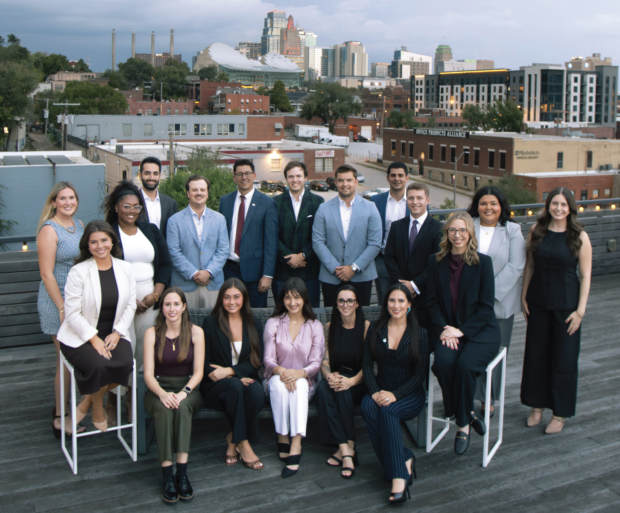
Get this year’s 20 in Their Twenties class together in one room, and the conversation does not stay centered on individual résumés. It moves quickly to the city itself—what it offers, what it withholds, and whether the people sitting around the table intend to stay and build or eventually leave for places that already know their names.
Start with one question–a vital one for employers, civic leaders, and elected officials who are paying attention: What’s this city missing? Well, these young go-getters tell us, you can start with public transportation. Connectivity and hidden gems that only natives know how to find. Professional basketball snd hockey. Time and recognition so that “Kansas City” registers the way Chicago does when you say it outside of this region. A more root-cause approach to health care. Commitment and tenacity from people who already live here. More direct flights from KCI. Support for medium-sized businesses that are neither pure startups nor Fortune 500s. A pro hockey team. More Fortune 500 headquarters. Excitement and buzz Downtown that would actually pull someone who lives in the exurbs into the core. An identity that sticks after the Cerner-Oracle moment. More shows like Ted Lasso that export a positive image of this place. More—and better—Asian food, specifically dim sum. International travel awareness. More live-music options.
Those were the opening bids. What followed was less a list of amenities and more a debate about the place’s underlying economics and culture.
Building a City We Can Afford
Zach Molzer of Molzer Development led off by addressing a structural issue facing the region. Kansas City, he said, has the most highways per capita and the largest land area of any U.S. city. But that came at a cost: “We built the city that we can’t afford.” Public transit, housing, and Fortune 500 recruitment all collide with that fact. The only real paths he sees are raising taxes (politically dead), cutting expenses (already tried), or growing the tax base through jobs—quality jobs born and raised here, not imported and then exported when the next opportunity appears.
He tied that to an identity crisis. The last major liquidity event to create overnight multimillionaires was the Cerner-Oracle merger. Some major employers, in his telling, have not reinvested at the same scale here. Without that reinvestment loop—occupations that spawn startups that create wealth that stays—the city lacks the internal engine other places take for granted. Crime, jobs, and housing sit on a pyramid; solve one and the others move. Jobs are the lever.
Spencer Stewart of Lane4 Property Group reinforced the Fortune 500 point. Affordability, cost of living, and existing entertainment options are assets. What is missing is the corporate headquarters density that turns those assets into sustained growth. Taylor Limoges of the Leawood Chamber noted recent Kansas-side wins but wanted more of the same across sizes of companies. The counter-argument came quickly: public dollars have been used for decades to incentivize developers and large employers, and the result has been deferred infrastructure and school systems.
“We can’t afford to keep putting public support behind private equity,” one participant said. Molzer pushed back that the city has not truly tried hard enough to poach Fortune 500s; in his view, attracting potentially large-scale employers is a better use of public money than a Downtown ballpark, even though he supports the ballpark. The practical disconnect between KCADC’s outreach and city incentives came up more than once. Too often, projects do not pencil out without some form of public participation. The discussion was less about whether incentives exist and more about whether they are structured to require genuine reinvestment, rather than a promise of jobs.
Staying, Leaving and Roots
When the conversation turned to what keeps people here, the answers were less about compensation and more about deliberate choice. Molzer said the people in the room are not here by default or out of necessity. They want to be here. There is a lot to build, change, and sustain in Kansas City, and the group already has some level of passion for the place. That is why they showed up. The same logic, he argued, needs to extend beyond those in their 20s—to people in their teens and 30s, and even those in their 40s and 50s, who also want to stay and build.
Aaliyah Aramjoo of KC Rise Fund put it in terms of commitment and tenacity. She tells people she feels indebted to Kansas City and wants more young people who feel the same way—who will ride the ride, invest, and stay rather than leave. The city needs fewer departures and more people doing the hard, unglamorous work of building here.
Lateral mobility came up as a real constraint; compared to a Chicago or coastal metro, the same density of options inside Kansas City is missing. The professional fabric is tight; that tightness supplies mentors and quick information, but it can also make a pure job-hop feel limited. Where the region does stack up with this group is in homeownership; roughly a third of the hands in the room went up when asked about being owners, roughly in line with national figures for those under 30. The economics, however, are mixed. Molzer argued it is currently cheaper to rent and that he would rather put capital back into his business than buy a suburban house until he can find his dream home. Others described cash-offer competition in places like Prairie Village and the practical difficulty of buying as a single person in their twenties. Freedom—short-term leases, the ability to pick up and go—still holds appeal for some.
AI and the Mid-Size Company
The AI discussion was pragmatic rather than existential. Natalie Shaw of Heartland LLC said the initial fear has shifted: people who refuse to adopt are the ones at risk of not sticking around, because they will not be as efficient or valuable. Employers need to provide the platforms and training; employees need the desire to use them.
Emma Lile described using AI at the Redefining Wellness Center to generate a full presentation deck, QR codes, email segments, and follow-up materials in minutes, work that would have taken hours a year earlier. It removes the low-hanging fruit so people can do higher-level creative work. Colby Coda, whose epoxy-flooring company employs 26 people, made the same distinction: AI is not replacing the crews with squeegees, but it is collapsing payroll and other repetitive office tasks from 10 hours a week to two. The recovered time can go to more productive work. Genna Foster of MMGY Global said she is the opposite of worried. The people who treat AI as magic that needs no human input are not actually using it. Smaller and mid-sized firms can now compete for clients that used to be the exclusive territory of larger agencies because the manpower gap has narrowed.
Several of the entrepreneurs in the room described the need to make AI fluency a cultural requirement in the workplace—weekly training, certification levels for leaders, the expectation that adaptability is part of the job. The through-line was not replacement but leverage: automate repetitive work, raise the ceiling on what a small team can attempt, and keep human judgment in the loop.
Capital, Angels and the B2C Challenge
On the entrepreneurial side, the constraints were more structural. Warren Wang of Rebulk credited local investors—KC Rise, Flyover Capital and others—for being willing to back a rail-and-bulk-materials technology company that fits the region’s industrial base. With AI, he noted, founders can now build proof points themselves before they need outside capital.
Aaliyah Aramjoo was more pointed about the limits. Building a B2C company in Kansas City is extremely difficult, she noted. The capital and the early customer base for consumer, food-and-beverage, and retail plays are thin. Many potentially strong founders get told, in effect, not to waste their time here if they are not selling at the B2B enterprise level. The Midwest’s general aversion to change compounds the problem. Family foundations exist, but a large share of their capital still flows outside the region. The angel community, several people said, is either inactive or deploys capital without the operating knowledge that helps a company avoid a damaging down round later. There should be hundreds of capable local angels; the number of people who would actually refer is far smaller.
Dulcinea Herrera of Café Corazón offered the counter-example of pure bootstrapping. She and her family started with no investors, fixed a building that had been hit by a car, built tables themselves, and grew to three locations and national coffee roasting without outside capital. Support and education for that path were scarce at its founding in 2019; knowing where to look still matters.
Kansas City has real assets—affordability relative to coastal cities, an improving image, World Cup momentum, and a cohort of people in their 20s who are already building companies, practices, and foundations. It also has structural gaps: limited public transit relative to the land area it covers, limited Fortune 500 density, weak reinvestment loops after liquidity events, insufficient capital for non-enterprise startups, and an identity that still does not travel as far as the people in the room would like.
Ingram’s Joe Sweeney closed by urging the group to think bold. The city, he said, has great opportunity; what it lacks is the bold creativity that turns the opportunity into something larger. Network, get engaged, push the limits. The people who had just spent an hour naming what is missing were, in his framing, also the ones positioned to supply what has been absent.
Whether that supply arrives depends on whether the commitment Aaliyah Aramjoo described—feeling indebted enough to stay and build—outweighs the pull of cities that already have the flights, the teams, the recognition, and the capital. While those around the room weren’t able to resolve the civic tension, their input made the terms of it unusually clear.
PUBLISHED OCTOBER 2026