
HOME | ABOUT US | MEDIA KIT | CONTACT US | INQUIRE
HOME | ABOUT US | MEDIA KIT | CONTACT US | INQUIRE
While the state’s biggest hospital systems consolidate, Missouri is running a genuinely different experiment in its smallest counties: fix the living room, and the readmission rate follows.
Two years after BJC HealthCare and Saint Luke’s Health System combined to form BJC Saint Luke’s, one of the largest non-profit health systems in the Midwest, the merger has settled into something closer to routine integration than headline news—shared service lines, combined purchasing power, the kind of scale plays that dominate hospital-system strategy nationally. It remains a significant fact about Missouri health care. It is no longer the most interesting one.
That distinction now belongs to the opposite end of the size spectrum. Missouri’s Department of Social Services has built, tested and begun scaling a rural-health model unlike anything the state has run before, and the federal government just backed it with real money: $216.3 million in first-year funding under the federal Rural Health Transformation Program, part of a five-year, $50 billion national initiative created through the One Big Beautiful Bill Act. Missouri’s version carries its own name—ToRCH Care, for Transformation of Rural Community Health—and its own theory of the problem: that a rural hospital’s biggest threat often isn’t clinical, it’s social, and the fix for a revolving-door emergency room might be a home repair, a ride to a pharmacy or a stocked refrigerator.
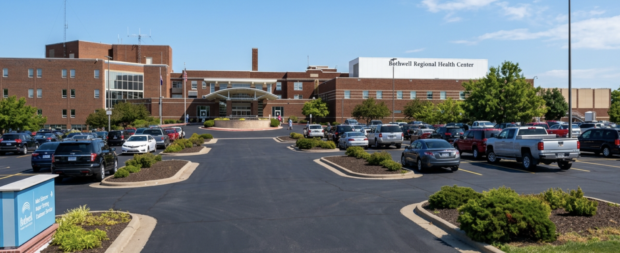
The model isn’t theoretical. A six-hospital pilot running since 2024 in Dent, Henry, Pettis, Phelps, Polk and Ray counties has already produced real numbers: a 19.6 percent increase in patients with controlled blood pressure and an 18 percent improvement in behavioral-health follow-up after emergency-room visits, according to program data, built on nearly 2,800 patient referrals into more than 900 community services—things like transportation, nutrition support and home modifications, all now reimbursable as documented health-related needs under the state’s Medicaid waiver. Participating hospitals report a 99 percent invoice acceptance rate from the community organizations doing that work, well ahead of typical medical-billing denial rates.
That pilot is now the blueprint for a statewide build-out. Missouri has organized the state into 27 rural health hubs, each covering two to six counties, under seven regional coordinating networks—and in May, the Department of Social Services opened applications for the local hospitals and organizations that will anchor each one. The goal is coordination at a scale Missouri’s rural hospitals have never had access to: shared technology platforms, community health workers embedded in small towns that previously had none, and payment models that reward keeping people healthy rather than only treating them once they’re not.
The honest caveat belongs here, too. Independent analysis from KFF has projected that Rural Health Transformation funding nationally will offset less than a third of the Medicaid revenue rural hospitals are expected to lose over the coming decade under other federal changes—meaning ToRCH Care is a genuine innovation, not a rescue. Missouri’s rural hospitals still face the same structural headwinds as their counterparts nationally: thin margins, aging populations, and workforce shortages that no coordination platform alone can solve.
The state’s urban hospital systems remain a strength worth stating plainly, even as the rural story takes center stage this year. Washington University’s medical campus in St. Louis anchors one of the nation’s premier academic medical centers, and both metros continue to place hospitals on national quality rankings. That urban strength was never the vulnerability in Missouri’s health-care system—it was always the rural periphery, which is exactly where ToRCH Care is aimed.
What Missouri has built, though, is a real answer to a specific question other states are still only asking: whether rural health care can be redesigned around the whole patient, not just the diagnosis in front of the doctor. The state’s largest hospital systems will keep consolidating, because that’s the economics of modern health care everywhere. It’s the 27 rural hubs—built from six counties’ worth of proof that the model works—that make Missouri’s 2026 health care story genuinely its own.
PUBLISHED AUGUST 2026