
HOME | ABOUT US | MEDIA KIT | CONTACT US | INQUIRE
HOME | ABOUT US | MEDIA KIT | CONTACT US | INQUIRE
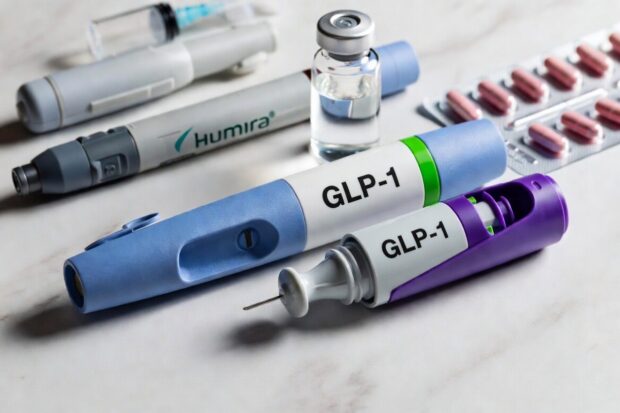
Weight-loss drugs are hammering employer benefit plans, adding to broader issues of pharmacy-benefit management.
PUBLISHED APRIL 2026
Those who treat GLP-1s as a pure human-capital investment without cost discipline risk unsustainable premiums; those who ignore the talent signal run the risk of losing talent.
As the never-ending, three-way chess match involving corporate health-plan designers, insurance companies and providers plays out, a new piece is emerging on the board: Pharmacy benefits.
That vital aspect of modern health care has quietly become the sharpest thorn in employers’ sides. Those trends account for the fastest-rising slice of health-plan costs, even as 2026 federal reforms finally pry open the black box of pharmacy benefit managers (PBMs) and GLP-1 agonists turn weight-loss and diabetes drugs into both clinical miracles and budget wrecking balls.
Self-funded and fully insured employers alike now face twin pressures: on one level, new transparency mandates under the Consolidated Appropriations Act of 2026 and a proposed Labor Department rule that demands rebate pass-throughs, fee disclosures, and audit rights. At the same time, surging GLP-1 utilization—already driving pharmacy trend 9%+ for large plans—tests whether generous coverage is a retention magnet or a talent-retention liability.
The result is a high-stakes operational recalibration for brokers negotiating contracts, HR executives balancing fiduciary duty against employee expectations, and provider systems wrestling with formulary-driven prescribing volumes and reimbursement ripple effects. What once looked like isolated “pharmacy issues” has become a defining test of whether employers can control costs without eroding the human-capital value of their benefits.
The two issues, combined, represent a powerful adversary for benefits managers.
Even moderate adoption can spike premiums by double-digits, and in response, many firms are already tightening coverage, shifting costs via deductibles, or carving out pharmacy for better management (biosimilar prioritization, human-led prior authorization). For companies, it’s a human-capital issue: retention is at stake.
With GLP-1, for instance, some surveys show employees are willing to job-switch for access, and the long-term ROI remains uncertain. Benefits newsletters flag this as threatening the “future of employee benefits,” but mainstream business coverage has generally treated this as a consumer/pharma story rather than a structural employer liability.
These, however, aren’t abstract policy debates; they translate into higher claims volatility, compliance burdens, and strategic decisions–level-funded plans, direct contracting, or enhanced data analytics–that can make or break competitiveness for mid-sized and larger employers.
PBM Transparency
Professionals recommend starting with full PBM audits, pharmacy carve-outs where feasible, and scenario modeling for public-program spillovers well before 2027 renewals. The gap between niche enterprise reporting and general business media leaves many owners underprepared for the magnitude of these shifts. Even the savviest benefits teams have long treated PBM contracts as impenetrable. Spread pricing, retained rebates, and layered administrative fees have quietly inflated net drug costs for years, often by double digits, while employers paid the bill without line-of-sight data. That era is ending—abruptly—in 2026.
On Jan. 30, the Department of Labor proposed an ERISA rule requiring PBMs serving self-insured plans to disclose, in advance of contract renewal, every form of direct and indirect compensation: manufacturer rebates, spread between plan payment and pharmacy reimbursement, co-pay clawbacks, and affiliate fees. Fiduciaries gain explicit audit rights; non-compliant arrangements risk prohibited-transaction penalties.
Just days later, on Feb. 3, President Trump signed the Consolidated Appropriations Act of 2026, which extends similar mandates to fully insured plans, requires 100 percent pass-through of rebates and discounts (excluding bona-fide service fees), and compels semi-annual drug-level reporting plus audit capabilities. Most provisions phase in for plan years beginning 2028–2029, but the Labor Department proposal, if finalized, could apply to calendar-year plans as early as January 2027.
For mid-market and larger employers, the operational fallout is immediate. Brokers are rewriting RFPs to demand transparent fee-for-service or “pass-through” models, running shadow audits on legacy contracts, and preparing clients for renegotiations that can shave 10–20 percent off pharmacy spend once hidden margins surface.
Many report that the first round of disclosures has already uncovered millions in previously invisible revenue streams flowing to PBMs rather than plans. HR executives, now explicitly on the hook as fiduciaries, are scrambling to document prudent selection and monitoring processes—tasks that once lived in the broker’s file cabinet. Compliance calendars now include quarterly data reviews and board-level briefings on pharmacy trends.
Provider systems feel the downstream effects in contracting and cash flow. Health-system pharmacies and specialty clinics tied to narrow networks are seeing PBMs tighten reimbursement formulas or steer volume to preferred outlets; transparent pricing also accelerates biosimilar uptake and site-of-care shifts that can reduce hospital outpatient margins. Some systems are responding by building their own transparent PBM partnerships or by carving out direct-to-employer arrangements to recapture volume and margin.
The bigger employer issue is structural: without clean data, self-funded plans cannot model true net cost or benchmark vendors. The new rules hand fiduciaries the flashlight, but using it requires new expertise, new vendor relationships, and the political will to walk away from legacy contracts that once looked cheap.
Early adopters who have carved out pharmacy or switched to transparent models are already banking savings; those waiting for final regulations risk another renewal cycle of overpayment. In an environment where pharmacy now routinely outpaces medical trend, PBM transparency is no longer optional housekeeping—it is core cost control and fiduciary risk management.
The Impact of GLP-1
Few innovations have moved from clinical curiosity to boardroom crisis as quickly as GLP-1 agonists. Utilization has doubled in many plans; pharmacy spend attributed to the class has jumped from single digits to 15–17 percent in large employers. Coverage for obesity indications, once rare, reached 49 percent of large firms in 2025 and 43 percent of the very largest—yet 15 percent of those covering for weight loss are already reconsidering or dropping it because actual claims far exceeded projections. Mercer’s latest survey pegs the average 2026 premium increase before plan changes at 9.2 percent, with pharmacy the single largest culprit.
For HR leaders, the math is brutally personal.
Employees who secure coverage often stay; those denied or facing high cost-sharing shop the market. Internal surveys and broker data show a measurable uptick in “benefits-driven” job inquiries, especially among knowledge workers and younger cohorts who view GLP-1 access as table stakes for metabolic health. At the same time, unrestricted coverage can add $300–$600 per employee in annual premium pressure—enough to force deductible hikes, wellness-program mandates, or outright exclusions that erode perceived plan value. The human-capital tension is acute: cover generously and risk budget blowouts; restrict and risk talent flight or productivity losses from unmanaged obesity-related conditions.
Brokers are responding with layered strategies. Many now model “GLP-1 light” designs—prior authorization tied to body mass index, plus lifestyle coaching; step therapy through metformin or older agents; quantity limits; or outcomes-based rebates from manufacturers. Some employers are carving pharmacy entirely to a transparent vendor that applies tighter clinical guardrails while preserving access for high-need patients. Others are exploring value-based contracts that tie manufacturer rebates to documented weight-loss or comorbidity reduction.
Provider systems sit at the clinical front line. Endocrinologists and primary-care clinics report prescription volumes up 50–100 percent year-over-year, straining appointment calendars and prior-auth staff. Hospitals see downstream effects: fewer obesity-related admissions in covered populations, but also pushback when plans deny continuation therapy. Some systems are partnering with employers with on-site coaching or digital monitoring programs to meet utilization-management criteria, turning the cost conversation into a shared-care opportunity.
The retention calculus is still forming. Early focus-group data suggest employees weigh GLP-1 coverage heavily when choosing or leaving jobs, yet the same employees accept reasonable guardrails if framed as clinical safety rather than cost-cutting.
For mid-sized employers without the scale to absorb open-ended spend, the 2026 playbook is clear: use the transparency rules to get clean data, layer evidence-based utilization management, and communicate trade-offs transparently. Those who treat GLP-1s as a pure human-capital investment without cost discipline risk unsustainable premiums; those who ignore the talent signal risk becoming the employer everyone leaves.
The winners will be the organizations that turn pharmacy-cost volatility into a differentiated, clinically sound benefit rather than an open checkbook.