
HOME | ABOUT US | MEDIA KIT | CONTACT US | INQUIRE
HOME | ABOUT US | MEDIA KIT | CONTACT US | INQUIRE
With the F-47 contract, a returning Boeing headquarters, and a newly mapped supply-chain corridor, the Show-Me State’s aerospace case no longer rests on legacy—it rests on what happened in the last sixteen months.
Far from the coastal spotlight, Missouri is orchestrating a high-stakes aerospace expansion that pairs a century of airframe building heritage with the most consequential defense program of the coming decades.
For site selectors and executives weighing where to place aerospace and defense investment, the state’s pitch has always included skilled talent, dense supplier networks, and central logistics. What it can now add is harder currency: a $20 billion fighter contract, a corporate headquarters relocation, a $160 million federal innovation award, and data quantifying a supply-chain corridor that runs straight through the state’s heart.
Fighterland Reclaims Its Title
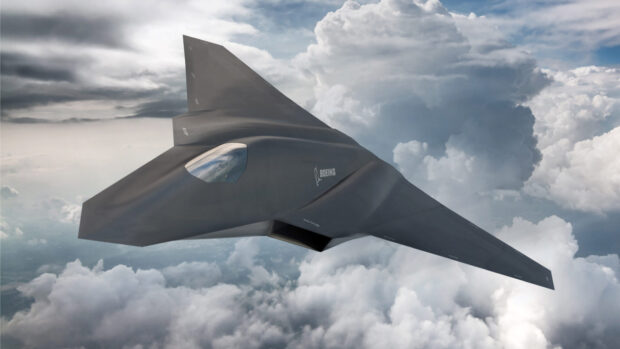
The defining event came early last year, when the Pentagon awarded Boeing the contract to build the F-47, the Air Force’s sixth-generation fighter under the Next Generation Air Dominance program—a deal estimated at $20 billion, with production anchored at Boeing’s defense complex in north St. Louis County adjacent to St. Louis Lambert International Airport.
That award validated a wager Boeing had already placed: a $1.8 billion expansion, including a new 1.2-million-square-foot advanced production facility—begun in 2024, before the contract was in hand—supported by roughly $155 million in St. Louis County tax incentives approved in 2023 against a commitment of 500 new direct jobs, with regional leaders projecting thousands more across the supply chain. Boeing describes the buildout as the most advanced all-digital aerospace design and manufacturing system in the world. First flight of an F-47 prototype is planned for 2028.
Then, in February 2026, Boeing made the relationship formal: the company named St. Louis the headquarters of its entire Defense, Space & Security business, returning the division’s leadership from Arlington, Va., to the region where it had been based from 1997 to 2017. The move puts executives alongside the more than 18,000 Boeing employees in the St. Louis region—the company’s second-largest employee site anywhere, and its largest manufacturing operation in Missouri, where Boeing ranks as the state’s biggest manufacturer.
The momentum extends across programs: Boeing delivered the first operational T-7A Red Hawk trainer built in St. Louis to the Air Force in January 2025, and the company is considered a leading contender for the Navy’s F/A-XX sixth-generation fighter—a win that would deepen the St. Louis production franchise for another generation.
A Bi-State Ecosystem
St. Louis aerospace does not stop at the Mississippi riverbank. Full disclosure requires noting that some of the region’s marquee assets sit on the Illinois side: Boeing’s $200 million, 300,000-square-foot MQ-25 Stingray facility at MidAmerica St. Louis Airport in Mascoutah, where the Navy’s first carrier-based unmanned refueler is built; Gulfstream Aerospace’s expanded completions operation at St. Louis Downtown Airport; and West Star Aviation’s MRO campus and new Aviation Academy.
But that bi-state density is precisely the point for companies siting in Missouri—the talent pool, supplier base, and institutional infrastructure function as one market. The St. Louis Regional Aerospace and Aviation Task Force, convened by the St. Louis Regional Freightway, now coordinates workforce pipelines across five regional airports whose tenants together employ some 36,500 workers with a combined economic impact exceeding $10 billion. The task force formed to capture more than $5 billion in recent regional aerospace investment, with Boeing, Gulfstream, and West Star expansions alone projected to add nearly 1,000 jobs.
Layer on the federal presence: the National Geospatial-Intelligence Agency opened its new $1.75 billion western headquarters north of Downtown St. Louis last year, anchoring an emerging defense-tech and geospatial cluster, while Scott Air Force Base—home to U.S. Transportation Command—employs roughly 13,000 in the region. Few metros anywhere can match that concentration of production, intelligence, and logistics command under one regional roof.
I-44 Corridor: The Advantage
New data gives the state’s logistics argument analytical teeth. A report released during FreightWeekSTL 2026 by the St. Louis Regional Freightway maps the Interstate 44 Aerospace Supply Chain Corridor—running 650 miles from St. Louis through Tulsa and Oklahoma City to Dallas-Fort Worth—as one of the most concentrated aerospace clusters in the nation.
Within it: more than 1.6 million aerospace manufacturing and related jobs, north of $250 billion in economic activity, and an aerospace manufacturing location quotient of 2.81, nearly triple the national norm. One in five of those jobs sits in the St. Louis region, the corridor’s highest-value node.
The corridor is a working supply chain, not a map exercise: Sonaca North America, headquartered in St. Charles, moves parts among its Washington and Cuba, Mo. plants and Tulsa for treatment before shipment to customers including Boeing and Gulfstream—a rhythm that depends on exactly the surface-transportation connectivity Missouri’s stretch of I-44 provides. Statewide, more than 80 aerospace manufacturing establishments—from majors down to specialized shops such as Van-Am Tool & Engineering and LeVic—feed the network.
Talent and Innovation: The UM System Advantage
Missouri does not leave workforce development to chance. Missouri S&T’s Missouri Protoplex, opened in April 2026 in Rolla, is a 117,000-square-foot advanced manufacturing hub—the first building of the university’s Manufacturing Technology and Innovation Campus—with 40,000 square feet of high-bay space and more than 60 industrial-scale machines purpose-built for the additive manufacturing, advanced metallurgy, and extreme-environment materials work that aerospace demands. The university reports more than $22 million already secured for industry and research collaborations, giving manufacturers large and small a shared venue to prototype processes and upskill workers.
The system-wide picture grew dramatically in July 2026, when the National Science Foundation selected the UM System-initiated, UMKC-led Critical Materials Crossroads Engine for up to $160 million—one of just 12 Regional Innovation Engines awards nationally and potentially the largest research award in Missouri higher-education history. The initiative targets domestic supply chains for the critical materials behind aircraft engine components, batteries, and semiconductors.
It’s a direct answer to aerospace’s most persistent sourcing vulnerability; its backers project some 10,000 jobs by 2036 and up to $40 billion in economic output, figures that are sponsor estimates but rest on competitively awarded federal money.
Missouri S&T’s separate federal Tech Hub designation in critical materials, plus the region’s geospatial workforce programs feeding NGA-adjacent employers, round out a pipeline aligned to where the industry is going, not just where it has been.
Strategic Elements
The fiscal backdrop reinforces the operational case. Missouri holds AAA bond ratings, and its recent tax record is genuinely first-in-the-nation: House Bill 594, signed in 2025, made Missouri the first state to eliminate its capital gains tax for individuals, with companion legislation cutting the individual income tax to 4.7 percent in 2026 and the corporate rate to 3.75 percent.
Established tools—Missouri Works for expansion and retention, Missouri One Start for recruitment and training—remain in active use, and pending legislation, the Advanced Manufacturing Recruitment Act, would add a 20 percent credit for megaprojects of $1 billion and 500-plus jobs, aimed squarely at the kind of aerospace-scale investments neighboring states have used targeted incentives to land. Multimodal logistics—converging interstates, Class I rail, river ports, and continuing airport upgrades—minimize expansion friction for operations that live and die on delivery windows.
With global defense demand rising, unmanned systems scaling, and advanced-materials requirements tightening supply chains, aerospace companies are choosing where the next generation of American airpower gets built. Missouri’s answer is no longer aspirational. The F-47 will be built here. Boeing’s defense leadership now sits here. The corridor that moves the industry’s parts runs through here. And the universities training the workforce and securing the materials are investing here, with federal backing to match.
In sum, Missouri isn’t just open for aerospace business—it’s built for it, and the past 16 months are the proof.
PUBLISHED AUGUST 2026