
HOME | ABOUT US | MEDIA KIT | CONTACT US | INQUIRE
HOME | ABOUT US | MEDIA KIT | CONTACT US | INQUIRE
Kansas City Claims Its Place in the Limelight
Kansas City and the broader region took the first steps onto much bigger stages—national and global—with successful projects in 2022. On a global scale, it was with designation as a host city for the 2026 FIFA World Cup. Nationally, the ability to attract Panasonic Energy’s new $4 billion electric-vehicle battery plant will dramatically affect the local job market, with 4,000 hires by 2025—roughly 1,000 of them engineers. And the biggest development project in state history will unfold over the next four decades as the Golden Plains Technology Park rises in the Northland. There, one of the first clients in the mix is Meta, the parent of Facebook, which will fill nearly 1 million feet of data-center space. Kansas City’s economy has always been diverse; it’s what keeps us from the troughs of recessions and the crashes that follow national peaks. Developments like these, and others, add to those multiple layers of diversity, and provide additional economic stability.
January
3 With Mayor Peggy Dunn breaking a City Council tie, Leawood approves one of its biggest development projects, Cameron Court. Though scaled back after neighbors raised objections to its scale, Oddo Development projects that the 116-acre mixed-use project near 135th Street and State Line Road will generate $300 million in investment, creating 833 residential units, mainly apartments, but also single-family homes, twin villas and brownstones.
31 Leawood-based C2FO, perhaps the biggest entrepreneurial success story of the past 15 years, closes a $140 million funding round. The fintech company has exploded across the globe as a platform to help companies manage their accounts receivable flows—$54.7 billion worth last year, up 57 percent from 2020. Is an IPO next? Founder and CEO Sandy Kemper says it’s not out of the question.
February
17 BKD, the largest accounting firm in Kansas City, announces that it will merge with DHG, of Charlotte, N.C., to create FORVIS. With $1.4 billion in combined annual revenue, the new brand will immediately claim a place among the nation’s top 10 firms. It will have more than 5,400 team members across 68 markets in 27 states, the United Kingdom and the Cayman Islands.
23 Liberty asserts it place in the region’s booming logistics space as officials announce that it has landed Amazon and Walgreens distribution facilities for the new Liberty Commerce Center. At build-out, the seven-building campus will sprawl across 3.6 million square feet and will account for roughly 3,000 jobs.
March
31 Three years after groundbreaking and with one year to go before scheduled completion, work on the new, $1.5 billion Kansas City International Airport terminal yields an update on the impact that project has had in the region: 235 area firms have been project partners, with 129 of those being minority- or women-owned firms; 617 workers on site daily (a figure that’s been considerably higher during earlier stages), and 13 joint-venture or mentor-protégé arrangements set in place. The single-terminal design is slated to open just before the NFL draft here in April.
April
26 Platinum Real Estate, long one of the region’s fastest-growing real estate firms, announced that it will merge with United Real Estate Group, parent of Kansas City’s United Country Real Estate. That thrusts Platinum into an operation with almost 20,000 real estate agents, nationwide, and extends its reach beyond Kansas, Missouri, Iowa, Nebraska and Oklahoma. United operates in 30 states with 110 offices and more than 16,000 agents, and amassed more than $21.5 billion in national sales volume in 2021, compared to $2.26 billion for Platinum.
May
17 Years in the making, and with few signs of slowing down, the Garmin expansion continues as the Olathe City Council signs off on annexation of 175 acres that the company had acquired in 2021. Garmin has been expanding its world headquarters in phases, starting with the October 2018 completion of a 748,000-square-foot, $102 million warehouse. The next phase, valued at nearly $100 million, is expected to create work spaces for thousands of new employees.
June
7 Oracle Corp. announces that a majority of outstanding shares had been tendered for its $28.3 billion acquisition of Cerner Corp. From its inception in as a health-care IT company in 1979, Cerner emerged as the region’s biggest entrepreneurial success story of the past 40 years. For the second time in three years, the Kansas City area lost the brand of its biggest private-sector employer. First was Sprint, absorbed by T-Mobile in 2020. Cerner peaked at 13,500 employees locally and 28,000 worldwide.
21 The Kansas City Planning Commission approves plans for a dramatic rebuild of the West Bottoms industrial site, starting with nearly 29 acres acquired by developer SomeraRoad throughout the previous year. It will replace those buildings with up to 1,238 apartments, hotels, office and retail space through 2035.
26 One of Kansas City’s fastest-growing financial institutions, Lead Bank, announces that will sell to California tech billionaire Jacqueline Reses. By focusing on business lending, the one-time community bank in Jackson County remade itself and boasted a loan portfolio growing faster than all but two other banks by 2022. Reses, who made her fortune with Square and Yahoo, indicates that the bank’s innovation in fintech development piqued her interest.
July
7 A journey that began nearly 20 years earlier culminates with The University of Kansas Cancer Center securing “Comprehensive” cancer center designation by the National Cancer Institute. That’s the NCI’s highest level of recognition, often referred to as the gold standard for cancer centers. Officials say it will propel the institute to first-choice status with cancer patients throughout the Midwest, rather than looking to Mayo Clinic in Minnesota or M.D. Anderson Cancer Center in Texas.
August
2 Hunt Midwest secures planner approval for a massive logistics park that could become the biggest of its kind in Missouri. KCI 29 Logistics Park envisions nearly 3 square miles of operations on 2,136 acres currently zoned for farming near Kansas City International Airport. Within that, Hunt Midwest would create 20 million square feet of warehouse and commercial office space on 28 industrial and four commercial lots. The extended build-out calls for construction to be complete in four phases over the next 20 years, and up to $1.5 billion in private investment.
September
1 The Port Authority of Kansas City issues a request for proposals on environmental review and preliminary design for placing a cap over I-670 through Downtown Kansas City. If completed, the proposed $160 million project would yield a 5 acre park, venues for arts and theater performances, playgrounds and dog parks.
16 Coming to the rescue after Waddell & Reed backed out of its commitment for new Downtown headquarters, Blue Cross and Blue Shield of Kansas City announces that it will lease the Class-A tower built at 1400 Baltimore Ave. and make it the new headquarters. The region’s largest health insurer had been exploring alternatives to its Class-B base across the street from Union Station.
October
5 The University of Kansas Health System announces that it will bring Olathe Health System into its fold, adding to its dominance in health-care delivery on the Kansas side of the metro area. The two entities sign off on a letter of intent to merge Olathe Health’s services and clinics into the larger system, with all 2,300 Olathe Health associates as employees included in the deal.
6 The first earth is turned on the nation’s only pro soccer venue designed exclusively for women with construction of the Kansas City Current’s $118 million, 11,500-seat multipurpose venue at the Berkley Riverfront. The site will also be a venue for entertainment event and NCAA soccer matches and potentially small-college football games.
November
1 Just a decade after its founding, Rx Savings Solutions of Overland Park is formally acquired by health-care giant McKesson Corp. in a deal that could eventually be valued at $875 million—$600 million up front and $275 million more if Rx hits certain financial performance metrics.
December
7 One more piece falls into place for the massive BluHawk multi-use development in southern Johnson County with groundbreaking for the project’s indoor sports complex. It will provide 20,000 square feet of space for basketball, volleyball and pickle ball courts, plus an ice rink, batting cages, and seating for up to 3,500 people. The $125 million facility is part of a 277-acre development owned by Price Brothers Management Co., and it’s part of an overall project cost of more than $1 billion, one of the biggest of its kind ever for the Kansas City region.
 World Cup Coming to Town
The World Cup will put Kansas City on a world stage in 2026. An intense, years-long marketing effort paid off in June when FIFA, the international soccer organization, designated Kansas City as one of 16 host cities in the U.S., Canada and Mexico. That hard-won victory not only positions this region before a global audience, it will do so for a tournament expected to draw more eyeballs than any in World Cup history. The field in 2026 will be expanded to 48 nations, with 80 matches, up from 32 teams this year. Kansas City was the smallest U.S. market to make the cut, which included 10 other cities, plus three in Mexico and two in Canada. Cliff Illig, the Cerner co-founder who branched into soccer as part of the ownership team of what is now Sporting Kansas City, nailed the impact when the announcement was made on June 16: “The success of Kansas City’s bid is a testament to the accomplishments we can achieve when we work together,” he said. ” The World Cup will bring unprecedented tourism and economic activity to our community and will provide an opportunity to showcase our city on a global stage.” That economic impact has been estimated at $695 million. It might not be the biggest deal, in dollar terms, but the follow-on developments from that positioning could produce multiples of that number in the years to come. Kathy Nelson, of the Kansas City Sports Commission and Foundation, said host-city status would make Kansas City an international destination for sports tourism. “To be named a host city for not only the biggest single sport event in history, but as part of the most competitive selection process FIFA has ever facilitated, is an incredible accomplishment for our city, our bid committee and everyone involved.”
 A Mega/Meta Blowout Deal
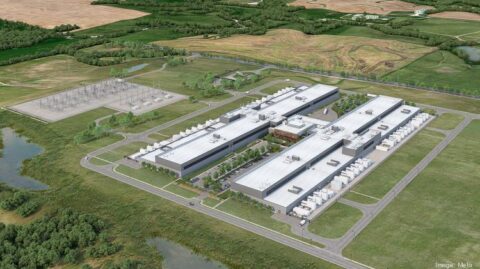
Developments in the Kansas City earn the “big deal” designation when they get north of $1 billion. So how does one characterize a potential development impact of $103 billion? “Big” hardly suffices. But that’s the estimate dollar footprint for Golden Plains Technology Park, which received Kansas City approval in March for the first tranche of what’s expected to be $8.2 billion in incentives over the next four decades. The massive data center is being spear-headed by Diode Ventures, a Black & Veatch subsidiary, and Velvet Tech Services; those involved say the data center complex could produce a monster local investment of $103.8 billion during the project’s life span. Golden Plains will be built on nearly 883 acres formerly zoned for agricultural in Platte and Clay counties. When completed, it will encompass 5.5 million square feet of space across 16 data-center buildings totaling 5.5 million square feet of construction, which is expected to start in 2023. Two weeks before the city signed off on that financing plan, Facebook’s parent company, Meta, confirmed that it would be the first Golden Plains tenant with a data center of nearly 1 million square feet. That investment by itself is projected at $800 million, and should launch operations in 2024. Why Kansas City for the world’s top social-media company? “It stands out with so much to offer—good access to infrastructure and fiber, a strong pool of talent for both construction and operations, and more than anything, great community partners,” said Darcy Nothnagle, Meta’s director of community and economic development.
 A New Energy for the Kansas City Area
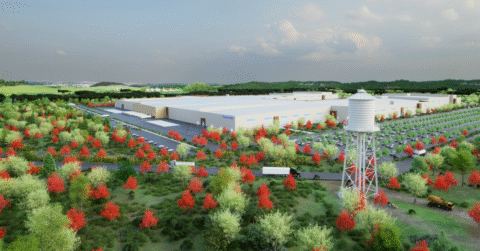
July produced the biggest news of the year on the Kansas side—and the biggest economic-development deal in that state’s history. On July 13, Gov. Laura Kelly announced that Panasonic Energy has selected DeSoto, in Johnson County, as the future home for a $4 billion battery plant that is expected to employ 4,000 people when it comes on-line in 2025. The plant will produce battery-packs for electric vehicles, with Tesla anticipated to be among its biggest customers. “A new facility of this size is transformational, not only for Johnson County, but also for the entire state,” Kelly said, and state officials put numbers on the scale of that transformation: $2.5 billion in yearly economic activity. A longer-term transformation for the broader region is also at hand with the deal, said Lt. Gov. David Toland, who also serves as Kelly’s Secretary of Commerce. “We shifted our focus from recruiting companies across a state line to recruiting companies across the international dateline,” he said. Securing Panasonic’s commitment took some doing on the part of Kelly’s team. Early in the year, the secrecy around an incentive package ruffled some legislators who would have to sign off on an incentives package topping $820 million. Officials at the state, county and local level now turn their attention to the massive follow-on infrastructure development required to sustain the project, including road improvements, housing for workers, expanded school facilities and more. Meanwhile, the competition for work-force talent amid sub-4 percent unemployment will only get hotter, especially with an estimated 1,000 engineers needed at the plant.