
HOME | ABOUT US | MEDIA KIT | CONTACT US | INQUIRE
HOME | ABOUT US | MEDIA KIT | CONTACT US | INQUIRE

Never Too Young to Build
In 1776, the year the colonies declared independence, Alexander Hamilton was 21 years old. James Madison was 25. The nation they helped invent was an act of the young—long on potential, short on proven institutions, and unwilling to wait for permission. And 250 years later, the pattern holds for business and entrepreneurship in the greater Kansas City region. This is the 19th class of 20 in Their Twenties, and the work reflected in these pages is not a preview. It is already in motion: a foundation-repair company that grew from one truck to $5.5 million, a payments firm that began in a fraternity house, a Latin coffee brand with three locations, software for a logistics industry still inundated by paper tickets. Alongside such founders sit attorneys, advisers, and operators who treat an employer’s book as if they owned it. The dual mission that has defined this program since 2008—economic value and civic contribution—shows up here as a schedule, not a slogan.
 Aaliyah Aramjoo, KCRise Fund
Aaliyah Aramjoo, 23, does not treat venture capital as a velvet rope that represents a barrier to accessing capital: At KCRise Fund, she sources and conducts diligence on deals for a $34 million early-stage technology fund, investing equal measures of capital and care. She’s worked with more than 300 companies this year and led three investments in which Kansas City capital helped close the round. She then built a bi-monthly operator summit so local founders could sit with product and sales people who have already made the mistakes; three sessions in, the room averages 20 operators. She co-founded a meeting circle of young women in private finance, has helped run InvestMidwest for three years, and launched Two Cents, now past 500 subscribers. “Entrepreneurship,” she says, “is creating something for the betterment of the world when the consequences are unclear and the risk is real.”
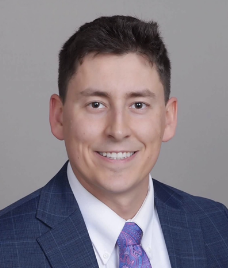 Caleb Banegas, Edward Jones
Caleb Banegas, 29, came home to Overland Park to build a practice that teaches as much as it manages. After ranking No. 6 nationally as a Northwestern Mutual intern in 2022, he moved to Edward Jones and, as a financial adviser, now serves nearly 300 households across 24 states with $45 million under management. Since 2024, the book has grown 130 percent in households and 300 percent in assets, at a compound clip above 50 percent. Extending his reach digitally, Banegas publishes free tax and investing explainers on LinkedIn, Facebook, and YouTube, serves in his church presidency, cooks on weekends at reStart Homeless Shelter, and, in 2023, created the Jill S. Tolley Scholarship for single mothers finishing college in Kansas. Colleague Dave Felshaw says he has never seen an advisory practice grow this fast. “I built my practice,” Banegas says, “around fiduciary responsibility, education, and client empowerment.”
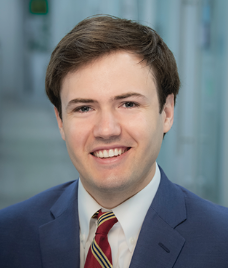 James Bergman, World Giving Foundation
James Bergman, 29, puts a strategic touch on the art and science of philanthropy by making appointments with non-profits the way other people make lunch dates—a different organization every week. That field work now sits underneath the World Giving Foundation, which he helped form in 2019 and has run as executive director since 2023. Assets and clients have multiplied tenfold, with more than 100 donor-advised funds and private foundations and roughly $30 million has moved into Kansas City and beyond. As a result, grants have tripled. The specialty is resolving messy gifts of appreciated assets, with fees kept thin so more of each gift lands where it’s intended. He serves on the boards of American Public Square and Reconciliation Services. “Entrepreneurship,” he says, “is the willingness to see a problem and take ownership of it. In my case, any problem, not just those that can lead to profit.”
 Colby Coda, Gateway Custom Coatings/GroCo
Colby Coda founded Gateway Custom Coatings at 21. Now, at 25, his enterprise does $3.3 million a year, will finish more than 600 jobs in 2026, and is growing 62 percent year over year. In February, he partnered with Michael Groff on GroCo Epoxy Floors, already on pace for $1 million in year one, with work at Fort Riley, Jack Stack Barbecue, and Jay Wolfe dealerships. The two firms employ more than 30 people and occupy industrial buildings Coda owns in Olathe. After firefighter Graham Hoffman was killed in the line of duty, the crew recovered a basement floor for his mother and sent no invoice. He also covers college tuition for an early employee’s son and sponsors two students in Kenya. “An entrepreneur’s success,” he says, “can be measured by how many lives are improved because of that one person.”
 Chloe Cox, HUB International
Chloe Cox, 25, sells benefits packages that help Kansas City employers keep people. As a benefits consultant for HUB for the past three years, she’s regarded as one of the highest-performing producers in the Kansas City region. The more interesting enterprise she started, however, is not included on a production report. Last year, she founded Next KC, a networking community for early-to-mid-career professionals, interviewing every prospect over coffee first. About 50 official members now show up monthly to assess potential collaborations. She sits on the Big Brothers Big Sisters BIG Board, chaired the American Heart Association Go Red auction, and is honorary chair of Newhouse’s 2026 Imagine a Day gala. “That’s how I’ve gotten to see entrepreneurship be most impactful this year,” she says. “Creating something that gives other people the opportunity to succeed.”
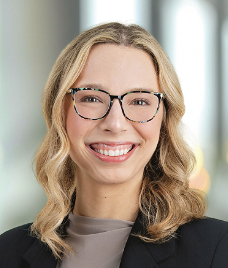 Drew Davis, Dentons
At the Kansas City office of one of the world’s largest law firms, Drew Davis, 28, has lasered in on real-estate deals. She works with acquisitions, dispositions, leasing, and financing transactions that have totaled more than $100 million in combined value, highlighted by the $64 million sale of two Kansas City buildings, and she sits on Dentons’ national data-center practice, advising developer clients across the country. Past honors include Order of the Coif at KU Law, a published Kansas Law Review comment on Kansas’ free-speech clause, seven CALI awards—the academic résumé was loud even before landing her first job. The professional one is quieter: be useful when a closing gets ugly. “Entrepreneurship,” she says, “means creative problem solving and being a good team member. It means showing up every day with a positive attitude and a willingness to do whatever needs to be done.”
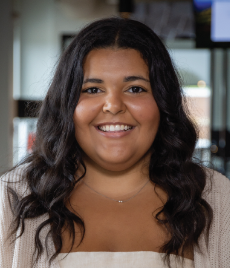 Genna Foster, MMGY
Genna Foster, 27, is not interested in dashboards that only describe yesterday. At MMGY Global, she has helped build analytics products and Tableau reports that turn multi-channel campaign data into actionable intel, and she introduced automation that cut manual reporting by as much as 20 percent. She also stood up the analytics team’s first internship program, ran it two summers in a row, and now supervises a direct report in the London office. The same itch shows up off the clock: she chairs networking for the KU Alumni Association’s Kansas City board and mentors both through the alumni association and the KU business school. “Entrepreneurship,” she says, “is the willingness to see an opportunity where others see the status quo—and then take ownership of turning that opportunity into something better. It is not limited to starting a business.”
 Dulcinea Herrera, Cafe Corazon
Dulcinea Herrera opened Kansas City’s first Latin/Indigenous coffee shop, but she was just getting started. Café Corazón now runs three locations, a roasting plant, and a brand that spent World Cup summer as a gathering place for visitors and neighbors. The Chamber named it the 2026 Mr. K Small Business of the Year, and at 26, she earned additional praise from the likes of Forbes, PBS, FIFA, ESPN, Telemundo, Apple TV and Barista Magazine. She also scored a Downtown Council Urban Hero citation and an 816 Day Community Champion honor from Mayor Quinton Lucas. Her artwork has been entered in the Congressional Record and featured on PBS’ We Are Latinos, and she designed Hispanic Heritage Month merchandise for the Kansas City Current. She also mentors through Big Brothers Big Sisters. “My goal,” she says, “is not simply to build something successful, but to create opportunities for others to rise alongside it.”
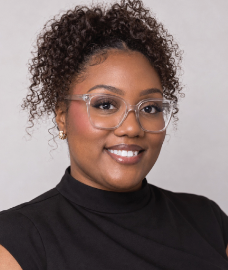 Dajaun Hindsman, Community Capital Fund
Dajaun Hindsman runs a nearly $1 million stack of neighborhood grant programs at Community Capital Fund and landed the six-figure commitment that is now the organization’s largest neighborhood program, which has been renewed three years running. Executive Director Phyllis Hardwick points to the 29-year-old’s work with Strengthening the Health of Neighborhoods, which pays stipends and training into low- and moderate-income blocks, and to logistics for more than 200 Community Development Workshop registrants. As chair of Connext: Emerging Leaders, Hindsman rebuilt the board to 19 members—highest in years—and launched the Emerge Pass to diversify revenue. Hindsman was also the youngest board president of the Lincoln High/R.T. Coles National Alumni Assn. “Entrepreneurship,” she says, “is the discipline of seeing a need no one is meeting, building something to meet it, and finding the resources to make it last.”
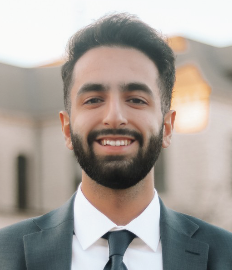 Shayan Karimy, Centric Projects
Shayan Karimy inherited two jobs other project managers walked away from—the Lawrence Public Schools Centennial renovation and a University of Central Missouri barn and greenhouse, nearly $8 million combined—and finished them on time and on tight budgets. Centric vice president Matt Hall says Karimy, 24, already thinks like an owner: improve the business, not just the day’s checklist. Offsite, he revived a dead Delta Sigma Phi all-chapter retreat, realigning 120 members, and rounded up contractors to upgrade a house that needed work. As a Big Brother in Manhattan, he helped Greek life members raise tens of thousands for Big Brothers Big Sisters, and he now raises alumni money for Cat’s Cupboard. “Entrepreneurship,” he says, “means seeing opportunities, taking ownership, solving problems, creating value, and improving things rather than just doing what is average.”
 Emma Lile, Redefining Wellness Center
Eight years ago, Emma Lile was painting houses when seizures—as many as 30 a day—took away work, walking, driving, and any usable plan for a future. At 28, and now three years seizure-free, she has built the operating system she once needed. As COO of Redefining Wellness Center, she helped take a three-person clinic serving 1,000 clients to three locations and more than 20,000 clients nationwide, with revenue up 1,150 percent. She automated more than 20,000 tasks a month, pushed 40 percent-plus of leads into long-term care programs, and led an AI build that now runs financial reporting, provider payouts, sales-call coaching, and compliance documentation. Recovery, she writes, did not come from a single practitioner. It came from a system. “Success, for me,” she says, “is not a figure on a balance sheet. It is a system reliable enough that healing becomes possible.”
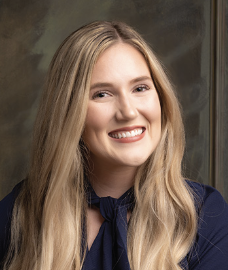 Taylor Limoges, Leawood Chamber of Commerce
Taylor Limoges joined the Leawood Chamber in 2021 and started asking what the calendar would look like if “the way we’ve always done it” were not an answer. She’s vice president of programming for an organization that now hosts 90 events a year. Attendance is up 50 percent, email read rates up 30 percent, social audiences up 70 percent. A Taste of Leawood, once yielding $18,300 in tickets and $9,800 in sponsorships, now sells out at 800 guests, generating about $40,000 in tickets and $20,500 in sponsorships. The golf tournament doubled in scope and went from $12,000 to $33,000 in receipts. Leadership Leawood, which she helped launch in 2024, now graduates 20-plus leaders a year and lifted program revenue from $13,000 to $21,000. “Entrepreneurship,” the 29-year-old says, “is creating momentum: asking ‘what if?’, being willing to experiment, and then doing the work to make it sustainable.”
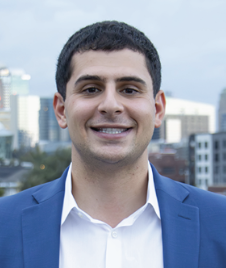 Michael Mallouk, GLC Payments
Michael Mallouk started loading cash into fraternity-house ATMs as a KU freshman with roommate Jack Denzel. After graduation, with Denzel and COO Steve Beene, that side hustle became GLC Payments: point-of-sale installs, e-commerce integrations, and cost consulting. The firm now has six people and more than 150 clients—restaurants, manufacturers, home-service shops, clinics—across 22 states. The five-year plan calls for 20 employees and a push into SaaS and embedded payments. Mallouk, 25, also sits on the board of KC CAN!, the children’s assistance network his parents founded almost 30 years ago, and he recently joined the board of Don Bosco Senior Center. Those who have watched him grow into the role say he believes that hard work and strong relationships matter most, and he carries that authenticity every day.
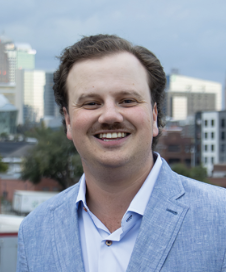 Zach Molzer, Molzer Development
Zach Molzer started Molzer Development at 23 and went looking for buildings other people had given up on. He raised outside capital, found partners, and worked with City Hall to restart the abandoned Aladdin Hotel in Downtown. In the Crossroads, he brought the Holman Building and Bar Phoebe back to life. Those projects pull in other young operators he met in that room—with varied expertise in power washing, concrete, digital marketing—so the developments also serve as a supply chain for his peers. Now 25, he serves as Director of Vision for Next KC, was appointed to the Historic Preservation Commission, and is a Big Brothers Big Sisters Seven Figures member. Through his work, Molzer is changing the landscape of Kansas City one 100-year-old building at a time.
 John Wyatt Ohle, Olympic Foundation Repair
John Wyatt Ohle learned foundation repair on someone else’s crew—then decided the truck should have his name on it. Olympic Foundation Repair started in 2019 out of a personal vehicle. He answered the phone, sold the job, did the work, and put the money back in. Last year, he launched Olympic Concrete Lifting; this year, he bought PierMagic Kansas City, all by age 29. The companies employ more than 20 people and are on track for about $5.5 million in combined revenue this year. He’s already leveraging the company’s success to make a civic impact: Youth sports get jerseys and fees paid; October profits send a cut to the National Breast Cancer Foundation. “Entrepreneurship,” he says, “means being responsible when there is nobody else to hand the problem to. Wanting to be your own boss is only the beginning.”
 Paige Peterson, Big Brothers Big Sisters of Greater KC
At 29, Paige Peterson is the youngest person on Big Brothers Big Sisters Kansas City’s leadership team and runs a nearly $2 million corporate portfolio as donor engagement manager. In her first six months in the seat in 2025, her work boosted corporate fundraising 25 percent and helped the organization post its highest corporate revenue on record. Talk about impact: One stewardship meeting turned a $1,000 donor into a $70,000 partner. She helped stand up the Individual Giving department and leads the Big Impact Group, the young professionals board that raises more than $300,000 annually. She has also been a volunteer Big Sister for seven years, which is a different kind of book of business, and served as social chair of the Chamber’s Centurions. “You don’t have to start a company to think like an entrepreneur,” she says. “It means seeing an opportunity and finding a way to turn an idea or relationship into meaningful impact.”
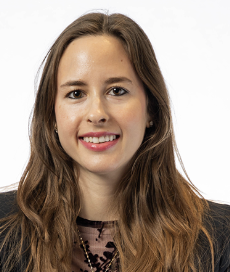 Natalie Shaw, HeartLand, LLC
Natalie Shaw showed up at HeartLand in 2020 as a consultant with a new master’s degree and, just three months later, ran the Business Intelligence operation. Now 29, she is vice president, leading a team of four that she built from a blank slate for the national commercial property maintenance and landscaping enterprise. Sales, finance, and operations had been flying around on spreadsheets; she replaced the patchwork with a cloud reporting platform that gives landscape operators a single view of pipeline, profitability, and efficiency. Hundreds of manual workflows came out. HeartLand’s Evan Shufflebarger, who at one point was her boss, now calls it the best BI platform in the landscape industry and notes she has become a featured speaker. “The accomplishment I am most proud of,” she says, “is building a BI function, developing a team, and establishing capabilities that continue delivering value daily.”
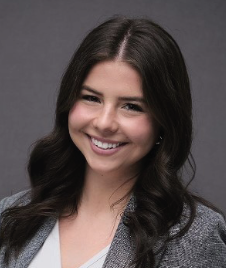 Kelsey Short, Merrill Lynch
Kelsey Short moved from St. Louis to Kansas City and treated the new market like a company that did not yet exist. At Merrill, the 27-year-old is building a practice the long way—new relationships, no inherited book, and a reputation as a trusted resource both within the office and with clients. In late 2025, Short walked into Junior Achievement of Greater Kansas City and proposed a young-professionals board; it launched in January with 10 founding members focused on financial literacy and workforce readiness. When she learned Braden’s Hope for Childhood Cancer’s young professionals board had lapsed, she rebuilt it as chairwoman, recruited 10 founders, and produced its first event which, raised nearly $4,000. She also sits on Merrill’s culture committee. “Entrepreneurship,” she says, “means identifying opportunities, taking initiative, and creating something meaningful where none previously existed.”
 Spencer Stewart, Lane4 Property Group
Spencer Stewart, 25, joined LANE4 in the summer of 2023 after earning a degree from Walton College and three years as a CBRE assistant in northwest Arkansas. The new seat was commission-only. “Every day, I wake up unemployed,” he muses. Since then, he has closed more than 100 transactions totaling 178,000 square feet and more than $26 million in value. Commercial-realty pro John Stacy breaks out Stewart’s 2025 alone: 39 deals and $18.99 million, plus 15 more and nearly $3 million in the first quarter of 2026. The niche is restaurant tenant-rep—Grand Mere’s Pizza Hut franchisee, Jason’s Deli, Bricktown Brewery, Jimmy’s Egg—and he pushed occupancy at the Prairie Village Office Center from 84 to 96 percent. He is licensed in both Kansas and Missouri. “No one,” he declares, “owes you anything. You have to wake up every day and earn it.”
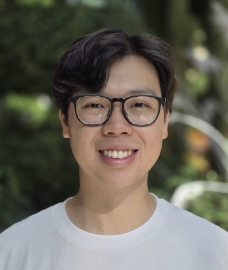 Warren Wang, Rebulk
Warren Wang is trying to get bulk transportation off its addiction to clipboards. Rebulk, founded in KC, is an operating system for an industry that too often still runs on spreadsheets, paper tickets, phone calls, and inventory walks. The platform pulls railcars, bulk inventory, documents, billing, and customer reporting into one place and adds tools for trans-loading, rail-switch planning, and camera and LiDAR scans of materials that will not take a barcode. Since founding the company, Wang, 26, has been accepted into Y Combinator, raised $4 million, won LaunchKC, and been named one of KC’s 2026 Startups to Watch. The software is live at more than 10 customer sites, with one full-time hire and four student interns. “Entrepreneurship,” he says, “means taking responsibility for a problem others have learned to live with, getting close to the people doing the work, and building something that makes their day better.”
PUBLISHED OCTOBER 2026