
HOME | ABOUT US | MEDIA KIT | CONTACT US | INQUIRE
HOME | ABOUT US | MEDIA KIT | CONTACT US | INQUIRE
Originally inspired to help a friend in need, this veteran brokerage executive for Reece Commercial recently completed a spiritual journey to donate a kidney, transforming a stranger’s life.
PUBLISHED FEBRUARY 2026
“There are 550,000 people on dialysis today in the U.S., of which only 100,000 have been approved to receive a kidney.” — John Sweeney, Reece Commercial broker and kidney donor.
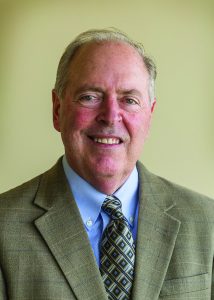 Q: You’ve had a pretty solid run in commercial real estate for quite a while, but we hear you’ll complete that career with one kidney fewer than you started with. Can you tell us a bit about how you ended up as a kidney donor?
A: Here’s how it all started: It was probably about 2 years ago, and two events happened. First, I went on a food rescue mission as a volunteer for Catholic Charities, and I rode with a guy who has a daughter, about 25 years old, and she needed a kidney. I felt sorry for him, I listened to his story, but really–what do you do in a situation like that? The bottom line is, I just listened, but didn’t think much about it after that. I mean, I felt sorry for them, but then went on about my business.
Q: What changed that got you into the game?
A: Two weeks later, a childhood friend of mine, Mark McIntosh—he goes by Mac—well, he posts on Facebook that he had been diagnosed with amyloidosis, which is a rare bone-marrow disorder that destroys your organs. His post says he’s going on dialysis, but the doctors tell him he’ll eventually need a kidney transplant. So I started communicating with him, and he invited me listen in on four or five Zoom meetings with an organization he’s part of. I sat and listened to what was going on, learning what I could and soaking it all in.
Q: That made an impression?
A: Oh, yeah. After that, I called him up and said I wanted to be tested to see if I can donate my kidney to him.
Q: That doesn’t sound like something one decides to do based on a casual friendship…
A: Oh, gosh, we’d known each other since we were kids here in Kansas City. We were competitors, high-school athletic competitors, but I knew him as early as late grade school when I was at St. Elizabeth’s, and he was on an opposing 3&2 baseball team. The first time we played together was in high school; I was 17, he was 16, and we both played Ban Johnson baseball for the Butternut Bread team. We became good friends then.
Q: And that carried on through college?
A: Right, he was a year behind me at Mizzou, but joined my fraternity, and we played fraternity sports together. Interestingly enough, during his senior year in high school, he was a very good athlete who got poked in the eye during a basketball game, fell to the ground and hit his head, busted an eardrum. He was going to be drafted by the Royals, he had scholarship offers to play at Mizzou, but because of that injury, he lost his equilibrium, and all that went away. But he was still good enough to play frat and intramural sports, all those things college kids do.
Q: So how did the relationship evolve to the point where a kidney donation offer is made?
A: He moved to Denver 40 years ago and was a broadcaster, a sideline reporter for a TV station there, following the Colorado Buffaloes and the Broncos for a long time. We would touch base maybe two or three times a year, but social media really boosted those contacts to a much higher level.
Q: OK, so you see the Facebook post, you get in the game. What was the process like, in terms of engaging with the medical establishment?
A: First, I had to be tested to see if I was eligible to even become a donor. I started the whole process in Kansas City, at The University of Kansas Health System. He was in Denver. The testing was extensive, probably spanned a full day and a half on my end here. There was blood work, imaging work, I had to talk with about a dozen health professionals. We did all this testing and they came back to me and said everything was great except for two concerns, that I had to take medication for what they considered high blood pressure. My doctor didn’t think it was high, but in their eyes, for this procedure, they thought it was. So I went on a small dosage, retested a month later, and it was still not acceptable. They rejected me as a donor. I was done.
Q: Clearly, though, that’s not the end of the story.
A: No, after talking to Mac, he talked to his team at AdventHealth Porter in Denver. Those professionals said my blood pressure reading would not be a reason for rejections, and they encouraged me to redo all that testing in Denver. Which I did. I flew out, did one full day of the same tests, then retook those because there were still some concerns. Literally, up to the day before, or two days before my surgery on Feb. 10, they were still asking questions where they might have rejected me, but bottom line, they ended up accepting me.
Q: So happy ending, right? Childhood friend gets your kidney?
A: Well, not exactly. Along the way, Mac received a kidney after a match through the National Kidney Registry. It happened very fast, and I thought it might have been the end of my journey. But after pondering things for two or three days, I decided to continue to go forward with this process. At that point, it really had become a spiritual journey for me.
Q: Any idea on the recipient?
A: I don’t know the person, but my kidney ended up in Minneapolis—I don’t know if it went to a male, a female, what their age was or what their family situation might have been. I had surgery at 6 a.m. to harvest the kidney, it was flown to Minneapolis that day, and the recipient received it the same day. Which is pretty amazing, isn’t it?
Q: Looking back, any concerns with the process, or things about it that encourage you about how the system works?
A: I wouldn’t say I had any frustrations about it, but this is not an easy process, or a quick one. Don’t get me wrong: Everybody at KU Health was nice, everybody was well-intentioned, but that didn’t alleviate the fact that all of this was still a hassle, and it seems like it could have been more streamlined than it was. Again, though, the reason I continued with it was knowing that I could continue saving a life and providing hope for another person who, at this point, I obviously do not know. I am trying to reach out and see if we can connect, if they’d like to talk about what is now a shared experience. That may be selfish on my part, but it’s curiosity more than anything. Mac knows his donor, and they’ve become good friends; I’d like to know more about the other person, as well.
Q: Despite the rigor, were you assured that those doing the testing had some serious guardrails to protect those involved?
A: Absolutely; one great thing about all of it is the health professionals involved were unbelievably thorough. You get to have a world-class exam done for free, during which time you might find out something about yourself that you didn’t know about, something that could now be treated because of that testing. Totally free. The system, quote, “pays” for it.
Q: With regard to process, especially when you have conflicting medical opinions involved, is that an indication of a need for some fine-tuning?
A: I’d hate it to be so bureaucratic that everybody involved has to follow the same set of standards, I like local decisions being made by local authorities. As far as supporting the process, I’m still in touch with the KU Health people, helping sponsor a donor-awareness game with the KC Monarchs. We did that last year, but the difference between last year and this, is that then, I was in testing, and this year, I’ve given—I am the donor. And I plan to taking this message to the road a bit, speaking to small or big groups or whoever will have me.
Q: What do you think now about how one individual act can make a difference when measured against the scope of the need?
A: There are 550,000 people on dialysis today in the U.S., of which only 100,000 have been approved to receive a kidney. The others are not because of some other health issue they may have—diabetes, obesity, whatever condition they might have in addition to kidney disease. But yes, for those who qualify, it makes a tremendous difference.
Q: You mentioned the potential to learn more about your own health. Did your testing reveal anything you didn’t already know?
A: Well, they said that I had a bit of high blood pressure, and while my own physician didn’t entirely agree, she prescribed a medicine to lower mine, which it did, but not a lot. And I had higher cholesterol than I should have had, so they prescribed a mediation for that.
Q: Looking back, though, this is a charitable contribution anyone can make just once. Can the system close the gap with more
organ-donation registrants and awareness?
A: Plenty of people with driver’s licenses have clicked the boxes to have their organs donated as doctors see fit, but there just are not enough of those out there. More would be wonderful if people would be aware of it. It so happens that all us are given two kidneys, but only need one. The famous line among those in the industry is “Share Your Spare.” I didn’t know sharing was a thing until those two events happened at the beginning of this journey, with the Catholic Charities trip and Mac’s Facebook post.
Q: All said and done, would you do it again?
A: I really would. And one other thing, I received a voucher—actually, it’s in my wife Sara’s name, she will receive the voucher—and with it, I can name up to 10 individuals— I named 10 family members—who can receive a kidney if they develop a disease, and they move to the top of the list as recipients because of my donation. And if I end up having issues with my remaining kidney, I move to the top of the list, as well.
Q: Does that latter prospect keep you up at night?
A: Great question, but I go back to the spiritual journey, and a lot of my decision goes back to trust, and a belief that all things will turn out well, that I can help an individual save their life and provide them hope. If you’ve ever lost hope in something, that’s a pretty debilitating feeling.
Q: The family piece there: How did they get behind your decision, and how did friends react?
A: Your family is going to have concerns, naturally. I can have all the wonderful intentions, but is this going to impair John in some way where it shortens his life or impacts his health in ways where he can’t be there to support his family? Once they learned about and felt my commitment, they all got on board. I posted on Facebook about it, and Mac wrote an article on Facebook (reprinted on the previous page). I forwarded it, and last I looked, it had about 150 comments. That’s amazing to me; I normally get very few on any post. It touched people. I couldn’t believe it, but it did, and inspired them to write