
HOME | ABOUT US | MEDIA KIT | CONTACT US | INQUIRE
HOME | ABOUT US | MEDIA KIT | CONTACT US | INQUIRE
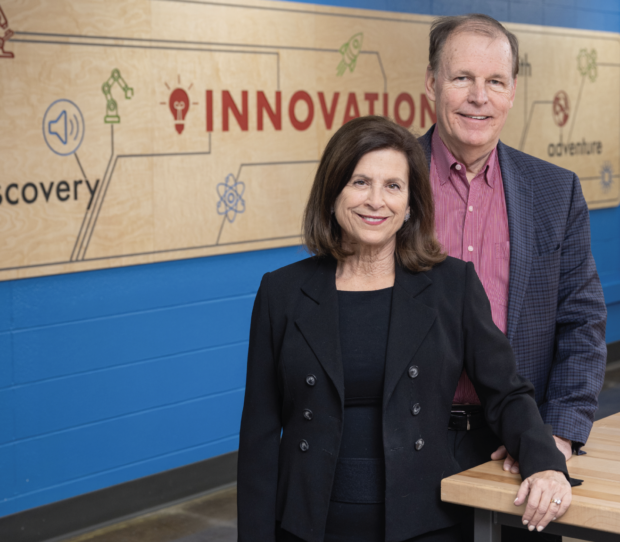
In the pantheon of Kansas City philanthropy—and it’s a big pantheon—few stories resonate with the depth of Mike and Millie Brown’s. He, a lifelong Kansas Citian who built a global payments empire from the ground up; she, a nurse whose roots in service run as deep as her commitment to family and community. Together, they have channeled the fruits of extraordinary business success into a focused mission: transforming educational outcomes for generations of young people in the Kansas City region.
For Mike and Millie Brown, philanthropy is not just a practice—it is a way of life. “Philanthropy when you’re young doesn’t start with money because you have no money, right?
So it starts with service,” Mike reflects, recalling the values instilled in him growing up in Kansas City, long before spectacular business success ever shaped his giving.
Millie echoes this sentiment, noting that service was a family imperative from her childhood in Fulton, Mo.: “My mom and dad were very involved in the community…they had all of us children doing Red Cross, teaching kids how to swim in the summer. They were always about serving others.”
Together, their early experiences laid the foundation for a partnership that would one day shape Kansas City’s educational and cultural landscape and reach out from there to offices around the world through Euronet Worldwide, the payment-processing platform he co-
founded in 1994.
That partnership, reinforced over decades, has become the throughline of the Browns’ work across education, health care, and civic institutions. It also explains why their giving—now structured through the Brown Family Foundation–Kansas City but deeply personal in execution—emphasizes systems, leadership, and measurable outcomes rather than one-time gifts. For Mike and Millie Brown, generosity is not episodic. It is strategic, accountable, and sustained.
Through their personal giving, through the foundation they created to formalize that giving, through Euronet’s corporate philanthropy and through their shared vision to elevate educational instruction that will bolster business formation and expansion, Mike and Millie Brown share Ingram’s 2025 Philanthropist of the Year honors. They join a roster of elite business icons whose own works of charity have been pillars of Kansas City’s outsized philanthropic spirit.
The Business Lever
Mike Brown was just 22 when he co-founded Innovative Software, which within a decade was one of the region’s fastest-growing companies. He sold it and later co-founded Euronet Worldwide in 1994, starting with a bold vision of installing the first independent, non-bank-owned ATM network in Central Europe. Today, Euronet’s suite of payments-processing services employs around 11,000 people across 67 offices, serving 200 countries and territories.
The Jesuit roots of his instruction at Rockhurst High School would form the basis of his own giving, and his degrees–first, in electrical engineering from Mizzou, then molecular and cellular biology from UMKC, would set the stage for business success that would complement the call to serve. The belief he shares with Millie in the value of education is rooted in large part by her matching academic achievement: She secured her master’s degree in molecular and cellular biology at the same time he did, and earned an MBA from KU.
For all his global achievements, Brown remains a “lifelong Kansas Citian,” deeply rooted in the community that shaped him. That grounding in service began early. He credits his time at Rockhurst, with its Jesuit ethos of “Men for Others,” and his Boy Scout experiences.
Millie, a nurse by training at MU, traces her own value set to her parents’ involvement in community causes, with local chapters of the American Cancer Association, the American Tuberculosis Association and church-sponsored initiatives. “My parents were always about serving others,” she says. “That generation, they instilled those values in children, that you give back, and the Catholic Church also was a big part of that.”
That generational legacy of service transitioned into meaningful philanthropy as business success provided the means. Millie notes with pride that Mike was a pre-programmed giver. “Mike Brown is probably one of the most generous people you will ever find, and Mike Brown was giving back well before we were even married,” she says.
Mike, in turn, cites Millie’s passion for promoting instructional excellence in K-12 schools, crediting her with the heavy lifting done in collaboration with the family foundation’s executive director, Jo Weller. Central to that work has been an emphasis on data-driven-results to inform the giving strategy, along with a relentless focus on improved academic performance.
Answering a Civic Challenge
One pivotal early involvement they shared came with the revitalization of Union Station and the creation of Science City in the 1990s. As a high-tech entrepreneur, Mike recognized a critical gap if the city were to capitalize on the emergence of a digital economy.
“We needed software engineers. And guess what? There weren’t very many of them in Kansas City to hire, and we recognized there was a need,” he says. “I was turned on to this idea of science, technology, education, getting more kids in because it’s great for the economy.” He became chairman of the effort to transform historic Union Station into a hub featuring Science City, a hands-on science center designed to spark interest in STEM fields among children. “The statistics show that if you don’t get them excited by the time they’re in sixth grade, you probably missed it,” he says.
Through research and experience, they learned that K–12 education—especially by strengthening great teaching–was one of the most powerful levers for multi-generational change.
“Early on, we focused on strengthening specific academic areas like science, project-based learning, and math, often through individual programs and learning spaces,” Millie says. “Over time, we’ve become more convinced that the highest ROI is investing in educator leadership. When teachers are equipped to lead, analyze data, and coach their peers, the impact scales within a school and across schools.”
Mike says priority is given to organizations focused on building long-term capacity, not just addressing short-term needs. “Financial support matters, but we devote our time where partnerships can multiply impact—where leadership development, shared learning, and accountability are central,” he says. “We’re most involved when there is a clear commitment to collaboration, measurable gains in student learning, and the ability to extend impact beyond a single school.”
That collaboration piece applies to their civic engagements, as well. The Union Station project, a quarter-billion-dollar endeavor, required not just funding but grassroots mobilization. Mike recalls the challenge of passing a bistate tax measure. “Half of that was raised through a bond offering that sunsetted after the money was raised,” he says. But any time you put a tax up before voters, he says, “there’s a 70 percent chance that you’re going to lose.”
Success came through tireless community engagement, including what he describes as “Tupperware parties” organized by dedicated volunteers, with over-sized roles being played by allies like Georgia Lynch and the late Angela Browne. “I gave 200 speeches that year to the masses…because I wanted people to understand that if Kansas City was to be vibrant, it had to have good technical education, good technical people.”
Years later, the Browns returned to support Science City’s Early Learning Initiative with a $250,000 multi-year commitment to expand the Children’s Museum for young learners. Union Station leaders recognized them as “founding leaders in the creation of Science City,” with Mike having served as chairman of its board.
Sources of Inspiration
Mentors played a crucial role in shaping their philanthropic journey. “Tom and Jean McDonnell have kind of guided us through and they’ve been inspirational to us,” as were Mary and Tom Bloch, the extended Bill Dunn Sr. family, Barnett and Shirley Helzberg, Mick and Marlys Haverty—all exemplars of strategic giving.
As Euronet’s success grew, so did the scale of their impact. Major gifts have included a $2.1 million pledge to Rockhurst High School’s STEAM initiative in 2016, where Mike, a 1975 alumnus, and Millie served as co-chairs of the “Building on Our Tradition” capital campaign. That’s only a fraction of the $16 million they’ve provided to local K-12 education.
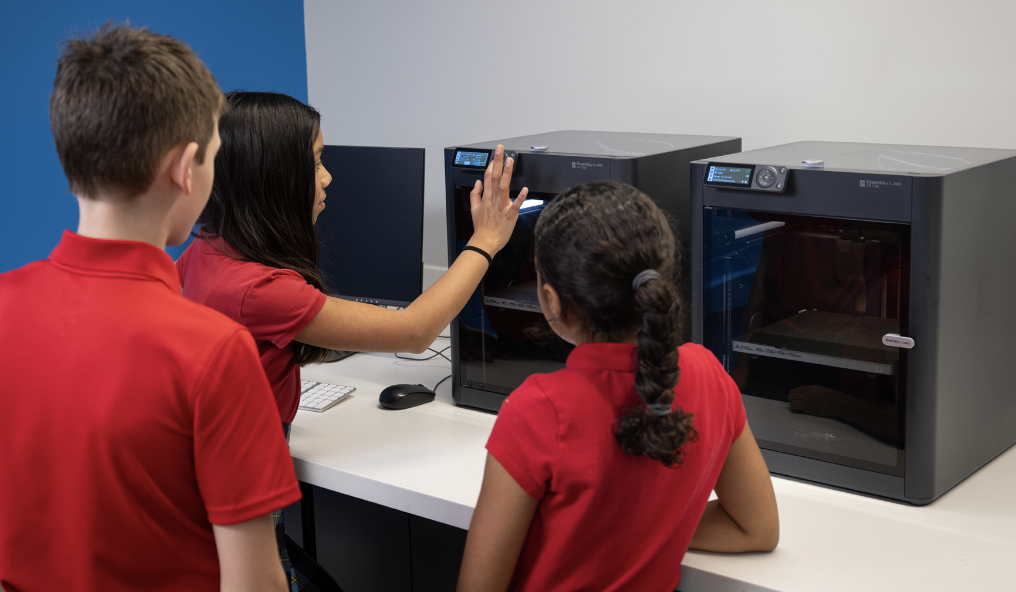
They also supported the Sinclair School of Nursing at the University of Missouri with $2 million for a new building and the NextGen Precision Health Institute with another $2 million. Through the family foundation, they funded projects like a dedicated STREAM Lab at Resurrection Catholic School and the 3-D printing lab for students at St. Agnes Catholic School.
 In K-12 education across the region, the Browns say, the most pressing constraint is capacity. “Schools with strong leadership and momentum are being stretched as academic expectations rise and student needs become more complex, driving increased demand for instructional coaching, targeted intervention supports, and cross-school collaboration,” Mike says. “This is not the moment to pull back from investing in human capital. Our experience shows that when donors strengthen the people and systems inside schools, the gains are greater and more durable.”
Today, the bulk of their giving is channeled primarily through the foundation, where education is the pillar. Its creation in 2020, they say, not only formalized their giving, it allowed them to be more intentional about setting priorities, measuring outcomes, and expanding support for work that was demonstrating real impact.
“Most recently,” Millie says, “consistent feedback from principals identified literacy as a critical need, leading us to extend our proven leadership model into reading and writing.”
That’s where the ground-level work of the foundation is being done. “The bulk of our charitable giving now is focused on our foundation, which is all about improving the educational outcomes of students,” Mike says. “So from grade school through high school and then even into the university.”
Millie’s hands-on role, says Weller, makes her a thought-partner to the school leaders. She participates in strategic planning meetings, mentors rising leaders, and even attends conferences and professional development alongside administrators and teachers to have a boots-on-the-ground understanding of the challenges and opportunities within the schools.
Millie works with Weller “hundreds of hours as we figure out what we’re going to do, what are the most impactful programs and so forth,” Mike says. “And so the leadership really goes to Millie for that.”
Accountability and Measurement
What sets their approach apart is a business-like rigor applied to philanthropy. Drawing from his executive experience, Mike emphasizes accountability. “There’s a lot of people who give money to charities, and we really appreciate that,” he says. “Through the foundation, we go into the weeds to understand what’s this money going to be used for and how are you going to measure success.” Working closely with Weller, they track data meticulously. “We’re not here just smiling and giving money,” he says. “We want to see what have you done. How much has it improved?”
The results speak volumes: markedly improved educational outcomes across supported schools, many parochial but also including charters. They partner with schools to hire superstar teachers and place them in classrooms, provide professional development, and foster collaboration to share best practices. “We find something that works here and then we try to export that best practice to another school and another school and another school,” Mike says.
The impact is exponential. Professional development programs in math, project-based learning, and more reach beyond directly funded schools to regional educators. Their giving has launched 41 teaching-leadership positions across 20 schools, and in the past year alone, more than 1,000 educators participated in their foundation’s professional learning opportunities. The foundation supports dozens of schools, reaching thousands of students while prioritizing institutions where leadership can drive change.
Millie underscores the urgency of investing in education amid rapid societal shifts. “The rate of change in our society and the world is moving so fast to prepare students for a world that’s still a lot of unknowns—it’s a difficult task” she says. “There’s a lot of social-emotional needs that we see today…Our students, our children, they’re in the hands of these teachers right here, right now, to move us forward. We need to invest in them.”
Their strategy also emphasizes lead giving to inspire others. “Any project we’ve ever done, we were lead givers,” Mike says, adding that true impact requires resources. Yet they stress inclusivity: even small contributions matter, as demonstrated in the Union Station campaign.
Looking ahead, scalability depends on additional support. At the foundation, “right now…90-plus percent of the funding comes from our family,” Mike notes. “To scale bigger, we would be more than happy to take donations from people, because the nice thing is we can show a winning report card.”
In an era when education faces unprecedented challenges—from rising costs to preparing students for an AI-driven future—the Browns’ deliberate, data-driven philanthropy offers a model of transformation. By investing deeply in teachers, innovation, and measurable outcomes, they are not just funding schools; they are building a stronger, more equitable Kansas City.
It remains, however, very much a work in progress.
“Philanthropy is never finished work,” Millie says. “We believe there is always room to do better—to ask harder questions, to align giving more closely with results, and to invest in approaches that build lasting capacity. That commitment to continuous improvement is what will ensure Kansas City’s philanthropic leadership continues to grow stronger over time.”
The good news? The work here has a solid foundation on which to build.
“Kansas City has long had a strong philanthropic tradition, and from what we’ve observed, that spirit remains very much alive,” Mike says. “What feels especially strong today is the willingness of donors to collaborate, to learn from one another, and to engage more deeply with the work they support.”
PUBLISHED DECEMBER 2025