
HOME | ABOUT US | MEDIA KIT | CONTACT US | INQUIRE
HOME | ABOUT US | MEDIA KIT | CONTACT US | INQUIRE
DRIVING CHANGE WHERE IT MATTERS
PUBLISHED FEBRUARY 2026
Amid the headwinds buffeting K-20 education in America are leaders, teachers and mentors who stand out as drivers of meaningful change. They innovate in instruction practices, champion equitable access, integrate emerging technologies thoughtfully, and lead institutions through enrollment and financial turbulence toward stronger, more resilient futures. Their work ensures that students not only graduate but thrive in a dynamic economy—equipping them with the tools to succeed in an increasingly competitive, tech-driven world. In that sense, they work not for their respective school and university missions—they work to better life for all of us.
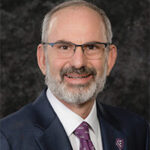 Marc Hahn
Kansas City University
At institutions more than a century old, leadership is rarely about reinvention. It is about continuity—protecting a mission while extending its reach. For Marc Hahn, president and CEO of Kansas City University, stewardship is measured by the lasting influence of the university and the communities it serves. Founded to address physician shortages in the Midwest, KCU has grown to educate physicians, dentists, psychologists, and biomedical scientists. Thousands of its graduates serve in hospitals, clinics, and research institutions across the country, reinforcing the university’s dual role as a workforce engine and a public-health partner. Under Hahn’s guidance since 2013, KCU has embraced the mission and expanded the reach, including a campus in Joplin, intentional efforts to broaden educational and community impact and making the institution more accessible while strengthening regional health-care capacity. Hahn’s path to leadership was been shaped by service in both medicine and the military; he was Chief of Pain Management Services at Walter Reed Army Medical Center and an anesthesiologist for Presidents Ronald Reagan and George H.W. Bush. Those experiences taught him that “decisions carry real consequences for people’s lives,” lessons that inform the way he balances operational priorities, institutional goals, and human considerations. They also reinforced his conviction that organizations move forward only when expectations are clear, people are treated equitably, and trust is earned and maintained. Medicine, then academic medicine, gave him a concrete perspective on impact: each student represents future patients and communities, and the quality of that education directly affects the well-being of those served. Legacy, for Hahn, is about people and purpose. “I hope I am seen as someone who is fair—not in the sense of being mediocre, but in being equitable in how I approach issues and people—so that we can move the organization forward together,” he says. Equally important is care: leaving “a positive difference for an organization that has existed for more than a century and has impacted the lives and well-being of communities from Kansas City to around the world.” Fulfillment comes from knowing he helped strengthen KCU’s impact—whether by expanding the number of health professionals educated or enhancing the communities they serve. His pride, Hahn emphasizes, resides in the team. Faculty and staff across campuses have expanded programs, launched new initiatives, and upheld the university’s long-standing mission. “That collective effort and shared commitment is what I am most proud of,” he notes. Growth, in his telling, is a reflection of shared dedication rather than institutional ambition alone. In the end, Hahn frames leadership as stewardship: advancing a mission that measures success in healthier communities and stronger institutions. His ambition is steady and shared—ensuring KCU’s enduring impact for generations of students, patients, and the communities they touch
 William King
Moberly Area Community College
William King did not set out to become an educator. “Education wasn’t plan A, B, C, D or E,” he says with a laugh. “It wasn’t in the top five.” His young son jokes that it was “Plan G—God’s plan.” King prefers a simpler explanation: somewhere along the way, life kept steering him back to young people who needed someone in their corner. Today, he teaches business and accounting at William Woods University and Moberly Area Community College, part of a career that has also included Columbia College, Stephens College and high school classrooms across mid-Missouri. He commutes long distances, helps run a thousand-plus-acre family farm, and describes himself as a “hired gun” who will work wherever students need him. Work-life balance, he admits, is not his strength. Purpose is. That sense of purpose traces back to a man with an eighth-grade education. King’s grandfather, D.T. “Gussy” Burkhart, was a farmer, nearly deaf in one ear, relentless in his work ethic and unflinching in his honesty. “He was the smartest man I ever met,” King says. “All lessons came the hard way.” Burkhart taught him that truth matters more than comfort and that character outlives credentials. When King once quit college, his grandmother told him she was disappointed. It hurt. It also recalibrated him. Before the classroom, King cycled through careers—automotive, retail, oil pipelines, farming—drawn to the hustle. When the energy sector faltered, he began substitute teaching in a small Missouri town near a state penitentiary. At first, it was a paycheck and a story. Then a student asked him a question that changed everything: “You got a dad?” King realized many of those teenagers did not. He had endured homelessness and hardship himself, but he’d always had one steady force—an old farmer who loved him. “I can’t be your dad,” he remembers thinking, “but maybe I can be your crazy uncle.” He hired an entire senior class to work on the farm after a tornado. He attended their weddings; they attended his. School became less a workplace than an extended family. His teaching philosophy is disarmingly direct: take care of the person first, then the student. Feed the hungry before the lecture. Tell the truth, even when it costs you. Early in his career, he lost a job rather than compromise his integrity. The week that followed—spent working alongside his dying grandfather cemented his mission statement: do the right thing because it’s the right thing. King has earned Teacher of the Year awards, but he shrugs at trophies. “I’m not after the award,” he says. “I’m after the reward.” The reward is the parent at graduation who whispers, “Don’t say a word—just give me a hug.” It’s the former student running a Super Bowl control room. It’s the quiet text from someone who made it through. In an era thick with policies and pressure, his north star remains simple: “How does this help the student?”
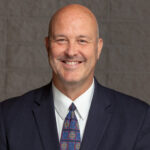 David Laughlin
Rockhurst High School
David Laughlin speaks about leadership less as an achievement than as a discipline of listening. Over a career rooted in Jesuit secondary education—and now in his second tenure as president of Rockhurst High School—that habit has shaped institutions without ever centering on himself. His formation began in a home defined by expectation rather than entitlement. “I grew up in a loving home, with parents who valued education and had expectations for me to study and work hard,” Laughlin says. Though neither parent attended college, “they expected me to,” an assumption he absorbed early. His schooling was public through middle school, followed by Mount Michael, a Benedictine high school outside Omaha, and then Creighton Prep., where Jesuit education entered his life decisively. At Creighton, Laughlin encountered a model of education that joined rigor with care. He recalls teachers who were “challenging but caring,” who took a genuine interest in his vocational direction and set “a high standard for integrity and purpose.” Over time, he says, “my life’s journey synthesized itself within the spirituality and purpose of the Society of Jesus,” rooted in the conviction that faith and giftedness should be placed in service of others. That conviction was tested when he sought to declare education as his major. Dr. Ed O’Connor, then dean of education, asked a simple question: “Why do you want to be an educator?” Laughlin wasn’t ready. O’Connor refused to approve the major. “We don’t need educators who don’t know why they want to be educators,” he told him. Laughlin was stunned, but the moment proved formative. “It really allowed me a moment to go deeper in my discernment,” he says. His career unfolded through a series of similar invitations to listen. After working at Creighton Prep, Laughlin was contacted by Rockhurst following the death of its principal in 1999. He initially declined. When asked again, he recognized what Jesuits see as a call to discernment. “It was about listening to what a community was looking for,” he says, “and reflecting on whatever gift set I thought might match that for the greater good.”Five years later, the pattern repeated at St. Louis University High School, where Laughlin served as president for 13 years. His return to Rockhurst followed the same logic—timing, mission, and fit. “It’s been a real privilege to be back,” he says. “It’s a special place.”As president, Laughlin insists the mission lives in others. “The core of Rockhurst is about the students and teachers, moderators, coaches and staff,” he says. That belief has shaped priorities around affordability and faculty support, including Rockhurst’s commitment to meet 100 percent of demonstrated financial need. The model exists, he says, at “the intersection of grace between families who sacrifice…and benefactors who allow us to achieve our purpose.” Legacy holds little interest for him. “I’m not concerned in any way nor do I spend any time thinking about my legacy,” Laughlin says. He returns instead to the Jesuit motto, Ad Majorem Dei Gloriam. “Our school is a miracle,” he adds. “Not one single student was ever required to attend Rockhurst and not one single benefactor was required to give a gift.
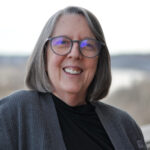 Kim Shankman
Benedictine College
After 16 years of teaching political science at a private liberal arts college in Wisconsin, Kim Shankman found herself searching for a higher-education pathway marked with a deeper meaning. She found it with her transition to Benedictine in 2002 as Dean of the College, a role that aligned her expertise with the mission of a Catholic institution, and it carried over into her own academic contributions beyond the classroom. Her study for the Cardinal Newman Society, for example, explored the ways general education at Catholic colleges emphasized preserving philosophy and theology as integrative disciplines to provide a coherent, unifying vision amid secular fragmentation. More recently, her work explores the interplay of reason, truth, and public life, including presentations on “Truth and Democracy” at the University of the Sacred Heart in Milan and “Human Capital in Caritas et Veritate” at Columbia University in New York. Under her stewardship, Benedictine has experienced remarkable growth, with enrollment and faculty nearly tripling. Physical campus expansions, new buildings, and programs like the Center for Service Learning, which supports service projects integrated into class assignments, underscore a commitment to inclusion and holistic formation. Other new programs include engineering, a classical architecture program and master’s degrees in Classical Education, to prepare educators in faith-informed classical traditions—echoing the Benedictines’ historic role in cultural transformation through the liberal arts. Of course, this rapid expansion requires adaptation, so recently Shankman assumed the title of Provost and added a Dean of Faculty position. “The reason is growth,” Shankman explained at the time. “We decided to add this position to amplify the faculty voice so that it would not be lost as the college expands.” Shankman champions education that nurtures the whole person, equipping graduates to engage public life with integrity and address societal challenges like polarization and civic disengagement. Her leadership has positioned Benedictine as a beacon for faith-driven scholarship and community impact in the region. A personal trial in 2013—the severe traumatic brain injury her son John sustained in a vehicle accident—deepened her appreciation for human dignity and God’s mercy, and she found the widespread support she witnessed from students and colleagues deeply moving. She frequently notes how such challenges reveal the essence of humanity: “John’s dignity and worth come not from what he can do, but from who he is—a child of God.” This experience has subtly reinforced her advocacy for the college’s mission to educate within a community of faith and scholarship. Shankman’s career integrates rigorous academics, Catholic identity, and resilient service, inspiring future leaders to transform culture through faith and wisdom
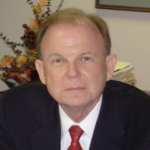 Phil Watlington
University of St. Mary
There is a particular cadence to the way Phil Watlington talks about numbers. Not as abstractions. Not as columns on a ledger. But as a narrative—evidence that, when read honestly, tells the truth. Long before he stepped into a classroom at the University of Saint Mary, Watlington learned that truth carried weight. In school, teachers impressed upon him the importance of doing the research before speaking, of backing up assertions with facts rather than “conventional wisdom.” In his accounting career, he watched boardroom dynamics where opinions filled the air—until the chief financial officer began with what the numbers showed. Trends. Trade-offs. Consequences. “When he spoke, you knew you should listen,” Watlington recalls. The authority came not from volume, but from disciplined inquiry. That ethic shaped a career in accounting and finance. Attention to detail was not mere fastidiousness; it was moral imperative. Providing false or incomplete information, he understood, could harm people, organizations and communities. “The devils are certainly in the details,” he says, “but so are the angels.” For him, ethical leadership begins with informed decision-making—especially when decisions affect employees and families whose futures hang in the balance. His pivot to higher education came unexpectedly. While staying at a Marriott in Moscow during a European trip, an email arrived from a provost at a small university. An instructor had fallen ill; would Watlington consider filling in for a semester? He had taught occasionally as an adjunct, but full-time instruction had not been the plan. Back home, a single meeting changed that. He left energized by the prospect of helping students understand how businesses truly function—and how value is created when leaders think critically and act responsibly. In the classroom, he frames accounting not as compliance but as stewardship. Finance, properly understood, is an ethical discipline. Leaders, he tells students, are bound to seek informed solutions before making choices that ripple outward. And they must do so “with respect, grace and humanity.” Today, he sees higher education confronting a new inflection point: artificial intelligence. Like the personal computer, the Internet and the smartphone before it, AI will reshape work and social norms. Faith-based institutions, he believes, have a special role in guiding students through technological change without surrendering relational depth. How will constant interaction with machines affect empathy? Community? Mental health? Those questions deserve as much attention as code and circuitry. At the same time, he notes, the workforce itself is evolving. Data centers, skilled trades, technologically sophisticated manufacturing—all will demand informed, adaptable leaders. What sustains him is simpler: Watching students grow. Seeing resilience. Believing, without hesitation, that the next generation will produce capable leaders. If one’s legacy is modest—a remembrance for helping others think clearly, decide wisely and serve something larger than themselves—then for Phil Watlington, that is enough
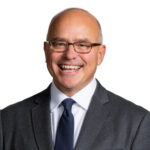 James Smith
Friends University
James Smith did not arrive in higher education as a prodigy or a straight-A student. He arrived curious, observant, and eventually transformed by learning itself—a transformation that has defined his career at Friends University and beyond. Education mattered early in Smith’s life. His parents believed deeply in schooling, and his older sister became a teacher, shaping his respect for the profession. In high school, two English teachers pulled him in opposite but complementary directions. One, Ed Tyrell, was demanding and exacting; the other, Bob Ludwig, was “cool” and approachable. “Because of them,” Smith says, “I decided to seek a degree in education.” At the time, that choice was aspirational. Smith graduated high school squarely in the middle of his class—“the definition of average,” as he puts it. College changed everything. During his sophomore year, Smith took two courses at Friends University that reordered his sense of purpose. One was taught by Dr. Howard Macy, a Harvard-trained Old Testament scholar. “He was a true scholar, and he made me want to be a scholar as well,” Smith recalls. The other was led by Dr. Richard J. Foster, a professor of spiritual formation whose influence was equally profound. “Richard was a man who lived deeply with God,” Smith says. “He taught me how to grow in my own spiritual life.” That season ignited a passion for learning Smith had never experienced. “I began to believe that learning is a way we honor and glorify God,” he says, “so we should do it with all of our might.” The results were immediate. After arriving in college as an average student, Smith earned nothing but A’s from his sophomore year forward. More importantly, he caught a vision that never faded: “All I could think about was, ‘I want to teach this someday.’” At Foster’s urging, Smith applied to Yale Divinity School—a notion that would have seemed “comical” just a few years earlier. He was accepted, and at Yale his love for scholarship deepened. His mother took on a second job so he could focus entirely on his studies. “I am so grateful to her, to this day,” he says. After Yale, Smith faced a choice between doctoral study and pastoral ministry. He chose ordination in the United Methodist Church, but soon discovered that teaching—not preaching—was his clearest calling. In 1990, Friends University offered him a role that fit perfectly: chaplain and part-time assistant professor. Over the decades that followed, Smith’s scholarship and writing—especially The Good and Beautiful series—led to the creation of the Apprentice Institute for Christian Spiritual Formation and Friends University’s first doctoral program. Administrative leadership followed, but teaching never receded. Today, amid challenges in higher education, Smith is most attuned to student mental health and spiritual formation. He sees a generation “hungry for God,” showing up voluntarily in chapel and worship, and eager for meaning
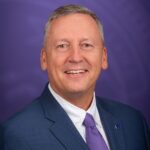 Richard Linton
Kansas State University
Richard Linton took the helm at Kansas State University in 2022 determined to restore its land-grant roots amid broader higher-ed pressures. The results are striking: After 10 years of enrollment declines, K-State posted its fourth-largest freshman class ever last fall. Research grants soared 22 percent—leading the nation in that metric—and fueling a $2.3 billion annual economic impact on Kansas. It has exceeded a $100 million philanthropic goal, captured more than $350 million in state/federal support, and Linton himself visited communities in all 105 counties. “We’re stronger, more competitive, with a better reputation and established brand,” he says, distinguishing K-State among Regents institutions with that engagement. A centerpiece of his work is the $210 million Agriculture Innovation Initiative, K-State’s most complex building project ever. Debt-free before completion, it integrates facilities for agronomy, grain/milling science, baking, animal science, food/dairy, and a competition livestock arena. “It supports research innovation in the No. 1 economic sector in the state—ag and food systems,” Linton notes, enhanced by proximity to the National Bio and Agro-Defense Facility and by his 15 years of USDA partnerships at Purdue. It re-imagines the land-grant model for future students and long-term economic growth. Linton’s leadership foundation was laid in Delaware by his father, a PhD chemist at DuPont for 35 years and All-American soccer player. “No question, my dad was my greatest influence in every facet of life,” he recalls. “He was an incredible motivator…and he made me who I was as a person.” Key takeaway: “You never had to be the smartest person in the room, but if you could work harder than anyone else and bring people together to go after big things, that’s been a big part of my career.” That mindset—hiring smarter talent, giving 100 percent—shaped his path through sports, studies, and leadership. Mentors locked in his academic calling. A microbiology professor back at Virginia Tech “completely changed my life,” he says, guiding him from a career track in industry and into research/teaching. “He encouraged me to take an academic route…because I cared about people, and would be a good mentor,” Linton says. At Purdue, another mentor helped him outline a 20-year plan to qualify for a university presidency, leading him through advancing leadership roles at Purdue, Ohio State, and N.C. State. K-State, then, fit seamlessly: a people-focused land-grant powerhouse in agriculture, and it had been one of his five long-term targets on that list two decades earlier. “I thought K-State was a place I needed to advance my leadership,” he says. “And it needed someone to put it back on track relative to its land-grant mission.” Though diagnosed with cancer in 2023, he never wavered. “Not even for a moment did I think about hanging it up,” Linton says. Seven weeks of commuting for treatment in Kansas City tested him, but “my work during that time kept me alive,” he says. The K-State family supported him; his absence built team resilience: “They stepped up and led in a different way,” he says, and on a personal level, it made him “far more strategic, not wasting time” when making important decisions
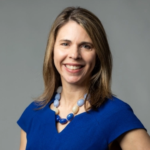 Jennifer Lundgren
University of Missouri-Kansas City
As provost and executive vice chancellor at the University of Missouri-Kansas City, Jennifer Lundgren stands as a beacon of transformative leadership in higher education. Since assuming her role in 2020, she has steered the institution through unprecedented challenges, fostering academic excellence and community impact. Lundgren’s journey at UMKC began in 2006 as an assistant professor in the Department of Psychology, where she advanced to department chair, associate dean of the College of Arts and Sciences, dean of the School of Graduate Studies, and interim dean. A clinical psychologist by training, she holds a bachelor’s degree from Oklahoma State University and a Ph.D. from the University at Albany, with specialized postdoctoral work in weight and eating disorders at the University of Pennsylvania. Her research on the interplay of eating behavior and sleep has yielded numerous publications, and she’s a fellow of the Academy for Eating Disorders and the Obesity Society. She’s also a past winner of UMKC’s Chancellor’s Early Career Award for Excellence in Teaching. As she moved up the administrative ranks, though, she inevitably distanced herself from the classroom. That changed not long ago when she returned after seven years on a limited basis, only to enter a different academic world, one marked by profound shifts in student experiences. Much has changed for students starting their journey today, she observes, citing academic gaps from pandemic disruptions, social isolation, and the influence of digital culture like TikTok on information absorption. This insight drives her oversight of initiatives that bridge education and real-world readiness, positioning UMKC as a vital engine for regional workforce development. Central to her vision is the Professional Career Escalators program, which connects students across majors to experiential learning, mentoring, and scholarships in high-demand fields: health care, education, business and engineering, and law and justice. Aiming to support up to 1,500 students, it curates personalized pathways from aspirations to careers, including internships and volunteer opportunities with local employers. “Kansas City won’t be successful unless we have students stay in our community and contribute to the community,” Lundgren emphasizes, underscoring the program’s role in retaining talent and fostering mentorship. Complementing this is RooMentum, a seamless transfer pathway with area community colleges, ensuring coordinated advising and support for smooth transitions to UMKC. Lundgren has also championed expansions in critical areas, such as the Artificial Intelligence Workgroup for ethical AI integration in academics and operations, and Strategic Data Capacity enhancements for evidence-based decision-making. In addressing broader societal shifts, Lundgren highlights UMKC’s entrepreneurial spirit and the vital link to this region. As she noted at last year’s Enactus conference, “Kansas City has long been a place where bold ideas take shape and where people work together to solve
real-world problems.”