
HOME | ABOUT US | MEDIA KIT | CONTACT US | INQUIRE
HOME | ABOUT US | MEDIA KIT | CONTACT US | INQUIRE
Today’s Champions of a Healthier Tomorrow
PUBLISHED FEBRUARY 2026
In a region as dynamic as Kansas City, health care never stands still. New technologies reshape diagnostics, workforce demands evolve with each generation, and the very definition of wellness expands to include mental, preventive, and community-wide well-being. Yet through every shift, one constant endures: the dedicated professionals who make our regional health system not just functional, but truly life-affirming.
This marks the 23rd year we’ve spotlighted Heroes in Healthcare, and the stories remain as compelling as ever. We’ve now celebrated more than 460 individuals across administration, clinical roles, support services, lifetime contributions, and volunteer efforts. What ties them together isn’t a single heroic act, but a sustained commitment to something larger: ensuring that every resident of this metro—from the newest arrival to the lifelong native—can count on compassionate, high-quality care that elevates daily life.
These 21 honorees for 2026 embody that promise in diverse ways. They secure the infrastructure behind seamless patient experiences, innovate therapies that rewrite outcomes, deliver bedside care that restores dignity during vulnerability, and build the behind-the-scenes systems that keep our hospitals, clinics, and research centers thriving. Their work doesn’t merely treat illness; it safeguards futures, strengthens families, and reinforces the sense of security that lets our community pursue
opportunity with confidence.
Kansas City has long punched above its weight in health care, and that’s no accident. It’s the product of talent drawn here, nurtured here, and given room to excel. To the nominators who bring these stories forward, the organizations that foster such excellence, and especially to this year’s Heroes: thank you for reminding us what quality of life really means. In a world of constant change, your steady hands make all the difference.
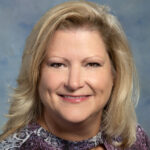 Beth Lee
Saint Luke’s Hospital of Kansas City
For 42 years, Beth Lee has walked into the same place with the same conviction: that the sickest patients in the region deserve a team ready to “move mountains” on their behalf. As director of Critical Care at Saint Luke’s Hospital of Kansas City, she oversees units that care for “the sickest of the sick,” patients whose lives hinge on speed, precision and coordination. “It’s great work, getting patients who need our services here,” she says. “Being available to help them swiftly, with the right people involved—that’s a very fulfilling part of what I do.” Born and raised in Kansas City, she was influenced early by a grandmother who was a nurse; volunteering as a candy striper sealed it. “I just loved helping people.” She graduated from Northwest Missouri State University, then headed to St. Luke’s School of Nursing and went to work for the hospital right after. Four decades-plus later, she says, “my car doesn’t know how to go anywhere else. I’ve never felt there was a place that could mean more satisfaction.” The ICU was an early and enduring fit. “The detail, the technology, the complexity in figuring things out—that taps into my fulfillment,” she says. In 1985, she was among the nurses supporting the hospital’s first heart-transplant efforts. “Any time you’re doing something for the first time, there’s research and protocols and longer ICU stays,” she says. Since then, she has helped care for more than 1,000 transplant patients. “Seeing all of that has been so fulfilling.” Today, though no longer at the bedside, she stays close. Transitioning away, she admits, “is a true loss.” The gratitude of patients and families is different now, but no less real. “To know we’ve done our best,” she says, “and to uplift the family—whether there’s celebration or meaningful time at the end—that’s why we’re here.”
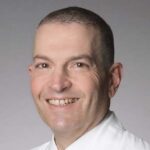 Mark Lieser
Research Medical Center
Mark Lieser likes to joke that his career path was forged in a household of self-described hypochondriacs. Doctors were a constant presence; medicine, a familiar language. By first grade, he had already decided he wanted to be one of them. What stuck wasn’t illness itself, but the idea that helping people at their most vulnerable time might be the most meaningful work a person could do. That instinct found its purest expression in trauma surgery. Lieser was drawn to the immediacy: the clarity of a problem that could be confronted directly, with skilled hands and decisive action. “You don’t always have time for another test,” he says. “Sometimes you have to make very sudden decisions based on limited information.” For him, trauma represents the highest-stakes version of medicine—patients arriving on the worst day of their lives, outcomes shaped in minutes. His journey took him across the country—training in Michigan and Minnesota, early work in Texas trauma centers—before Kansas City offered an opportunity too compelling to ignore: building an American College of Surgeons–level trauma program at Research Medical Center from the ground up. Since 2017, that mission has defined him as a physician. The achievement he values most isn’t a single save, but the system itself: refined protocols, a strong multidisciplinary team, and the hospital’s growing capacity to meet extreme need with coordination and consistency. That need is stark. Research sees penetrating trauma rates far above national averages, putting Lieser and his colleagues on the front lines of gun violence. Having served in Iraq with the Army, he sees a grim parallel. Moments of affirmation come each May during EMS Week, when the trauma team honors one “Great Save” for the collaborative effort that pulled a patient through devastating injury. Those cases stay with him. So do the others. Trauma surgeons, Lieser says, don’t leave their work at the hospital.
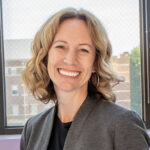 Catherine Satterwhite
Kansas City University
Catherine Satterwhite’s reach—in local, national and global health–can be found in the millions of calls placed to the national 988 behavioral-health crisis line—an initiative she helped promote and operationalize working in the Department of Health and Human Services. It’s there in the early rollout of the HPV vaccine, when she was part of the team advancing a cancer-prevention vaccine—a public-health breakthrough that will quietly save lives for decades. And it’s there now at KCU’s Center for Population Health and Equity, shaping how future physicians, dentists and psychologists understand the forces that determine whether their patients can truly be healthy. “When we all work toward a common good, it can be impactful,” she says. But she’s quick to add that impact rarely arrives as a single sweeping victory. “If we don’t celebrate the small wins, we lose sight of the big picture. The small increases are sometimes more powerful than waiting 10 years to take one giant step.” That philosophy was tested during a previous stint as regional health administrator with HHS, deeply enmeshed in the federal pandemic response for Kansas, Iowa, Missouri and Nebraska—balancing vaccine distribution, public education and transparency in a climate of deep division. From that experience, she learned that “there isn’t a single right answer.… What’s missing in the national discourse now is the ability to come together and compromise with science as your foundation.” Her role, as she defines it, is to “listen and try to identify that common ground…something we can do right here, right now.” At KCU, she sees a multiplier effect in preparing clinicians to think beyond the exam room. If one student better understands the social and economic realities shaping a patient’s life, she says, “that can have a ripple effect for thousands.” That systems-level view traces back to her upbringing in suburban Gardner. With a grandmother once named Citizen of the Year and a grandfather on the City Council, she grew up seeing community as interconnected. “Service as civic engagement—we’re all in this as a family going beyond the nuclear family,” she says.
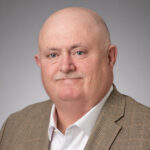 Richard Bowers
HCA Midwest Health
Small-town values? Heck, when Richard Bowers was growing up, a trip to town meant visiting nearby Smithville. But in a burg of 95 souls, he learned early that service isn’t a slogan; it’s a reflex. “In a small community like that, you learn quickly that neighbors take care of one another,” he says. With law enforcement and health care running deep in his family, responsibility and integrity were less career choices than inherited expectations. For more than 35 years with HCA Midwest Health at Research Medical Center, Bowers has translated those expectations into a vocation that most patients will never see but always rely on. He arrived not fully grasping the reach of hospital safety and security. Over time, he has come to understand its quiet centrality. “Every day, we show up for Kansas Citians, our colleagues, physicians and community partners when they need us most,” he says. “Being part of that support system has kept me energized and committed.” He thrives on change—an asset in a field reshaped by evolving threats, regulatory demands and community crises. He has watched the system’s approach mature into an enterprise-wide strategy: centralized emergency operations, specialized incident-response teams, facility hardening and strategic partnerships. “Our approach is data-driven and evidence-based,” he says, “ensuring operational readiness and resilience in the face of disasters and emerging risks.” His portfolio spans the visible and the unseen: supervising security officers, aligning physical and technology security with IT partners, serving as liaison to law enforcement and emergency managers, and overseeing the environment of care—from fire alarms to life-safety compliance. Preventing workplace violence, managing access, mitigating hazards—much of it unfolds behind the scenes. “Our goal is for every colleague to arrive at work and leave knowing they are in a safe environment,” he says. Bowers does not treat patients, but he clears the path for those who do. “When families enter our hospitals during vulnerable moments, they deserve to feel secure and supported.” The husband, father and grandfather measures his work against that standard. Recognition, he insists, “is never about one individual. It reflects decades of planning, preparation and response”—and a commitment to care for others as if they were his own family
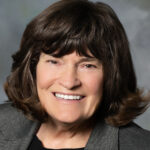 Terry Aldrige
Saint Luke’s South Hospital
Terry Aldrige has devoted 50 years to Saint Luke’s Hospital Kansas City, joining the laboratory in 1975 after earning her medical technology degree from what was then Central Missouri State and completing her clinical training at Saint Luke’s—where she has remained ever since. During her tenure, laboratory medicine has undergone profound change. Early processes were entirely manual: samples loaded individually, patient IDs handwritten, and spectrophotometer curves plotted by hand on paper. “It was a different world,” Aldrige recalls, yet she cherished “the hands-on chemistry and looking at things under the microscope.” That meticulous, intimate work deepened her passion for the field and its critical role in patient care. The hospital’s mission-driven culture has been the foundation of her long service. “It was like a big family,” she says. “There was respect for all employees.” This collaborative, respectful environment continues to inspire her commitment to excellence. Today, as manager of lab services and overseer of point-of-care testing, Aldrige embraces the role’s variety and constant problem-solving. “I’ve always loved working puzzles,” she notes. Her responsibilities include training staff, troubleshooting equipment, optimizing workflows, and ensuring accurate, timely results. Her primary focus remains supporting front-line caregivers: “If I can enable those roles to better take care of the patient through education and guidance, then the patient has a better opinion of the lab.” Her contributions extend to small but meaningful acts of service—guiding a lost visitor, adjusting her schedule to help a nurse, or simply noticing who needs assistance. “We are all equally important for the great patient experience that is Saint Luke’s,” she says
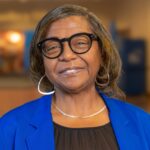 Maxine Draper
University Health
In a health system with nearly 4,800 employees and more than 13,000 patient admissions each year—and many times that in outpatient visits—the first impression rarely comes from a surgeon or specialist. At University Health, it often comes from Maxine Draper. She is the lobby ambassador at the system’s flagship campus, Truman Medical Center—the person many patients and families first encounter at the door, sometimes on one of the hardest days of their lives. Draper did not set out to be in a health care setting. Born in Mississippi and raised in Kansas City from age 6, she spent a year at the Penn Valley campus of Metropolitan Community College “trying to figure out what I wanted to do.” That quest led to a 20-year career in banking, finishing as a legal assistant before consolidations and technology shifts eliminated her job. “I knew I wanted something different,” she says. “Maybe it was just time for a change.” An opening at Truman Medical Center offered one. Over the ensuing two decades, she has worked in data entry, patient access in the emergency department, multiple clinics and wound care. For the past decade, she has served in the lobby—a role she calls her favorite. Her duties sound simple: answer questions, provide directions, locate wheelchairs, call rapid response if needed. In practice, they require instinct and empathy. “A lot of people going to a hospital come in upset,” she says. “It makes me feel good to know I’m doing something to help calm them down.” She sees the full arc of care. Patients arrive anxious about surgery; months later, she may watch them return for physical therapy, walking on their own. “Sometimes they’re not able to walk when they come in,” she says. “To see the progress they make—it’s amazing.
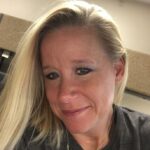 Christy Shipps
AdventHealth-Lenexa City Center
Christy Shipps still remembers the weight of a moment that changed everything: a Med-Act ambulance parked at Oak Park Mall, and a paramedic who didn’t rush a curious seven-year-old away. “He spent two hours showing me everything on the ambulance and how it worked,” she says. “From that point on, I knew I wanted to take care of people.” Decades later, that instinct—to slow down, to explain, to stay—has become the throughline of a nursing career defined by presence. That sense of calling carried Shipps into emergency medical services in 1992, when she became an EMT and interviewed with that Johnson County Med-Act. When she shared the mall story with the director, fate completed the circle: “As luck would have it, the person interviewing me happened to be that paramedic—and he remembered me.” It was an early lesson in how small acts of kindness ripple outward. Emergency care would shape both her professional and personal life. On a Prairie Village call, she met Kyle, a police officer. They’ve been together ever since, celebrating their 30th wedding anniversary last month. “We were running back-to-back calls,” she recalls. “That’s how our lives have always worked—showing up when things are hard.” Shipps’ career evolved deliberately. After Med-Act, she earned a bachelor’s degree in health care, worked in the KU Medical Center emergency room, and pursued advanced certifications before committing to nursing. She chose the ICU at Overland Park Regional to build depth and discipline. “I wanted a good foundation,” she says, “and to really learn all I could.” But the ER kept calling her back—eventually leading her to AdventHealth, where she helped open the new satellite hospital. “I have never felt more supported and seen,” she says. “The administration is one of the best I’ve ever worked for.
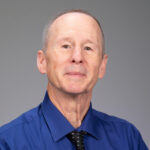 Michael Graves
NKC Health
Michael Graves didn’t begin his career in health care, but leadership—and responsibility for others—was always part of his wiring. Before he ever put on scrubs, he managed a manufacturing plant with more than 100 employees, learning early that systems matter, people matter more, and that leadership carries consequences. When that company was sold and began to unravel, Graves felt a pull toward work that was “more directly aligned with caring for people,” a shift inspired by close family friends in medicine who modeled service as vocation rather than occupation. Nursing gave him that alignment—and ultimately brought him home. After training and early practice in orthopedics, Graves returned to North Kansas City Hospital, the same place where both of his children were born. Nearly three decades later, NKC Health has become the setting where his clinical grounding and operational instincts intersect daily. Though he never planned to return to management, he recognized something familiar: “Effective healthcare leadership…is about creating structure, supporting teams, and ensuring safe, reliable outcomes.” Now serving as senior director of cardiovascular services and staffing operations, Graves oversees some of the hospital’s most complex and high-acuity environments. His impact is often invisible to patients—but not abstract. Staffing decisions, unit readiness, and coordination across services can mean the difference between delay and decisive care. “You’re not always touching the patient,” he notes, “but you’re doing a lot for them.” One defining moment cemented his sense of calling far beyond any job title. When his young daughter suffered a severe asthma attack, Graves found himself performing CPR on his own child. “In that moment,” he says, “I knew exactly why I had been led into nursing—to be prepared, present, and accountable when it matters most.”
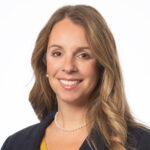 Miriam Crandall
Children’s Mercy
There’s no mystery on how Miriam Crandall got here; “I’ve wanted to be a nurse since I was very young,” she says, “because I saw it as a way to serve others when they need help the most.” That instinct to care was seeded long before nursing school, rooted in her upbringing in rural Missouri and shaped by the example of her parents. They founded a non-profit adoption agency the year she was born and devoted their lives to helping children in the most dire circumstances find a family. “My dad took each of his children with him when he traveled to orphanages internationally so we could gain an understanding of the plight of the orphan,” she recalls. Those experiences were “eye-opening” and forged the heart that still guides her work at Children’s Mercy. Crandall earned her BSN from Truman State University in 2003 and began her nursing career in a community Emergency Department in northern Missouri. “There were nights I worked with one other nurse overnight, and we learned to handle whatever came our way,” she says. Following that, she and her husband volunteered in an orphanage in Romania—a time that confirmed their shared calling to adopt and serve. When she returned home, Crandall knew she wanted to continue working with children in an environment equipped for the most critical needs. That led her to Children’s Mercy, one of the region’s foremost pediatric hospitals, known for world-class specialties, trauma care, and a family-centered approach to healing. As a pediatric institution dedicated exclusively to children’s health—seeing more than half a million patients annually—Children’s Mercy provides care from birth through young adulthood, integrating clinical excellence with translational research and innovation. Serving in critical care and as a forensic nurse, Crandall has been called to testify many times, advocating for vulnerable children within the justice system. “When there are good outcomes in court, I feel very grateful that I get to be a piece of the puzzle that brought some social justice to the child,” she says
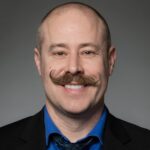 Adam Olberding
The University of Kansas Hospital
At the region’s biggest medical center, Adam Olberding leads one of the largest and most visible teams as senior director of nursing for critical care and emergency services. In many aspects, it’s the front door of the organization. From the department’s high-volume chaos to the quiet vigilance of critical-care units, he oversees teams that handle the medical center’s highest-acuity cases. At the core of his leadership is a conviction he lives out daily: “Each nurse has an opportunity to make someone’s day better each day and I get to help do the same almost every day,” he says. What sets apart the best critical care and emergency nurses? The great ones, he says, “are kind, curious, motivated, competitive and are people who have failed and come back from failure at least once in their lives.” The constant variety of cases ensures that no two days are the same—yet every shift offers that chance to brighten a patient’s world. Olberding’s path to this expansive role unfolded almost entirely within the health system. A Kansas native and KU nursing-school product, he spent six years at the bedside in the surgical ICU before stepping into management, eventually leading the Medical Transplant Intensive Care Unit and filling interim roles across critical care. When an interim leadership spot opened in the Emergency Department, he took it on temporarily, then committed full-time. “The appeal was the Emergency Department is the front door of the hospital with one of the largest teams and the highest patient-contact opportunity—and I had never done something like this before, so it was exciting.” The welcoming interdisciplinary staff sealed the decision. Leaving the transplant ICU proved the hardest part—“I loved and still do the people and the patients from that time in my life”—but his current senior director position has brought everything “full circle,” reuniting those cherished areas under one umbrella.
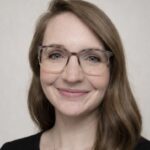 Reba Millam
Lee’s Summit Medical Center
Her career has not, Reba Millam will tell you, produced a single defining moment that validated her career choice in nursing. Rather, she says, “any time I see a patient’s deficits improve in real time, it reminds me exactly why I entered the field of medicine.” As stroke and neurology program manager at Lee’s Summit Medical Center, those moments—watching someone regain function or clarity before your eyes—are both powerful and reaffirming. “Those everyday interactions with patients and families, each challenge worked through together, have had the greatest impact on me and continue to drive my passion for delivering exceptional care.” Millam’s path to nursing wasn’t straightforward. Growing up in Norborne, Mo., she spent summers at a Lake of the Ozarks camp that instilled an early love for service. “That environment taught me that using your gifts to care for others doesn’t always happen in obvious or public ways,” she says. “Some of the most meaningful acts of service occur quietly, behind the scenes, through consistency, compassion, and a willingness to show up for people when they need it.” After earning a bachelor’s degree in recreation management, she never imagined she would enter health care. “Not long after starting my first career, I felt an unexpected and persistent pull toward nursing.… From the first day of nursing school, I knew I was exactly where I was meant to be.
I’ve never looked back.” Millam began on the surgical floor, wanting to witness patients’ journeys from illness to recovery. An emergency room externship had intrigued her with its fast pace, but she wanted to see outcomes through to the end. When the Ortho/Neuro/Spine unit opened in 2018, she transitioned there and later became a charge nurse, cherishing the chance to care for patients and support her team.
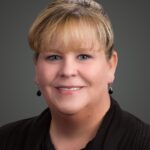 Dennie Anderson
Liberty Hospital
For Dennie Anderson, one of the most affirming moments in her career came not from a clinical milestone, but from a conversation. A patient and family once told her that what mattered most wasn’t just the medical care. “It was feeling listened to and supported during an uncertain time,” she recalls. Seeing how coordination, communication, and advocacy changed both their experience and outcome was a powerful reminder that “healthcare is about more than treatment plans. It’s about people.” That perspective was shaped early. Anderson grew up moving frequently as the daughter of an Army serviceman, an experience that taught her adaptability, resilience, and how to connect quickly with people from all walks of life. As a middle school student, she volunteered as a candy striper at a hospital in Lincoln, Nebraska. “It confirmed that I loved being in an environment where I could help people,” she says—an early signal that caregiving would become her calling. Nursing ultimately became the vehicle for expressing that instinct to care, but it was care management that truly resonated. “My team can influence care in ways that truly shape the patient and family experience,” Anderson says. As a care manager, advocacy sits at the center of the work—ensuring care is not only clinically excellent, but “compassionate, respectful, and responsive to individual needs.” That philosophy has anchored her at Liberty Hospital for more than two decades. Anderson has spent 26 years there, beginning on the Skilled Nursing Unit before moving into Review Services and Utilization Management, eventually stepping into leadership. She also was part of the team that helped implement Care Management, a collaborative practice that brings together patients, caregivers, nurses, social workers, physicians, payers, and community partners.
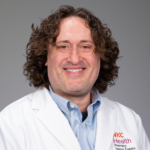 Denny Fugate
NKC Health
Denny Fugate comes from a place that taught him early what it means to care for others. He describes himself, without irony, as “a true Appalachian Hillbilly,” raised in Rowdy, Kentucky—a town of fewer than 300 people. The lessons that shaped him didn’t come from institutions, but from people. “Four exceptional women have shaped my outlook on life,” he says, beginning with his grandmother Opal and aunt Doris, whose “never-ending patience and kindness” set the tone for everything that followed. Health care appealed to Fugate because it offered purpose. “Healthcare provides an opportunity to make a difference in the lives of others,” he says plainly. Pharmacy, in particular, fit both his aptitude and curiosity. It aligned with “my educational strengths of chemistry and mathematics,” while also feeding his interest in “business and innovation.” He adds, with a smile, “Yes, I have always been a nerd.” At NKC Health, Fugate leads a pharmacy operation that has steadily expanded beyond traditional roles. The organization, he says, “supports pharmacy stepping beyond traditional roles, allowing our team to provide patient care that optimizes medication therapy and promotes health, wellness, and disease prevention.” That evolution includes precision medicine, where pharmacists apply pharmacogenomic testing, therapeutic drug monitoring and dose optimization to improve outcomes and reduce adverse events. Much of Fugate’s work happens outside patient view, but its impact is deeply felt. His days revolve around “enhancing operational efficiency, optimizing labor management, and streamlining supply chain strategies,” all with the aim of serving “as both a clinical and financial driver for the health system.” Fugate doesn’t point to a single defining moment in his career. Instead, meaning shows up daily—in “smiles and kind words shared by patients, nurses, physicians, and peers,” he says.
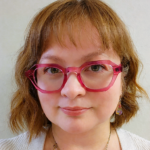 Vanessa McMillan
University Health
Vanessa McMillan’s earliest lessons in health care weren’t learned in a classroom or hospital corridor. They came in her abuelita’s house in Fort Worth, amid dancing, games, and the steady rhythm of a Mexican family that understood something simple and profound: You take care of people. “My culture centers around taking care of others,” she says. “My mom was always taking care of people.” When city workers came to read a utility meter, lemonade waited in the Texas heat. In Midwest winters, there was hot cocoa. “My family taught me from a young age that no job was too small, and everyone was deserving of kindness.” That ethos resurfaced when nursing became her second career at 30. Living in Galveston and “surrounded by nurses,” she felt drawn to something more purposeful, and found a home for her skills in Kansas City. Her path eventually led to University Health—a move sparked when a friend said, “If I made a job for you, this would be it.” The mission and values, McMillan says, “just seemed like the place I needed to be.” She loved bedside nursing, but a system-wide committee role revealed broader impact. A conference presentation linking gun violence to social determinants of health propelled her toward a master’s degree and program management. “In order for staff at the bedside to be successful in their job, they had to have good, strong foundational processes,” she says. “I wanted to help shape those foundations.” Today, as a critical-care team leader, she extends her reach—supporting stroke-certification efforts because “everyone deserves the best care,” and co-leading the Hispanic Employee Resource Group because “feeling seen is important.” Inclusive teams, she believes, reduce burnout and improve outcomes. “I get to help support our staff to make our community healthier and better,” she says. “What could be more rewarding than that?”
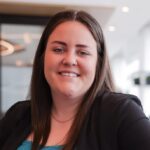 Miranda Coffey
 Blue Cross and Blue Shield of Kansas City
Miranda Coffey didn’t set out to be a hands-on health-care provider—she set out to be a catalyst for healthy communities. Today, as Community Health Supervisor for Blue Cross and Blue Shield of Kansas City, she shepherds a team of community-health workers who turn systemic challenges into actionable support for the city’s most vulnerable residents. “CHWs are trusted members of the community who understand these realities because many of us have lived them ourselves,” she explains. “We go into neighborhoods, sit face to face with individuals, and help them navigate the resources and supports they need.” Coffey grew up in Friend, Neb., where small-town life “taught me the value of kindness, support, and community.” Moving beyond her hometown, through Colorado, Ohio, and finally Kansas City, she says, “I began to understand how those instincts could shape a career. Healthy communities aren’t accidental; they’re built through connection, advocacy, and shared investment.” Initially focused on becoming a physical therapist, she pivoted after “I realized my passion wasn’t just promoting physical activity. It was dismantling barriers, strengthening networks of care, and creating spaces where people could access what they needed to thrive,” Coffey says. That led to her to the KC Cares clinic, where she navigated emergency room diversion, helped older adults access transportation, and connected families to food programs. Her path also included service at Cross-Lines Wyandotte Warming Shelter during the pandemic, where she provided warmth, safety, and access to housing resources for people experiencing homelessness. “When the world feels heavy, showing up for community is grounding,” she says. At Blue KC, Coffey integrates all she’s learned: health-care navigation, community partnerships, advocacy, and trauma-informed care. One defining moment remains vivid: helping a client move from instability to self-sufficiency by connecting them to job training, legal support, and housing resources. “Watching them reclaim their life—that’s exactly why I chose this field,” she reflects.
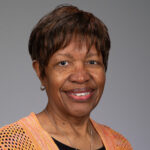 Donna Brooks
NKC Health
Just months after moving from her native St. Louis as a newly minted retiree, Donna Brooks received a welcome that could most charitably be defined as…unwelcome. She and Marvin had come here to be near their two children and six grandchildren, settling just a few miles from North Kansas City Hospital. After scheduling a routine mammogram that June, doctors made a suspicious finding, ordered a biopsy, and her breast cancer was confirmed. “That was my welcome-to-KC initiation,” she wryly notes. Yet the experience transformed her. “I don’t care where I was sent, from housekeeping to physicians to the CEO, everybody we came in contact with was really nice…treated me humanely, and no question was too small,” she remembers. The staff’s humor, kindness, and accommodation made a daunting year of treatment bearable. “It was just an awesome place.” Retired and in a new city, Brooks sought purpose. After exploring other options—” I went to the library, grocery stores, didn’t like what I heard there”—she visited volunteer services. “He was so welcoming,” she says of the coordinator. Within days, she was onboarded. Now volunteering one day a week for four hours, she greets patients at the front desk, delivers flowers and cards, answers phones, provides directions, and offers a listening ear. Employees often escort lost visitors, creating “a real nice experience.” Brooks also serves on the advisory council, shaping patient experiences with her insights as both nurse and former patient. “When you’re on the floor providing hands-on customer service, people really appreciate it more and feel like they have a purpose.” She lost Marvin to cancer in 2021—he was treated at the hospital, as well—but she finds a measure of solace in her work. Through Brooks, NKC Health’s warmth endures, turning vulnerability into connection and gratitude into grace.
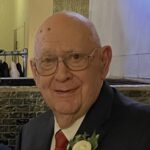
Stormont Vail Health
Harry Craig has occupied the board room and the lobby, the groundbreaking ceremony and the waiting room. His titles, though, matter less to him than his calling. At Stormont Vail Health, his journey has stretched from trustee and board chairman to pastoral care volunteer and, today, Lobby Ambassador at the Stormont Vail Cancer Center. The through line is servant ministry. “When a patient at the cancer center asked me what I do,” Craig recalls, “I said, ‘I listen, visit and pray when asked.’ She said, ‘Oh, sit down. I need all three.’” In that exchange is the essence of his work: presence before prescription. Studying to become a deacon required Clinical Pastoral Education, which he completed at Stormont Vail in the early 1980s. Years later, when the Cancer Center created a pastoral care volunteer role, he stepped in again—until the program transitioned to paid chaplains. Service did not stop; it shifted. By 2018, he was greeting patients as a Lobby Ambassador, rounding through waiting rooms, checking in quietly, offering a booming laugh that eases the air. His empathy is hard-won. Diagnosed in 2006 with Acute Lymphocytic Leukemia, he says the experience “simply increased my empathy for people with cancer.” Craig deflects attention from his 18 years on the board, including three as chairman. “I have been richly blessed and God gives me the daily opportunity to be a blessing to others,” he says. “It is very fulfilling for me to be part of the Church’s Servant Ministry.” As a deacon in the Episcopal tradition, he sees his role as ministry “sent out into the world.” What turns his crank? “Once you decide what you have a passion for, then use your skills in this area. I love serving as a Deacon in the Church and as a volunteer at the Cancer Center. Life is good!” More than 1,800 volunteer hours later, patients may not recall his résumé. They remember that someone sat down—and listened
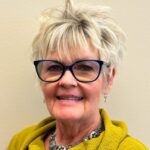 Martha Sims
 Cass Regional Medical Center
Martha Sims has spent 18 years transforming lives through quiet acts of service as a dedicated volunteer at Cass Regional Medical Center in Harrisonville. Originally from Cape Girardeau, she recalls an “idyllic childhood” in a small town where “everybody knew you,” fostering independence amid barefoot adventures, gardening with her father, and helping at the family retail shop. Her mother led Girl Scouts, instilling community spirit, while her father’s role on the St. Francis Hospital board planted early seeds of health-care connection. Professionally, Sims pursued retail, working for Neiman Marcus in St. Louis, then had executive training in Dallas and Chicago as her sales-marketing career progressed in the retail world. After marrying and moving to Harrisonville, she worked in the office of her husband’s Pontiac/GMC dealership for years. “I’d always worked,” she notes, but after its sale, uncertainty loomed—until a friend’s mother paid her first auxiliary dues. “That’s where I found volunteer work,” Sims explains. “It was great to be part of something larger than yourself.” She soon joined the foundation board and capital campaign advisory group, discovering “I needed them maybe more than they needed me.” Her crowning contribution? Working to create gardens when the current hospital was built. Budget cuts threatened that effort before the 2009 opening, but Sims didn’t shrug. With no formal training—” Did I have a certificate in landscaping? Absolutely not.”—she rallied master gardeners, local greenhouses, and volunteers. They transplanted perennials from the old site, donated mums, and marked outlines for flower beds before the sod was laid. “We weren’t a nursery company or landscape design center; we did it ourselves,” she says. “That’s what you do in small-town America—you get it done.” Today, the two-acre oasis includes courtyards, memorial gardens, ER beds, and walking trails on 40 acres, all helping distressed or ailing patients “get lost for a bit of time,” she says, aiding their recovery: “That’s changing the mindset of patients inside,” she believes. As she winds down her years of service to make way for fresh faces in the ranks, she leaves a legacy painted in colors on the hospital campus
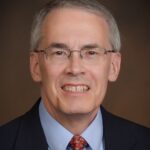 Stephen Salanski
 Non-Profit Health-Care Physician Leader
For 35 years, Stephen Salanski practiced medicine the way he first understood it as a young EMT: “not just a job,” he says, “but how important it was to take care of patients.” In exam rooms from private practice in Lee’s Summit to residency leadership in Kansas City, he guided families through chronic illness and trained new generations of physicians. That daily proximity to patients—insured and uninsured, secure and struggling—became the foundation for everything that followed. When he returned to help lead the Research Family Medicine Residency Program serving Kansas City’s urban core, the contrasts were stark. “I began to realize how difficult health care was for patients living east of Troost”, he says. “People had different lives that impacted their health and their health-care options.” In suburban Lee’s Summit, most people had healthcare coverage; in the inner city, many did not. He saw gaps in access to medications, dental care, and vision services. He heard deep distrust in end-of-life conversations, particularly among African-American families—insight that sharpened his understanding of structural inequities impacting outcomes. Clinical work had shown him the symptoms. Community engagement would address the causes. With the Baptist-Trinity-Lutheran Legacy Foundation’s Medicine Cabinet program, now AcruxKC/AccessKC, he helped access to prescriptions, durable medical equipment and other essentials for patients at or below twice the poverty level. He would go on to chair or serve on multiple boards, including the Kansas City Medical Society and the Kansas City Medical Society Foundation, the Kansas City Health Collaborative—where maternal-health equity is a central focus—and the Center for Practical Bioethics, among others. In each, his aim has been alignment. His wife of 44 years, Phyllis, tells him that his superpower is being a connector. “I know that what these groups do overlaps, so I try to get them to work together.” The through-line traces back to St. Joseph, where his father, a corporate executive immersed in civic leadership, showed him that professional success carried an obligation to community service. In retirement, his father spent a decade leading a non-profit counseling center for Medicaid and uninsured patients. “I saw in that how, in your second life, you can still have an impact,” Salanski says. And his own lifetime of service reflects both lessons: care for the individual, and stewardship of the system that shapes their health
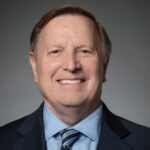 Charles Rozanski
The University of Kansas Health System
Charles Rozanski’s understanding of leadership was forged long before he entered health-care administration. Growing up in Boston, he was influenced by Ralph White, a Korean War veteran who dedicated his life to advocating for others. White, Rozanski recalls, “spent his adult life lobbying for the interest of others who did not have the voice to influence change.” Working for him as a student revealed what service looks like when paired with resolve. “He was a tough dedicated person,” Rozanski says, “who showed me what could be accomplished if you had a passion for serving people and a strong moral compass to guide you.” Another formative influence came through athletics. Bill Bulloch, an athletic trainer at Rozanski’s college, became both a mentor and role model. “He inspired me to pursue a career in sports medicine,” Rozanski says—a path that led to roles at Virginia Military Institute, UMass Lowell and eventually the Chicago Cubs. As the collegiate athletic landscape shifted, Rozanski saw an opportunity to broaden his impact. He believed his experience could translate into health-care administration, where leadership could support clinicians at scale. That belief led him first to MFA, and ultimately to The University of Kansas Health System—what he calls “the capstone of my career.” He’s Vice President of Orthopedics and Sports Medicine for the health system, where he initially guided the sports medicine program, drawing directly on his athletic background. When asked to lead the broader orthopedic service line, the responsibility expanded, but the mission stayed focused. “Any growth or expansion is always viewed through the lens of how this will positively impact our patients,” he says. It’s a philosophy reinforced daily in an organization that “talks about quality and measures it every day.
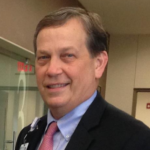 Todd Krass
Belton Regional Medical Center
Todd Krass has spent more than two decades shaping Belton Regional Medical Center into a cornerstone of health for south Kansas City’s growing suburbs. Under his leadership, the hospital has expanded critical services, from a robust emergency department and intensive-care unit to specialized stroke and oncology programs, ensuring timely, high-quality care for patients when every minute counts. “Time is cell death or life,” Krass says, reflecting on the life-saving interventions his team delivers, from heart attacks to strokes. “Seeing someone walk in with flowers, driving themselves home after treatment—that’s why I got into this field.” Krass’ approach to hospital leadership is rooted in the bedside lessons of his early career. Born and raised in Topeka, he cites his father—a 40-year veteran at the Menninger Clinic—and his mother, who returned to nursing after raising three children, as instilling in him an “empathy gene” that guided his vocation. A summer job in the clinic kitchen at age 16 sparked a desire to help others, leading him first to work as a mental-health tech, then a psychiatric nurse, and eventually into management and executive roles. “My primary job is not taking care of patients, but of the people who take care of patients, so they can be the best they can every day,” he says. By 2005, the hospital was navigating transitions in a community on the cusp of growth. He saw untapped potential and committed to seeing it realized. Over $150 million in investments by parent HCA Midwest Health, expansion of service lines, and a focus on time-critical diagnoses proved transformational. Outside the hospital, he has led civic initiatives, from chairing the Kansas City Heart Walk to supporting expanded medical access for underserved populations, demonstrating a belief that community health begins with access and equity. As he prepares to retire this year, Krass leaves a legacy defined by constancy, vision, and service.