
HOME | ABOUT US | MEDIA KIT | CONTACT US | INQUIRE
HOME | ABOUT US | MEDIA KIT | CONTACT US | INQUIRE
Regional Momentum Building for ’26
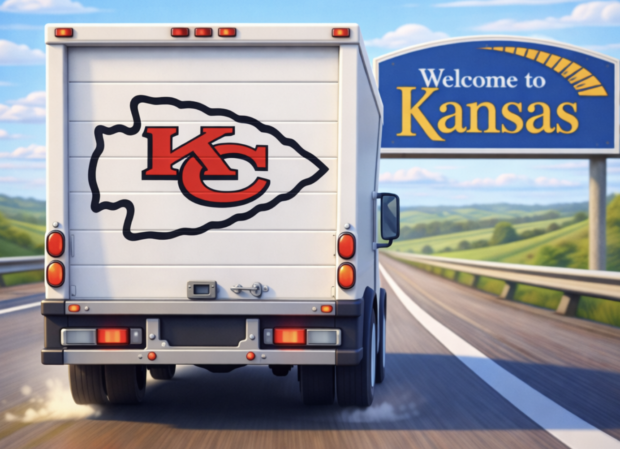
The Kansas City region closed 2025 with the unmistakable hum of momentum—a symphony of cranes, ribbon-cuttings, and venture pitches that confirmed the metro’s pivot from pandemic recovery to full-throttle expansion. That hum turned into an ear-splitting crescendo in the final days of the year, as the Kansas City Chiefs announced plans to build a $3 billion domed stadium in Wyandotte County.
Gov. Laura Kelly, announcing that deal with team owner Clark Hunt on Dec. 22, said construction will have generated 20,000 jobs by the time the stadium opens in 2031. The payoff? Nearly $1 billion a year in economic activity once it’s operating.
As for completed work, the region absorbed more than $15.65 billion in new construction for the year, a record that turned once-vacant riverfront sites and suburban brownfields into magnets for capital, talent, and tourists alike.
This was no mere rebound; it was a deliberate reimagining of what a Midwestern economy could become when manufacturing, health care, and entrepreneurial grit converged under one ambitious banner.
The year’s loudest drumbeat came from the built environment with mixed-use projects that finally broke ground after years of pandemic delays, proving that patience—and public-private alignment—can still move mountains of rebar and concrete.
Corporate America took notice: Fiserv planted the flag for a 2,000-job fintech hub in Olathe, Panasonic cut the ribbon on its $4 billion De Soto EV battery megaplant, and Merck Animal Health rolled out plans for an $895 million expansion of its manufacturing plant, also in De Soto. Each announcement carried the same subtext: Kansas City had become a low-risk, high-reward bet for global giants seeking supply-chain resilience and Midwestern work ethic.
Meanwhile, homegrown powerhouses Garmin and Burns & McDonnell both earned spots on Forbes’ roster of America’s best employers, reminding recruiters nationwide what happens when innovation meets livability. Health care, too, flexed its capital muscle. AdventHealth Shawnee Mission broke ground on a new patient tower, while The University of Kansas Medical Center unveiled a prefabricated pavilion that shaved months off traditional timelines, a clever workaround for urban land scarcity. These investments weren’t just about beds and scanners; they signaled a region preparing for hundreds of thousands of additional residents by mid-century, with the clinical infrastructure to match.
Beneath the marquee deals, a startup ecosystem quietly matured, headlined by ventures rooted in sustainability and social impact. Seed money flowed, mentorship sharpened, and Kansas City’s innovation narrative felt less like aspiration and more like inevitability.
Even the global gaze lingered. Britain’s BBC network slotted Kansas City among the world’s top 25 travel destinations, citing CPKC Stadium’s soccer-fueled energy and the broader urban renaissance unfolding block by block. The Federal Reserve’s Economic Outlook Conference closed the loop, forecasting steady gains in energy, biosciences, and national security—sectors where local players already hold quiet dominance.
As 2025 fades, the metro stands taller, louder, and undeniably more connected to the national economy than at any point in its modern history. The cranes will keep swinging into 2026, but the story they’re writing is already clear: Kansas City has learned to build not just structures, but futures.
2025 NEWSMAKERS:
Stadium Shake-Up
As the year drew to a close, the Kansas City Chiefs joined with the state of Kansas to deliver perhaps the biggest headline of the year: The team is moving to Kansas—Wyandotte County, specifically. A $3 billion domed stadium seating 65,000, with $1.8 billion from state incentives, was the final inducement to abandon the venue that had created a game-day experience matched by no other fan base in the NFL. For the Missouri side, it was a bitter loss: The Chiefs had played in Kansas City since moving from Dallas in 1963, first in the old Municipal Stadium, and since the 1972 season, at Arrowhead. The move sounds the death knell for that civic crown jewel after the 2030 season. It was the culmination of nearly two years of public debate—and public-official rancor—over whether Jackson County and the state of Missouri should offer support for upgrades at Arrowhead. Gov. Mike Kehoe’s team was working on an incentives package, but the Chiefs saw a better deal to the west, making what team officials called, simply, “a business decision.” The Hunt family, which had pledged $800 million toward upgrades in a renewal plan rejected by voters, ponied up an extra $200 million for the Kansas plan, bringing the team’s commitment to at least $1 billion. In addition to the new stadium, the Chiefs will have new corporate offices in neighboring Johnson County, where the team headquarters and a new practice facility will anchor a large economic-development project in Olathe. The upside? The team and state leaders in Kansas say this region will be eligible to host Super Bowls, NCAA Tournament finals and other events for which Arrowhead wasn’t a fit. Still unresolved: The fate of Kauffman Stadium, where the Royals lease expires in 2031. Principal owner John Sherman may prove to be the biggest winner in the Chiefs’ move, as Kansas City will likely accelerate efforts to keep the team on the Missouri side. Is a Downtown baseball stadium now more likely? Stay tuned…
The Asset Ascent
In 2025, Kansas City’s wealth-management crown changed hands twice in a high-stakes acquisition showdown between Mariner Wealth Advisors and Creative Planning. Mariner struck first: On Jan. 9, it announced the $292 billion AUA acquisition of Chicago-based Cardinal Investment Advisors, instantly catapulting the Overland Park firm past rivals to nearly $550 billion in total assets—briefly making it the largest wealth-management firm in the Kansas City region. The momentum continued with a rapid-fire triple deal just five days later, adding $1.1 billion across Ohio, Colorado, and Massachusetts. Mariner kept the pressure on: Hyre Personal Wealth Advisors ($325 million, March), Taurus Asset Management ($1.4 billion, June), and an August trifecta—Forté Capital, Ultra Financial Partners, and Southeastern Advisory Services—combined for $7.2 billion. November’s Defined Financial Planning ($164 million) capped a 10-deal spree, pushing Mariner past $560 billion and 124 offices nationwide. But Creative Planning, the firm Mariner had briefly dethroned as the year dawned, refused to stay down. Starting with Maxwell Wealth Strategies in February, it methodically built momentum: Mosaic Pacific ($430 million, July), Grassi Investment Management ($1.3 billion, September), and Financial Abundance ($275 million, October). Then came the game-changer. In October, Creative announced its agreement to acquire SageView Advisory Group—a $250 billion AUM/AUA retirement powerhouse. The deal vaulted Creative past $650 billion, reclaiming the No. 1 spot in Kansas City and solidifying its national dominance. A December close with Burt Wealth Advisors ($1 billion) sealed the year. Mariner’s early blitz and volume of deals showcased relentless growth; Creative’s strategic timing and massive late-year strike proved decisive. Both firms expanded coast to coast, but Creative Planning ended 2025 firmly atop the Kansas City RIA throne.
Kestrel…and More
A kestrel is a small falcon. There is, however, nothing small about what’s taking wing in the shadow of Kansas City International Airport. In August, Port KC unveiled Project Kestrel, an emerging colossus in the region’s tech renaissance. It’s a $100 billion hyperscale data-center campus poised to redefine the Northland’s economic horizon. The initiative—backed by an unnamed global tech titan via Shenandoah Computing LLC—spans 379 acres at the KCI-29 industrial mega-site. Over two decades, it will erect six buildings totaling 1.8 million square feet, fueling cloud computing and AI demands with phased construction starting in 2026. This behemoth promises more than silicon synapses: over $110 million in tax revenue across phases, dwarfing the site’s current $1,400 annual yield, plus $2.62 million upfront for the Northland Career Center and $15.75 million for workforce training at 25 cents per square foot. Infrastructure upgrades—roads, water, fiber—will catalyze broader development, while sustainability pledges include 50 percent carbon-free energy and water replenishment exceeding consumption. Expect 50 high-salary jobs (averaging more than $100,000) per phase, bolstering a talent pipeline amid local pushback on tax abatements from figures like Platte County Commissioner Scott Fricker. Kestrel joins a 2025 frenzy amplifying Kansas City’s ascent as a Midwest data hub, drawn by cheap power, fiber abundance (5.5 million miles), and land availability. Meta’s $1 billion facility went live in August, LEED Gold-certified with 100 percent renewable matching and water-efficient cooling. Google’s $1 billion Northland campus advanced phases, supporting AI’s backbone. Nearby, Project Mica ($10 billion, 500 acres) and a $12 billion Red Wolf complex in Wyandotte County (delayed by environmental lawsuits) vie for grid space, alongside Edged’s $143 million AI-optimized site (featuring zero-water cooling) and Lambda’s AI factory (100 megawatt potential). DataBank doubled its Lenexa footprint for AI leasing. This surge—now nearly 20 facilities—injects billions, creates thousands of jobs, and spurs a $2 billion water plant. It does, however, strain Evergy’s grid and ecosystems, testing the balance between innovation and resilience. As Port KC’s Jon Stephens envisions, it’s a “long-term partnership” powering digital futures.
Busey Takes a Bow
In the heart of Kansas City’s dynamic financial landscape, CrossFirst Bank’s meteoric ascent from a scrappy 2007 startup to a regional powerhouse captivated observers and baffled competitors. Founded amid the Great Recession by a cadre of seasoned executives in Leawood, CrossFirst Bank—initially CrossPoint Bank—launched with a vision to blend cutting-edge technology and personalized service for businesses, professionals, and families. From humble origins with a handful of I-35 corridor branches in Kansas and Missouri, it expanded aggressively into high-growth metros such as Wichita, Oklahoma City, Dallas-Fort Worth, Denver, and Phoenix. By Dec. 31, 2024, its assets had swelled to $7.7 billion, with $6.2 billion in loans and $6.7 billion in deposits. Those metrics propelled it into the Kansas City region’s Top 10 banks by asset size—a remarkable feat achieved through organic growth and strategic acquisitions like Tulsa National Bank in 2013. This trajectory culminated in a transformative 2025 merger with Illinois-based Busey Bank, Busey’s largest deal in its 157-year history. The $917 million all-stock transaction closed March 1, following Federal Reserve and shareholder approvals. Each CrossFirst share converted to 0.6675 Busey shares, granting former CrossFirst holders 36.5 percent ownership. CrossFirst operated as a Busey subsidiary until its June 20 integration, rebranding 16 branches under Busey and expanding the network to 77 locations across 10 states. For Kansas City, the merger cements Leawood as Busey’s holding company headquarters, bolstering local commercial lending and wealth management while preserving community ties. Regionally, the combined entity—now boasting $20 billion in assets, $17 billion in deposits, $15 billion in loans, and $14 billion in wealth assets under care—enhances Midwest and Southwest banking. It fuses CrossFirst’s metro-focused commercial expertise with Busey’s robust deposit franchise, FirsTech payments innovation, and fiduciary services, fostering deeper liquidity, risk mitigation, and growth in underserved markets like Arizona and New Mexico. As FDIC-insured stability meets expanded scale, the union promises resilient, client-centric services amid economic flux, positioning Busey as a Midwest banking linchpin.
January
9 Overland Park-based Mariner soars to No. 1—for the time being—among the region’s biggest wealth-management firms by snapping up Cardinal Investment Advisors, adding an eye-popping $292 billion in assets under advisement. It was a significant milestone in Mariner’s 2025 strategic national expansion plan, bringing its total assets under advisement to approximately $550 billion in the first quarter of 2025, with more to come. As CEO Marty Bicknell promised: “This acquisition kickstarts a year that will be filled with growth, innovation, and a relentless pursuit of providing the best client-focused financial services.”
31 UMB completes its acquisition of Heartland Financial, significantly expanding the footprint of Kansas City’s biggest bank to 13 states, boosting its assets to around $70 billion, doubling its retail deposits, and integrating Heartland’s community banks into the UMB brand and platform. It was the largest acquisition ever for UMB, giving it a broader reach and deeper financial services.
February
9 A harbinger of what would come in the fall, the Kansas City Chiefs fail in their quest for a threepeat with a crushing 40-22 loss to the Philadelphia Eagles in Super Bowl LIX. Though the Chiefs tied Detroit for the NFL’s best regular-season record in the 2024 season—15-2—a remarkable six of those victories came on the final play of the game. They were winning, but not dominating. Karma came later in the year as Kansas City went 1-6 in games with a one-score margin, and missed the playoffs for the first time since the 2014 season.
28 Kansas City-based Lockton, the world’s largest privately held independent insurance broker, significantly expands its European presence, announcing that it is acquiring PL Risk Solutions of Dublin, Ireland. While the purchase price was not publicly disclosed, the transaction involves one of the city’s most prominent private companies acquiring a major competitor with a nine-figure revenue stream, placing the deal value well within the target range. Lockton stated the deal adds over 170 associates and expands its specialty offerings in the Irish and UK markets.
April
21 Fiserv, Inc. and Gov. Laura Kelly announce plans for a strategic fintech hub at Aspiria in Overland Park, projected to create roughly 2,000 jobs with the global provider of payments and financial services technology. The new site includes 427,000 square feet of space across two buildings, and company officials say it was selected for its central location in the country, proximity to Fiserv’s Midwest client base, affordable living, and the opportunity to attract exceptional tech talent.
May
1 First National Bank of Omaha announces a definitive merger agreement with CCB Financial Corp, the parent company of Kansas City’s Country Club Bank. The acquisition brings together two unique and highly respected financial institutions, both of which are privately owned with multi-generational family leadership, into one institution serving the Midwest. Country Club Bank’s history dates back to 1953, and it has grown from a single commercial bank to a multi-faceted financial institution with $1.8 billion in deposits, $2.2 billion in assets and a trust company with $2.8 billion in assets under management, along with more than 400 employees.
8 Merck Animal Health and Kansas Gov. Laura Kelly jointly announce the $895 million expansion of Merck’s manufacturing facility in De Soto. The $895 million capital expansion will go up on existing Merck-owned property currently home to its biologics facility in De Soto. It includes an $860 million investment in the site’s existing manufacturing facility and a further $35 million investment in its research and development laboratories. The 200,000-square-foot project will expand filling and freeze-dryer capacity for large molecule vaccines and biologic products. Site preparation and facility design will start immediately, creating 2,500 construction jobs. Commercial manufacturing is expected to begin in 2030, creating more than 200 full-time roles.
June
10 Heartland Coca-Cola cuts the ribbon on a new $400 million Olathe bottling facility. Construction crews with design-build firm Haskell broke ground on the 700,000-square-foot plant in June 2023 on a 150-acre site near 167th Street and Hedge Lane. It shipped out its first Coca-Cola products in early 2025, providing additional support for the 18 sales and distribution centers serving 25,000 retail and food service customers.
16 Commerce Bancshares announces the $585 million, all-stock acquisition of FineMark Holdings, parent of FineMark National Bank & Trust. The deal adds 13 offices across Florida, Arizona, and South Carolina, $4 billion in assets, $3.1 billion in deposits, $2.6 billion in loans, and $7.7 billion in assets under administration for 2,000 clients, bolstering Commerce’s wealth platform to $82 billion in AUA.
27 Olathe boats another whale with Walmart opening its first-ever owned and operated, case-ready beef facility, bringing quality beef to customers in the Midwest while creating more resiliency in Walmart’s supply chain. The new facility is creating over 600 jobs that will
directly impact Olathe, Kansas, and the surrounding communities. The company says it will reinforce Walmart’s commitment to building a more resilient, transparent and efficient supply chain for Angus beef.
July
7 The first battery rolls off the production line at Panasonic Energy’s $4 billion plant to serve the electric vehicle industry. The company says initial production will begin at 300,000 batteries a day, eventually increasing to 500,000 a day on that line, with other lines coming open through 2027. By that point, it expects to employ 4,000 advanced-manufacturing workers in De Soto, turning out a projected 6 million cells a day.
20 Nearly three years after breaking ground, Meta opens its Kansas City data center, one of the biggest projects that highlight the region’s emergence as a data hub and a significant part of the company’s $1 billion investment in properties across Missouri. The Facebook parent says it chose the Kansas City location because it offered “excellent infrastructure, a robust electrical grid, a strong pool of talent for construction and operations jobs, and incredible community partners.” It will employ more than 100 tech professionals.
27 Investment titan Blackstone picked up $90 million with the sale of Overland Park-based Cyan Southcreek. The community debuted in 2021, featuring seven three- and four-story buildings consisting of one- to three-bedroom floor plans ranging between 661 and 1,471 square feet. Common-area amenities feature a gym, swimming pool, clubhouse and business center, among others.
28 Port KC approves financing for Project Mica, authorizing up to $10 billion in taxable revenue bonds for the roughly 500-acre hyperscale data-center campus near I-435 and U.S. 169. Project Mica accelerates the region’s data center boom, driven by AI demands, and is expected to attract additional investment, generate construction/trade jobs, and prompt additional zoning updates for large-scale tech infrastructure—solidifying Kansas City as a Midwest digital hub.
August
12 Americold announces an investment of at least $100 million investment in logistics/cold-storage operations the Kansas City area. Developed in partnership with Canadian Pacific Kansas City, the 335,000-square-foot facility is Americold’s first on the CPKC rail network and a key hub for the Mexico Midwest Express, North America’s only single-line rail service for refrigerated goods between the U.S. and Mexico.
26 Project Kestrel, widely quoted as a project with a buildout value of “up to $100 billion” is unveiled, a multi-phase hyperscale data-center campus on a 379-acre site in the Northland. It will consist of six hyperscale data centers totaling up to 1.8 million square feet upon full build-out. Designed to power the next generation of cloud computing and technology-driven industries, the campus represents one of the largest technology investments in the region’s history by one of the world’s leading tech companies.
September
16 Legends Outlets in Kansas City, Kan., sells to Tanger, which acquired the shopping center for $130 million, using a $115 million CMBS loan that matures in November 2027. According to Tanger, Legends Outlets is 93 percent occupied. Tanger will rename the shopping center Tanger Kansas City at Legends, and it becomes the fourth outlet center of seven total open-air shopping centers to join Tanger’s portfolio since 2022.
25 KBS announces that it has sold Park Place Village, a fully leased, 10-building, 484,980-square-foot office and retail property in Leawood, for $100 million. DFW Land, a development company that specializes in the acquisition, development and sale of land in the Dallas-Fort Worth Metroplex area, was the buyer. Park Place Village was owned by KBS Real Estate Investment Trust III and purchased in 2015.
October
16 UMB Financial Corp. completes the $2 billion acquisition of Heartland Financial USA, a deal valued at approximately $2 billion. That solidifies UMB’s position as the largest bank in the Kansas City area, with a 35.68 percent deposit market share. This merger reshuffled local banking rankings amid a busy year for regional M&A.
28 San Francisco-based Lambda, which bills itself as the Superintelligence Cloud, announces plans for a $500 million AI Factory in Kansas City. The site is expected to launch in early 2026 with 24 megawatts of capacity, and the potential to scale up to more than 100 megawatts. When the facility launches in early 2026, it will initially feature more than 10,000 NVIDIA Blackwell Ultra GPUs—a footprint expected to double over time. The supercomputer is dedicated to a single Lambda customer for large-scale AI training and inference, under a multi-year agreement. The proposal further cements the region’s reputation as an emerging national tech hub.
November
18 The new owners of The Country Club Plaza unveil plans for a $1.4 billion redevelopment to remake the city’s historic commercial district. Port KC signed off on a plan to finance the redevelopment of 1.7 million square feet of retail space and the construction of 750 residential units and about 280 hotel rooms. The developers also plan to make repairs and improvements on public and private infrastructure in and around the Plaza, including covered garage, streetscape, open space, infrastructure and deferred maintenance work.
December
1 The Housing Authority of Kansas City approves a ground-breaking, multi-year Development Plan valued at $2.6 billion, with a goal of delivering 7,159 units of housing through new construction, redevelopment, and acquisitions. It represents one of the most ambitious public housing revitalization efforts in the region’s history. All of HAKC’s existing public housing properties will be redeveloped into mixed-income communities, blending high-quality design with affordability and opportunity. The initiative underscores the agency’s commitment to reimagining public housing as a foundation for economic mobility, community pride, and long-term neighborhood growth.
9 A Johnson County judge paves the way to write the obituary for Mission Gateway, the long-running development fiasco that became the epitome of urban redevelopment failure. Proposed in 2005 on the 17-acre site of the demolished Mission Mall, it originally promised a $268 million mixed-use hub with 370 apartments, a 90,000-square-foot Cinergy entertainment complex, retail, offices, and a garage. But in the ensuing two decades, it cycled through five stalled agreements, multiple developers, broken promises and false starts. The site remains unfinished today.
10 The Lee’s Summit City Council green-lights Oldham Village East, a $416 million development covering 130 acres at U.S. Highway 50 and Missouri Route 291. Costco, the warehouse retailer, will anchor the first of the projects two phases. Overland Park-based Drake Development expects to begin construction in January.
Notable Passings:
• Tom Grant, an iconic figure in Kansas City’s insurance industry, died at 74 on July 1. He most recently had been vice chairman and former president of SelectQuote, but was instrumental in the growth of the former Business Men’s Assurance, which was sold in 1990, then led LabOne before its sale to Quest Diagnostics in 2005, leading to the founding of SelectQuote.
• Former Price Brothers co-owner Steve Price, second-generation owner of Price Brothers Management Co., died April 19. He was 97. The firm’s work continues today with BluHawk, one of the biggest multi-use developments in the region’s history.
• “Andy” Paul Lock, a restaurateur whose concepts included Third Street Social and Summit Grill, died May 13. Lock, 57, had founded and co-owned Summit Hospitality Group, which includes Summit Grill, Third Street Social, Boru Asian Eatery, Pearl Tavern, South of Summit and Neighborhood Grill.