
HOME | ABOUT US | MEDIA KIT | CONTACT US | INQUIRE
HOME | ABOUT US | MEDIA KIT | CONTACT US | INQUIRE
In Kansas City, corporate philanthropy is a pillar of civic life. Leaders of iconic companies didn’t just build businesses—they built community. Executives roll up sleeves alongside employees, volunteering at food banks, supporting the performing and visual arts, serving on boards. These acts fuel non-profits, combat hunger, preserve historic gems like Union Station, and uplift entire neighborhoods. Corporate giving fosters employee pride, attracts talent, and ensures inclusive prosperity. Without it, Kansas City’s vibrant spirit—its festivals, schools, and shared resilience—would dim. Philanthropy isn’t charity; it’s the investment that keeps our city thriving for all. Here are eight companies whose commitment lives out that legacy every day.
Clark & Enersen
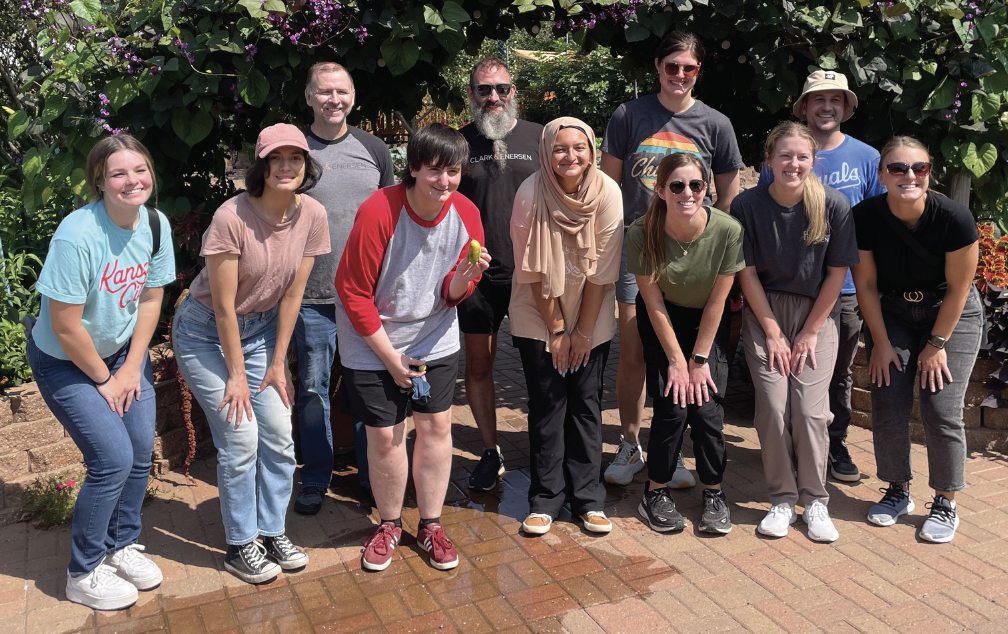 In the dynamic fields of architecture, engineering, and landscape architecture, Clark & Enersen stands out not only for its innovative designs but for its deep-rooted commitment to community service—a value woven into the firm’s culture across its offices in Kansas City as well as Colorado and the home office in Nebraska. While the company’s philanthropic efforts extend to each location, the Kansas City office places particular emphasis on local organizations, tailoring initiatives to address the unique needs of the metro area where many team members live, work, and build lasting connections.
At the heart of this strategy is an employee-driven approach that empowers staff to direct giving and volunteerism toward causes close to their hearts. Rather than imposing a rigid philanthropic agenda, Clark & Enersen lets employees lead the way. “Really, it’s based on what the employees want,” says associate principal Allison Wonder. “We don’t necessarily have a standard set philanthropy poll at the beginning of the year.” When an employee champions a local organization in need, they can approach the firm’s Grow Committee—a cross-office group that coordinates community activities—and requests are typically met with company matching support, she says.
A cornerstone of this flexible model is the annual United Way campaign, which serves as a primary channel for employee contributions. Through United Way of Greater Kansas City, staff direct funds, time, and resources to a wide array of regional nonprofits. This platform allows donations to support any qualifying organization across the city, amplifying impact while aligning with personal passions.
Complementing these efforts is the innovative Foundations program, the firm’s year-long leadership-development initiative for emerging professionals. Far more than a one-off volunteer day, Foundations challenges participants to design and execute sustained community outreach projects. In Wonder’s case, that involved partnering with the Veterans Community Project, organizing a tiny-house design competition that raised nearly $3,000 to support a village of small homes for homeless veterans—providing stability and a path forward for those who served.
Other Foundations groups have built and donated dog houses for the KC Pet Project and contributed to roadway cleanups and trail maintenance for North Kansas City Parks and Recreation. These projects not only deliver meaningful aid but foster leadership skills and a sense of purpose among younger employees.
Year-round, the Grow Committee organizes hands-on service events during work hours, ensuring participation doesn’t require personal time off. Activities have included sorting and packing at Harvesters Community Food Network, lending a hand at Helping Hands, tending plots at the Kansas City Community Garden, and supporting operations at the Kansas City Zoo & Aquarium.
By eschewing a single “pet cause” in favor of diverse, employee-selected initiatives, Clark & Enersen has cultivated broad engagement. This strategy, as one staff member observes, “helps our employees learn what’s out there and find their niche,” sparking internal enthusiasm that often extends to personal involvement beyond the workplace.
Company officials articulate the broader vision: the firm’s belief in giving back to communities where offices and staff are rooted, particularly in Kansas City, drawn to its strong sense of community. This commitment aligns seamlessly with the profession’s ethos—designing spaces where people live, heal, learn, and thrive. Community service, officials say, is a natural extension of that work, creating safer, more vibrant environments.
Ultimately, Clark & Enersen’s approach enhances employee morale, retention, and team building while strengthening the fabric of Kansas City. In an industry built on vision and collaboration, the firm proves that purposeful philanthropy not only benefits the community but elevates business success.
ECCO Select
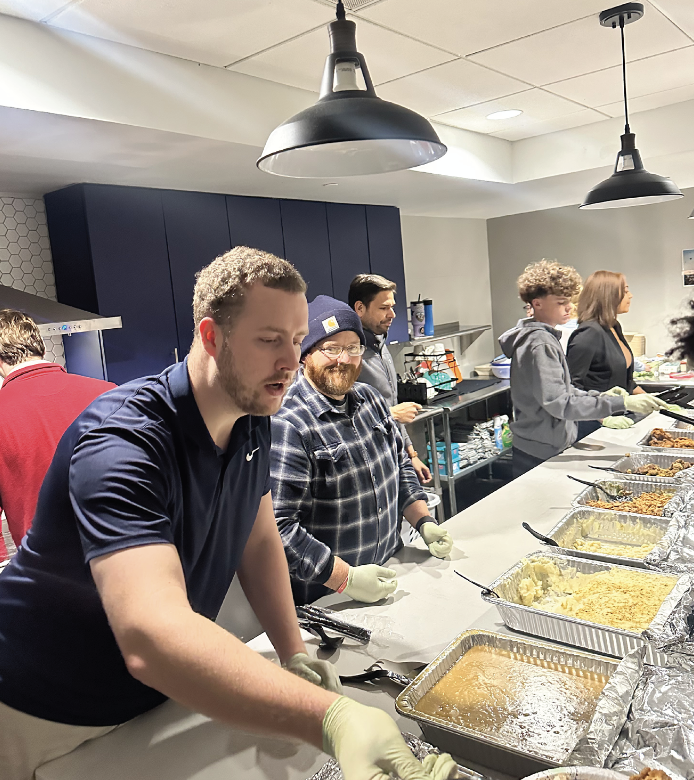 In the competitive arena of executive search and talent solutions, ECCO Select has built a reputation for insight, rigor and results. But in Kansas City—and increasingly in offices across the country—the firm is equally recognized for something less quantifiable and more enduring: a deeply embedded culture of corporate philanthropy. Guided by co-founder and CEO Jeanette Prenger, ECCO Select’s approach to giving has expanded in step with the firm’s own growth, evolving from founder-led commitments into a companywide ethos that spans markets, causes and communities.
“Our philanthropic journey has grown alongside our company,” Prenger says, a simple statement that captures both the origins and the trajectory of ECCO Select’s engagement. In its early years, charitable activity naturally followed the founders’ personal board service and community ties. As the firm expanded its footprint and resources, however, its capacity to give broadened as well. Today, while Kansas City remains the heart of ECCO Select’s community involvement, the firm’s impact reaches well beyond its hometown—extending across the country and, in some cases, around the globe.
What distinguishes ECCO Select’s philanthropy is how seamlessly it is integrated into daily work life. Giving is not treated as a side project or an annual obligation; it is woven into the fabric of the organization. Associates are actively encouraged to serve on nonprofit boards and engage with causes that matter to them personally. When they do, the company stands behind that commitment, offering financial contributions, in-kind donations, sponsorships and auction items, as well as something often more valuable: time. Dedicated time off for volunteer work underscores the firm’s belief that community engagement is a legitimate and important use of professional energy.
The firm’s physical and organizational resources are also put to work in service of the community. Employees are invited to use company event spaces to host charitable events and meetings, transforming ECCO Select offices into hubs of civic engagement. Team-wide initiatives further amplify the firm’s reach, creating opportunities for collective involvement that foster camaraderie while delivering tangible benefits to non-profit partners. The result: a model that is both structured and flexible, supporting signature initiatives while also empowering individual passion.
As ECCO Select has grown into markets such as Dallas, New York and Washington, D.C., its philosophy of giving has traveled with it. The core approach remains consistent: support associates where they are, align with organizations they care deeply about, and tailor engagement to local needs. Kansas City will always serve as the firm’s home base for community involvement, but each office is encouraged to reflect its own context and challenges. That balance allows ECCO Select to maintain a strong sense of identity while ensuring its philanthropy is relevant and responsive in every market it serves.
Faith and personal connection play a central role in shaping the firm’s philanthropic priorities. Prenger notes that many of the causes ECCO Select supports resonate directly with employees’ values and lived experiences. Over time, certain efforts have emerged as cornerstones of engagement—distinguished by long-standing relationships, consistent community impact and strong team participation. These partnerships are not transactional or episodic; they have become extensions of the firm’s culture, enabling associates to serve with purpose in ways that feel intentional and heartfelt.
For Prenger, the importance of corporate philanthropy extends beyond any single organization or initiative. In an industry built on relationships, she sees community engagement as a powerful way to build trust and authenticity. “Community engagement strengthens relationships that are not transactional,” she observes. “Not just with our associates and clients, but within the community.” Giving back, she adds, allows the firm to “walk the talk of being good stewards” while motivating those who choose to engage.
At ECCO Select, corporate philanthropy is ultimately about alignment—between values and actions, growth and responsibility, local roots and national reach. As the firm continues to expand, its commitment to serving communities remains a constant.
Hill’s Pet Nutrition
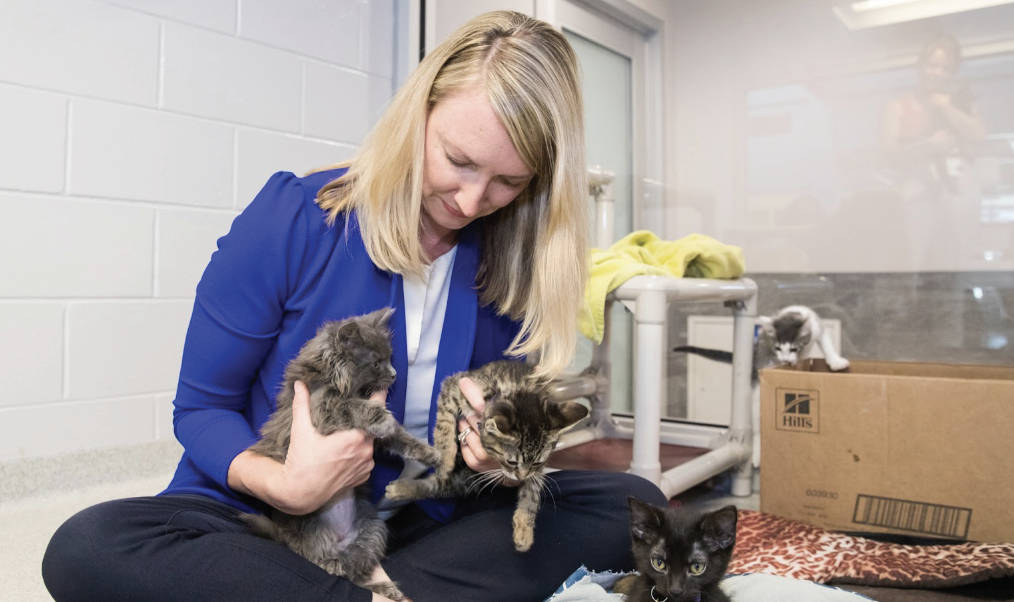 When you look at the scale, scope and reach of corporate philanthropy at Hill’s Pet Nutrition, one word comes immediately to mind: Woof.
The Overland Park-based maker of pet foods and supplements has embedded corporate philanthropy deeply into its mission, focusing primarily on ending pet homelessness through science-led nutrition and shelter support. The cornerstone of these efforts is the Food, Shelter & Love program, launched in 2002, which partners with more than 1,000 shelters across North America to provide premium, precisely balanced nutrition 365 days a year.
This initiative has donated an eye-popping amount of pet food–more than $300 million worth—helping shelter pets maintain health, support lean muscle, easy digestion, strong immune systems, and overall well-being. The goal? Pets that are happier, healthier, and more adoptable. The program has supported 16 million pet adoptions, transforming countless lives—and not just the four-legged versions—by ensuring continuity of nutrition that reduces stress during transitions to forever homes.
Every purchase of Hill’s pet food directly contributes to the program, enabling ongoing partnerships that feed thousands of shelter pets daily. Shelters receive not only food but also training, digital aids, visuals, exclusive discounts, and resources like adopter bags with coupons, pet-parenting tips, and access to the New Pet Parent web site. Adopters from partner shelters often take home a free bag of Hill’s food, easing the transition and encouraging continued use of quality nutrition tailored to a pet’s age, size, and needs.
Complementing this flagship effort, the Disaster Relief Network, established in 2013, delivers rapid response to crises. It has responded to more than 100 global disasters, donating hundreds of thousands of pounds of food. The network collaborates with shelters, veterinary hospitals, non-profits, and governmental organizations to support displaced pets and families during hurricanes, wildfires, pandemics, and other events.
Hill’s extends its reach through national campaigns and partnerships. It has served as a multi-year national sponsor of NBCUniversal Local’s Clear the Shelters pet adoption campaign, providing adoption kits with starter food bags, coupons, and supplies, while supporting events like pet airlifts via Greater Good Charities. Collaborations include PetSmart Charities (as official feeding sponsor for adoption centers and events like National Adoption Week), Shelter Bowl meal donations, “Welcome Home” campaigns committing funds to cover adoption costs, and senior pet adoption drives.
The online Shelter Donation Program via shop.hillspet.com donates $1 per order (through Shopping-Gives Foundation) to chosen shelters, further amplifying consumer-driven support.
Employee engagement reinforces this culture: As part of Colgate-Palmolive, Hill’s encourages volunteering, with global employees logging thousands of hours every year, often tied to shelter activities, supported by programs like Colgate Cares Days offer-ing paid volunteer time. Additional efforts include education and research, such as a $1 million endowment to Kansas State University’s College of Veterinary Medicine for clinical nutrition professorships.
From a strategic perspective, the company’s philanthropy aligns with sustainability goals, earning Pet Sustainability Coalition accreditation. From its Overland Park mother ship, Hill’s expands community impact in Greater Kansas City while maintaining longstanding commitments elsewhere.
Through these integrated initiatives, Hill’s Pet Nutrition demonstrates that corporate success fuels meaningful change, nurturing lifelong pet-people relationships by addressing homelessness, health, and crisis needs—one nourished, adopted pet at a time.
Kompass Kapital Management
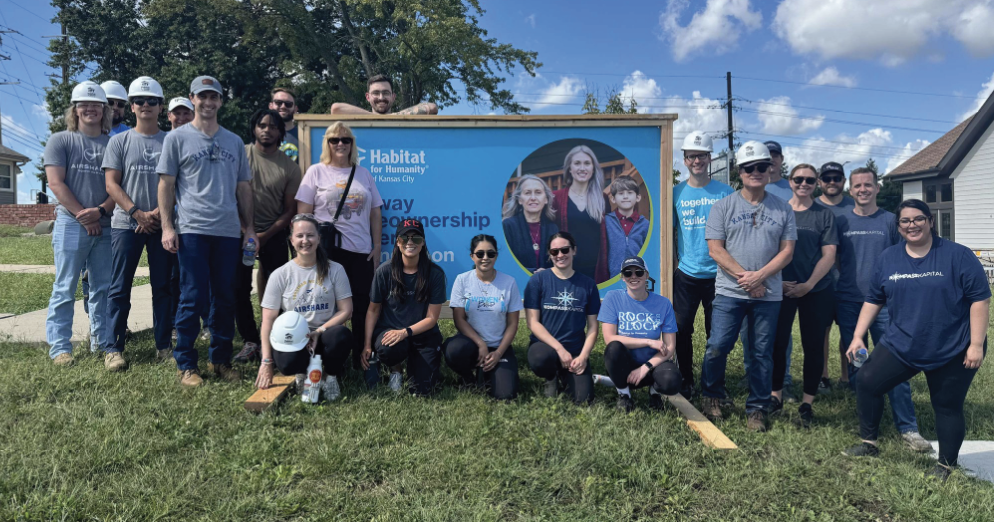 Philanthropy was never meant to trail behind business success at Kompass Kapital Management. From the outset, the Overland Park–based single-family office treated community engagement as a parallel discipline—one that demanded intention, patience, and accountability. As the firm built a long-term investment strategy around stewardship of family capital, it applied the same thinking to the way it showed up in Kansas City and the communities where its portfolio companies operate.
“Philanthropy was built into how we operate from the very beginning,” says Courtney Conrad, managing partner. Rather than positioning charitable giving as a peripheral activity, Kompass Kapital made it part of the firm’s identity—woven into its culture, expectations, and decision-making. The result is a model that mirrors its investment philosophy: values-driven, relationship-focused, and designed for durability.
In its earliest phase, the firm’s giving reflected the personal commitments of its founders—Jayson Kuti and Bradley Berger—and team members. Support flowed naturally to organizations where employees already volunteered, served on boards, or had long-standing personal ties. Over time, however, that organic approach matured into something more intentional. As Kompass Kapital grew, so did its capacity—and responsibility—to focus its philanthropic efforts more clearly.
That evolution led to an emphasis on causes that strengthen families and communities, particularly in areas such as education, health and human services, and organizations working at the grassroots level. The firm’s leadership recognized that deeper impact comes not from scattershot generosity, but from sustained partnerships grounded in trust and consistency.
Today, the firm’s philanthropic strategy is anchored by the Kompass Kapital Foundation, which coordinates giving across the firm and its portfolio companies. One of its most distinctive features is a matching program that doubles charitable contributions made by operating companies in their own communities. The approach preserves local autonomy while amplifying impact—encouraging each company to invest where it knows the needs best, backed by institutional support from the parent firm.
“Our goal has been to balance focus with flexibility,” Conrad explains, ensuring that philanthropy remains both structured and responsive. That balance allows Kompass Kapital to support a wide range of causes without losing sight of its core priorities.
While the firm’s reach extends nationally through its portfolio, Kansas City remains the epicenter of its philanthropic activity. The headquarters serves as a convening point for volunteer initiatives and collaborative efforts that bring employees together across businesses. That local engagement is deliberately hands-on: board service, volunteer days, and long-term relationships with local nonprofits where impact is visible and measurable.
That emphasis on participation is reinforced internally through clear expectations. Every Kompass Kapital employee is required to dedicate 25 hours of paid work time annually to volunteer service. Roughly 15 of those hours are tied to firm-wide initiatives, with the remainder left to individual choice. The policy reflects a belief that meaningful philanthropy thrives when people are empowered to support causes they care about, while still contributing to shared goals.
Many of the firm’s most enduring partnerships began as individual passions—particularly those focused on children, families, education, and access to health care. What transforms those efforts into cornerstones, Conrad notes, is longevity. Consistent engagement deepens relationships, builds institutional knowledge, and allows organizations to plan with confidence rather than reacting to one-time gifts.
Underlying it all is a clear philosophy about responsibility and influence. In private capital, Conrad believes, the way resources are deployed—financially and relationally—matters just as much as the returns they generate. Strong communities, she argues, are not just beneficiaries of good business; they are essential to it.
At Kompass Kapital, philanthropy is not a separate endeavor or a branding exercise. It is an extension of the firm’s values and a reflection of how it views stewardship. Like its investments, the firm’s community commitments are patient, intentional, and built for the long term—demonstrating that when capital is guided by purpose, its most meaningful returns extend far beyond the balance sheet.
Lockton
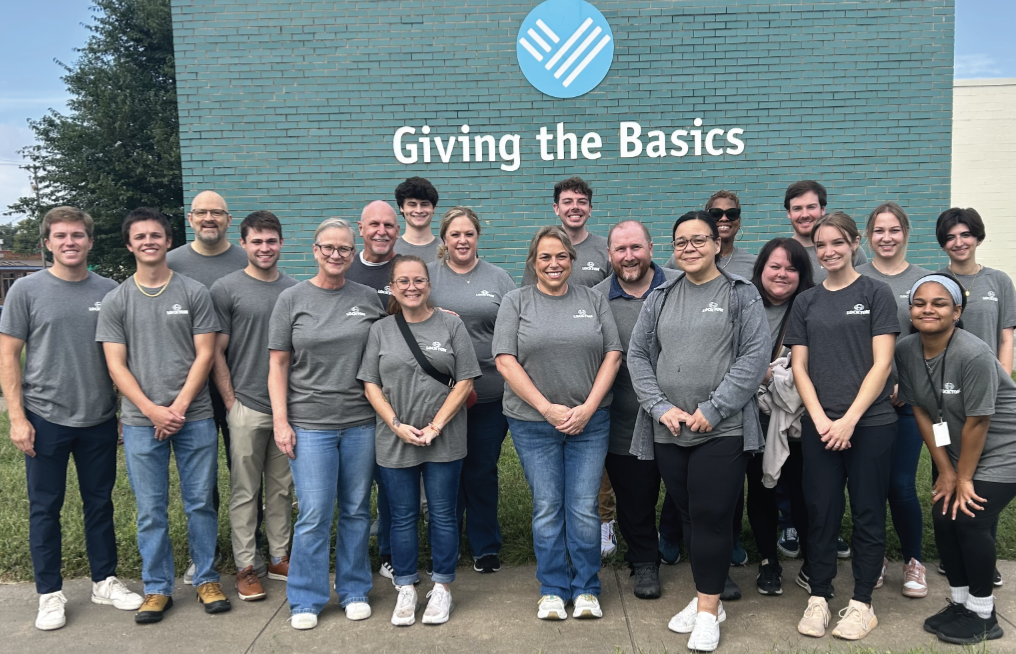 Since its founding in 1966 in Kansas City, Lockton Companies has woven corporate philanthropy into the very fabric of its operations, treating local communities as one of three core stakeholders—alongside clients and associates. This philosophy has remained unwavering even as the firm has grown into the world’s largest privately held insurance brokerage, with operations in over 140 countries.
At the heart of Lockton’s global strategy is the Lockton Cares program, a decentralized model that empowers associates worldwide to identify and address pressing local needs through volunteering, fundraising, and donations. In recent years, these efforts have generated substantial impact: globally, contributions exceeded $20 million annually, supporting more than 250 organizations. The flagship Lockton Cares Community Impact Awards, funded directly by the Lockton family and launched in 2023, annually honor 16 associates regionally with $25,000 donations each to charities of their choice. In 2024, the program introduced a higher-tier Global Impact Award, enabling even larger grants, such as $100,000 and $50,000, for exceptional service.
Examples of this associate-driven approach span the globe. In Thailand, efforts focus on education and animal welfare, with 2025 award recipient Pannarat Chuntorntaweekiat directing $25,000 to a dog sanctuary. In the UK, the Lockton Charitable Association supports a Charity of the Year, partnering in 2025 with Together for Short Lives to aid children’s palliative care. Other offices tackle breast cancer awareness in the UAE, disaster response, food insecurity, and more.
In Kansas City, Lockton’s hometown, the commitment carries extra weight. As President of People Solutions Rich Reda notes, “For nearly 60 years, our commitment to community has been a constant—even as we’ve grown from a Kansas City company to a global organization. Wherever Lockton operates, that local community is one of our three core stakeholders.”
The philosophy remains consistent across locations, but execution is tailored for maximum local resonance. A cornerstone in Kansas City is the longstanding partnership with United Way of Greater Kansas City, dating back decades to its predecessor, the Community Chest. The annual giving campaign dedicates over 10 days to coordinated volunteering and donations. Last year, Lockton contributed over $2 million in direct financial support to Kansas City nonprofits alone.
Execution is multifaceted. Every U.S. associate receives two paid volunteer days annually for causes of their choice, plus company-organized opportunities. Associates are encouraged to serve on charitable boards, with provided training and resources. In-kind support surges during crises, including seasonal giving for families and troops. DEI-aligned initiatives partner with United Way agencies on racial justice and education.
One poignant Kansas City example: an associate’s board service at Gilda’s Club Kansas City, a cancer support organization, earned a Community Impact Award. The resulting $25,000 donation helped the chapter serve 2,817 unique patients with 6,406 visits in 2024, positioning it to reach 3,000 in 2025.
Reda reflects on the broader imperative: “For Lockton, engaging the community is not a separate track from our business strategy; it is the strategy. Build resilient communities, attract and retain values-aligned talent, and deepen trust with clients by living our purpose in tangible ways. That’s what responsible companies do, and in the insurance industry, where resilience is the product, we have a special obligation to lead.”
Through this blend of global consistency and local empowerment, Lockton’s philanthropy not only delivers millions in aid but fosters a culture where associates worldwide turn personal passion into profound community change—starting right at home in KC.
Midwest Trust/World Giving Foundation
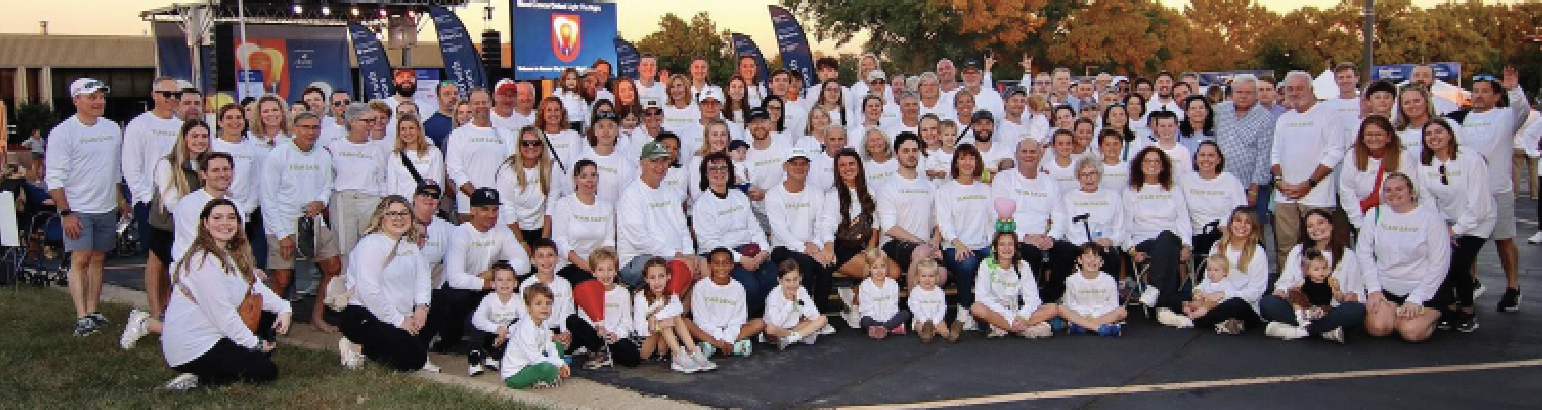 On any given workday in Kansas City, the Midwest Trust office hums with the usual rhythm of client meetings and portfolio reviews—but the conversation often drifts beyond financial statements. Here, philanthropy is not a line item on a balance sheet; it’s a lived practice. “Community engagement strengthens the social fabric that allows businesses to operate and thrive,” says James Bergman, who oversees the firm’s philanthropic vision. “In our industry, trust is the foundation of every client relationship. Engaging authentically with the community reinforces that trust and cultivates qualities—integrity, empathy, service orientation—that are essential to strong fiduciary practice.”
That philosophy is embedded in both culture and infrastructure. Midwest Trust’s approach is intentionally personal, driven by employee passions rather than a top-down mandate. “Service should be personal and meaningful,” Bergman emphasizes. “We encourage associates to engage in the causes and communities that matter most to them.” From board service to pro-bono advisory work, staff actively shape the firm’s philanthropic footprint. The result is a culture where empathy, accountability, and collaboration are practiced daily, not just aspirational values.
As the firm has grown, so has the sophistication of its giving. A few years ago, Midwest Trust launched the World Giving Foundation, a “global community foundation” that provides clients and partners across the country—and increasingly worldwide—with a modern, flexible platform for charitable giving. Bergman explains, “This expansion allowed us not only to support our clients’ philanthropic goals more effectively but also to establish a more cohesive framework for our own giving.” What began as informal volunteer efforts has evolved into a coordinated, purpose-driven strategy, blending the personal passions of employees with the firm’s long-term mission.
SpecChem
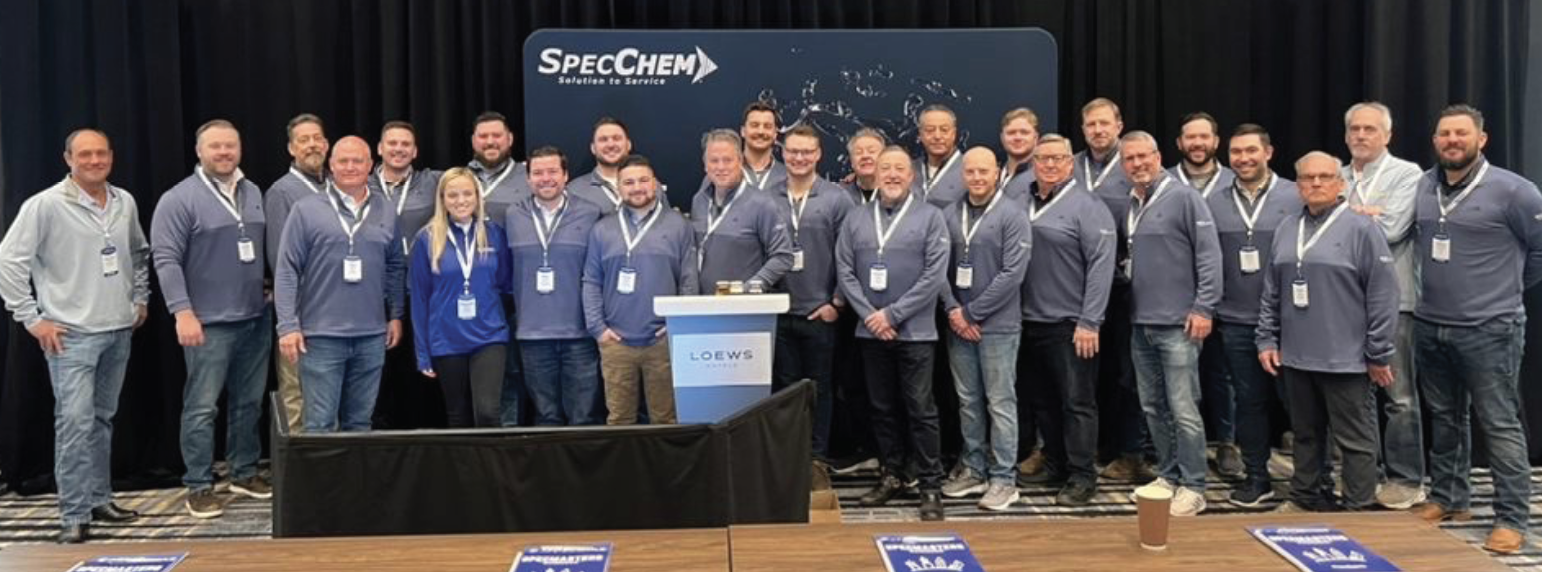 For Greg Maday, business has always been about the relationships—but so has his concept of corporate philanthropy. At SpecChem, the construction-materials maker he founded in 2006, corporate philanthropy is deeply woven into the company culture. Thus, it serves as a natural extension Maday’s personal values of relationships, respect, and the Golden Rule.
As a leading manufacturer of concrete-related building products in Kansas City, SpecChem not only builds durable infrastructure but also fosters a culture of giving back, encouraging employees to contribute to the community in meaningful ways.
His commitment to philanthropy stems from his humble roots and lifelong belief in treating others with dignity. Growing up in a modest duplex in St. Joseph, as the youngest of three in a family shaped by divorce and remarriage, Maday recalls a childhood without luxuries like a TV, yet filled with love.
“I always felt loved and didn’t realize that we didn’t have much, because it was all I knew,” Maday has said. Moving to a new neighborhood opened his eyes to opportunity: “I saw that the bankers’ kids had nice things, and that’s when I learned something important: if you get a job, work hard and have a little luck, you can have those things, too. I had a little hunger to succeed.”
This hunger drove him to the University of Missouri, where friendships and mentorship in the Phi Delta Theta fraternity shaped him. “The best part of my time at Mizzou was the friendships I made,” he said. At the Trulaske College of Business, he learned self-reliance and the value of relationships: These experiences instilled in Maday a profound sense of responsibility to give back. “It’s important to do the right thing by people,” he said, reflecting on the Golden Rule: treat others as you wish to be treated. When selling his first business, he insisted on fair compensation for employees, despite advice otherwise. “I wouldn’t change that. It’s important to treat people with respect and dignity.”
At SpecChem, this ethos translates into a workplace that prioritizes community impact. The company offers employees additional paid time off specifically to volunteer with nonprofit organizations of their choosing, embedding philanthropy into daily culture. Family-oriented benefits, company events, and a supportive environment reflect Maday’s emphasis on enduring relationships—“Relationships are everything,” he emphasized. “People do business with those they trust, and trust comes from strong relationships.”
Maday and his wife, Elizabeth, lead by example through numerous philanthropic efforts. Maday has served on boards for the Nelson-Atkins Museum of Art, Kemper Museum of Contemporary Art, The American Royal Association, UMB Bank, and the Greater Kansas City Community Foundation, praising the latter: “I love what they do and how they help facilitate giving.” He spent over a decade on the Trulaske College of Business Dean’s Advisory Board, mentoring future leaders.
Through ventures like co-ownership of Sporting Kansas City, Maday supports initiatives such as The Victory Project, aiding children with serious illnesses. His family, including children employed at SpecChem—like son Max, a Trulaske graduate—shares this spirit, bonding over golf, sports, and travel.
For Maday, SpecChem’s success is intertwined with community stewardship. “I think it’s important to step up and serve as leaders in the community,” he said.
By empowering employees to volunteer and modeling generosity, SpecChem extends Maday’s values beyond profits, proving that strong relationships and doing right by others build not just better concrete, but a better world.
Philanthropy at Midwest Trust unfolds on multiple levels. Associates are encouraged to volunteer during work hours when necessary, particularly for board or committee service, with flexible scheduling enabling consistent impact. Employee-led initiatives organize everything from local service projects to national fundraising campaigns. The firm provides direct donations to select nonprofit partners and amplifies employee-led fundraising, while also contributing in-kind expertise in financial management, governance, and strategic planning. “By supporting both nonprofit institutions and individual philanthropists, we help ensure that charitable dollars are preserved, grown, and deployed thoughtfully in service of meaningful causes,” Bergman notes.
Some initiatives rise to prominence because of the personal connections they inspire. Most recently, the team rallied around the Leukemia and Lymphoma Society—now Blood Cancer United—when a colleague faced a blood cancer diagnosis. “The response from our team was immediate and heartfelt, and the organization became a natural focal point for fundraising and awareness efforts,” Bergman recalls. Beyond that, the firm maintains active engagement across social services, education, health, arts, and community development, prioritizing sustained impact over one-time contributions.
For Bergman, corporate philanthropy is inseparable from the firm’s identity. “Philanthropic involvement is not an extracurricular activity—it’s a direct extension of who we are and how we operate,” he says. By connecting employee passions, client objectives, and community needs, Midwest Trust ensures that its work extends far beyond financial stewardship. The firm manages charitable assets with the same care and transparency it applies to client portfolios, overseeing foundations, donor-advised funds, and charitable trusts while guiding governance and compliance. In doing so, it creates a ripple effect: employees bring lessons learned in service back to the office, clients see a model of thoughtful giving, and communities experience sustained support.
In a city known for its civic-minded spirit, Midwest Trust has carved out a distinctive place as a corporate steward that blends expertise with empathy. Its model proves that meaningful philanthropy is not just about dollars—it’s about time, talent, and heart, woven into the culture of the firm and reflected in the communities it serves.
Terracon
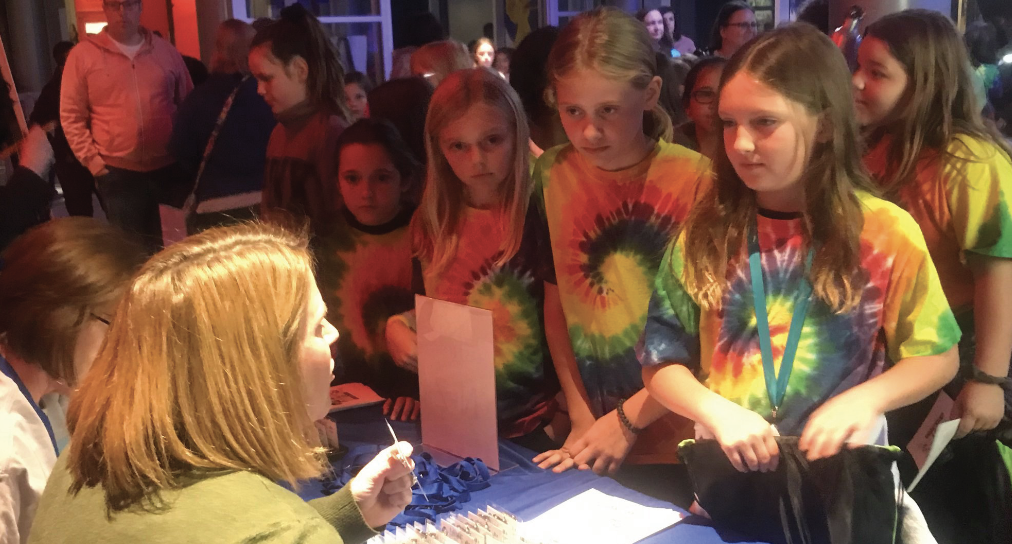 If you think of its corporate philanthropy as a woven garment, Terracon’s would comprise threads from more than 180 offices covering 7,000 employee owners. That makes for quite a quilt.
The consulting engineering firm headquartered in Olathe makes philanthropy part of its core identity through the Terracon Foundation. Established in 2007 as a donor-advised fund at Greater Horizons (affiliated with the Greater Kansas City Community Foundation), the firm’s foundation has grown into a robust national giving program. Since its inception, it has awarded nearly $6 million in grants, scholarships, matching gifts, and disaster relief, with more than $370,000 distributed in 2023 alone.
The key to making it work over a national expanse is requiring that each community and university grant be championed by an actively involved employee. This grassroots approach ensures funding flows to causes employees personally value, aligning with priorities in STEM education, the built and natural environment, and equity—particularly leadership development in underrepresented communities.
“Each community and university grant awarded by the Terracon Foundation is championed by an employee-owner, providing an opportunity to give back to the organizations that mean the most to them,” said Gayle Packer, Terracon’s chair, president, and CEO. “The continued partnership with our clients makes these grants possible.”
In the Kansas City region—home to Terracon’s headquarters and deep community roots—the foundation supports local non-profits and initiatives that reflect the company’s mission to build vibrant, sustainable communities. As part of the greater Kansas City metro, Terracon benefits from its partnership with Greater Horizons, enabling efficient grantmaking to area organizations.
The foundation also contributes to disaster-relief efforts that can impact regional communities, such as emergency health care support through Kansas City-area partner Heart to Heart International. In 2022, the foundation granted $10,000 to Heart to Heart for medical relief following Hurricane Ian, with Packer noting, “We are again honored to partner with this incredible organization to provide urgently needed care.”
Across satellite offices nationwide, the same employee-driven model amplifies local impact in diverse markets. Those community grants up to $5,000 and university grants up to $15,000 fund non-profits and academic programs where employees live and work, while larger National Partner grants up to $50,000 support broader initiatives.
Employees champion causes ranging from after-school STEM programs to professional development for women in engineering. For instance, one employee in Seattle championed early grants for elementary science education and later served as foundation board chair, highlighting the personal commitment the program inspires. In Wichita, another employee secured National Partner grants for the Society of Women Engineers to fund scholarships and marketing efforts showcasing women engineers, including Terracon professionals. An Omaha employee observed widespread local philanthropic activities, describing colleagues as having “a caring spirit” that drives office-level volunteering and giving.
Additional programs broaden participation: employee dependent scholarships of $2,000 annually, a matching gift program ($20–$100 per donation), and companywide campaigns for seasonal causes like Earth Day, back-to-school drives, and holiday giving through Feeding America. The foundation also responds to national disasters, such as grants to the Maui Strong Fund for wildfire relief.
Governed by a board of nine employees from various offices, the foundation reviews dozens of applications annually, awarding more than 40 grants in typical cycles.
As one longtime employee noted, the caring evident in daily work extends naturally to communities served across all 50 states. Through these efforts, Terracon’s philanthropy—totaling over 1,500 grants and matching gifts—strengthens education, environmental sustainability, and equity while fostering stronger connections in Kansas City and beyond.
PUBLISHED DECEMBER 2025