
HOME | ABOUT US | MEDIA KIT | CONTACT US | INQUIRE
HOME | ABOUT US | MEDIA KIT | CONTACT US | INQUIRE
Solutions to a never-ending challenge.
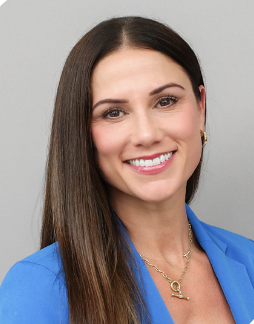 “Don’t judge me by our best days together, judge me by how I show up on your worst.” That’s been my philosophy, and my team’s, through two-plus decades of advising employers on benefits.
Because in health insurance, the fix has never been “just add water.” A benefits offering built on empathy and sustainability isn’t a quick fix and it doesn’t come from diluting the coverage itself. Here are two stories that prove it.
The PE Platform
I recently sat across the table from a private-equity firm managing more than 10 separate health plans across different sizes, regions, and industries. The HR leader asked one straight-forward question: How do we build a benefits strategy that leverages our collective buying power to reduce and stabilize costs?
Every adviser she’d called before us said it couldn’t be done or offered to run a feasibility study for a fee.
But that case presented an opportunity to deliver something different. After significant diligence, the solution was a self-funded platform serving all the individual organizations, each with its own stop-loss policy, so any one company could exit without disrupting the structure for the rest. One dedicated team, backed by specialty practices built for exactly this kind of complexity, managed every relationship under one roof. Along the way, the process uncovered compliance gaps that had gone unaddressed and eliminated redundant adviser fees quietly eroding value.
Eight months in, the organizations have saved more than $2.5 million, a number still growing. A number that has added over $20 million in enterprise value to the business.
The KC Contractor
A few years ago, a different client hit a different kind of wall. A longtime Kansas City contractor with roughly 150 employees had always been fully insured and had always resisted self-funding. Then a rare, high-cost, specialty-medication situation hit and the resulting renewal came in at an increase of more than 60 percent. The owner considered dropping benefits altogether and absorbing the ACA penalties as the alternative.
Again, another solution was possible: Restructuring the plan as self-funded and layered in targeted specialty drug management. By advocating directly on behalf of the employee, that individual received the medication at no out-of-pocket cost. The result: a drastically reduced renewal and a six-figure budget surplus by year-end.
No narrower network. No diluted plan. Just a smarter one.
The Association Exit
For more than 25 years, a Kansas City organization renewed health coverage through a trade association plan and watched costs climb every year with no explanation—and no recourse. Despite being one of the association’s largest members, with more than 450 employees, it had no leverage and no access to its own claims data. The structure designed to protect them had become the problem.
Exiting from that wasn’t simple; coverage continuity, network transitions, and regulatory compliance all had to be managed carefully, but within the first year, the company was able to provide richer benefits at a lower net cost to their employees. For a work force that had absorbed years of quiet erosion in their coverage, it was a meaningful change.
The more important shift, though, was structural. For the first time, the association owned its claims data. They could see what was driving costs, understand their population’s health trends, and make strategic decisions instead of reactive ones. Two years later, that foundation supported a move to a self-insured platform.
Nine months in, they’ve saved $950,000 compared to what their 2026 fully insured renewal would have cost. Not a projection, but actual dollars retained and back in the business.
The Common Threads
What connects a large PE platform to a 150-employee contractor isn’t size, industry, or severity, it’s this: both gained access to the kind of specialized, strategic expertise typically reserved for Fortune 500 accounts, without sacrificing continuity, without adding complexity for employees, and without accepting the first answer they were given.
Most advisers respond to a hard renewal with “that’s just how it works,” because rebuilding a plan is a lot more work than requoting the same one. Employers who get a different outcome are the ones who push for a different answer.
The organizations winning on benefits aren’t necessarily spending more, they’re working with advisers willing to do the harder work: building a plan that holds up at renewal, protects the balance sheet, and scales with the business.
If your renewal keeps climbing and your benefits strategy still runs through multiple advisors or feels reactive year after year, don’t accept the first answer you’re given. A better-built plan, designed by someone who’s done it before, almost always exists.
PUBLISHED OCTOBER 2026