
HOME | ABOUT US | MEDIA KIT | CONTACT US | INQUIRE
HOME | ABOUT US | MEDIA KIT | CONTACT US | INQUIRE
Affordability has become the defining anxiety of American housing. Missouri is one of the dwindling places where the math still works.
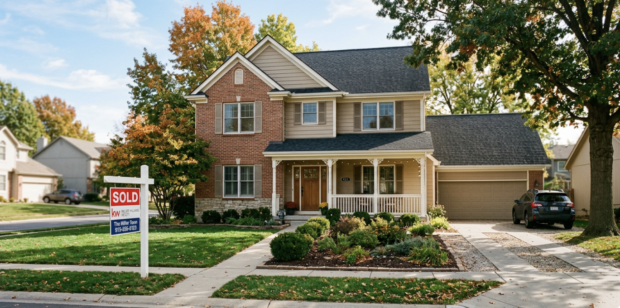
Housing affordability has moved from a personal-finance topic to a national political flashpoint, and for good reason: the gap between what median households earn and what median homes cost has been widening in market after market for years. Missouri sits on the other side of that trend line—one of a shrinking number of states where a household earning the area’s median income can still reasonably expect to buy the area’s median home.
The numbers make the case plainly. Missouri’s statewide median home sale price ran about $294,000 in May 2026, against a national median near $415,200. Recent affordability analysis puts Missouri among the nation’s most attainable housing markets—roughly 4.3 years of the state’s median household income to afford the median home, good for ninth-most-affordable in the country. Metro-level numbers track the same story: greater St. Louis posted an April median around $285,000, while Jackson County, anchoring the Kansas City side of the state line, ran near $287,000 with sales pace still brisk—homes moving in roughly 30 to 45 days across most of the state’s metros, not the multi-month waits common on the coasts.
That scarcity of affordable inventory nationally is exactly what makes Missouri’s position valuable rather than merely cheap. States that once offered similar bargains have watched prices catch up as remote work and interstate migration reshuffled demand; Missouri’s metros have absorbed population growth—Kansas City and Columbia among the fastest-growing in the state—without losing their price advantage. For now.
The pressure point to watch sits on the industrial side of the ledger, and it has a name: data centers. Missouri has landed some of the largest single capital commitments in state history over the past year—a $15 billion Google campus and a roughly $10 billion Amazon project, both anchored in rural Montgomery County, plus a $1.4 billion Metrobloks campus in Liberty and a Lambda AI facility in Kansas City’s Northland. Gov. Mike Kehoe has pointed to more than $25 billion in combined investment converging on one rural county alone. That’s an extraordinary infusion of industrial land demand, and it’s beginning to reshape site selection, land pricing and infrastructure planning well beyond the immediate footprint of any single campus—a dynamic worth watching for anyone valuing industrial and rural land near the affected corridors.
On the commercial side, the value proposition that has defined Missouri office and industrial space for years continues to hold: Class A office rents in St. Louis and Kansas City remain a fraction of coastal asking rates, and industrial vacancy in both metros has run consistently tighter than the national average, a function of steady demand against comparatively restrained new supply. For companies weighing a headquarters or distribution footprint against markets on either coast, the commercial math still favors Missouri by a wide margin.
The honest caveat: not every community has welcomed the scale of recent industrial investment. A citizens’ group has sued over transparency in one data center approval process, and voters in Festus ousted their entire city council after a local data center deal drew backlash. Growth on this scale doesn’t arrive without friction, and Missouri’s affordability story in 2026 includes both sides of that ledger—a market still open to buyers and businesses priced out elsewhere, and communities working out, in real time, how much industrial transformation they’re willing to accept in exchange.
For now, the fundamentals still favor the buyer and the business relocating in. Missouri listing agents charge among the lowest commission rates in the country, transaction costs stay low relative to home value, and sale-to-list price ratios in the high 90s suggest a market that’s competitive without being feverish. In a national conversation increasingly dominated by the question of where affordability still exists, Missouri’s answer—for buyers, renters, and businesses alike—remains: here.
PUBLISHED AUGUST 2026