
HOME | ABOUT US | MEDIA KIT | CONTACT US | INQUIRE
HOME | ABOUT US | MEDIA KIT | CONTACT US | INQUIRE
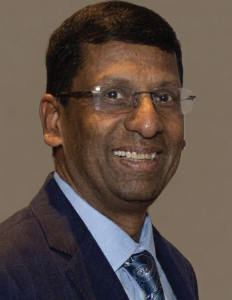 Raghu Adiga, Liberty Hospital, Liberty
A lower-middle-class upbringing in India taught Raghu Adiga two things at once: education is non-negotiable, and the point of that education is to contribute. His parents pushed both. Medicine, he decided, was the clearest way to affect other people’s lives. Watching his mother work to secure the schooling the family needed set the tone for the long road that followed. He arrived in Missouri in 1997 after specialty training in Chicago and has now spent more than 22 years at Liberty Hospital, the past four as CEO. Leadership was not a single epiphany. “The consistently encouraging and nurturing environment” at the hospital did the work, he says. Early roles drew positive feedback; larger ones followed, including chief medical officer and infectious-disease physician during the pandemic. Nearly three years ago, the hospital’s board and senior team chose a cross-state-line affiliation with The University of Kansas Health System, where Adiga found a cultural alignment right from the start. The payoff is arriving in concrete form: expanded services, stronger recruitment, and capital directed at growth needs north of the river. “Bringing that care closer to home for Northlanders and the people in northwest Missouri makes sense and is exciting,” Adiga says. Kansas City’s bi-state character and rising profile in specialized care still surprise outsiders. Missourians themselves, he notes, prefer data and proof—“the Show-Me State moniker is fitting.”
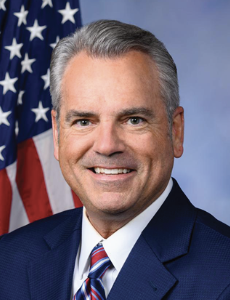 Mark Alford, U.S. Representative, Missouri’s 4th District, Lake Winnebago
For 25 years, Mark Alford reported the news that shaped Missouri conversations. Now he helps write the policies those conversations demand. The former Kansas City television anchor, who spent a quarter-century on the city’s top-rated morning show, brought a communicator’s instincts and a front-row view of local concerns into the U.S. House when voters sent him to Washington in 2023. Covering the state’s biggest stories connected him to families across every walk of life and sharpened the skills he now uses to “inform, influence, and inspire.” In Congress, he has moved from the Armed Services, Agriculture and Small Business committees into the powerful House Appropriations Committee, where he serves as Missouri’s voice on agriculture, national defense and small-business development. He also chairs the Oversight and Investigations Subcommittee of the Small Business Committee. Alford frames his role as amplifying the values he heard repeatedly while reporting—faith, family, hard work and individual liberty—and as a megaphone for the 4th District’s residents. Married 33 years with three grown children, he continues the charitable and civic work that marked his broadcasting career while translating years of observing public policy into the harder business of making it.
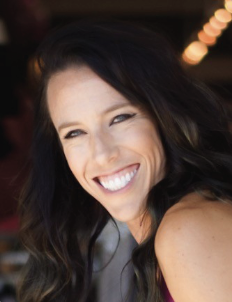 Kéelin Baine-Russell, Emerge Fitness & Training, St. Charles
Programming that treats elite athletes and people with complex medical needs as equally worthy of specialized care is still uncommon. Kéelin Baine-Russell has built a private practice around that premise: individualized training and rehabilitation for youth and professional athletes alongside clients living with Down syndrome, autism, cerebral palsy, neurological and spinal disorders, and legal blindness. The motivation is practical as much as personal, and she fond that demand followed results. Families and athletes who needed more than a standard gym program or a one-size-fits-all protocol found few places equipped to design work around both performance goals and medical reality. Her business grew by filling that gap—strength, coordination, recovery and confidence as measurable outcomes, not as afterthoughts. That work now defines her place in the community more than any single title. She is known for meeting people where their bodies actually are, whether the next step is a higher level of sport or a more independent daily life. An earlier career chapter involved high-school coaching, an experience that helped form the teaching instincts she still uses. The commonality in her career arc, though, has always been evident in her contributions to others’ lives: programming done carefully enough that people can trust it with both their ambitions and their limitations.
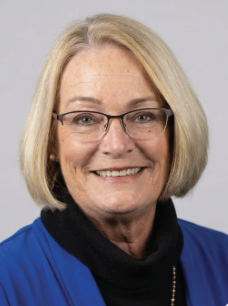 Marci Bennett, St. Joseph Convention & Visitors Bureau, St. Joseph
When Buchanan County voters approved a one-10th-cent sales tax for tourism in 1993, Marci Bennett helped turn that revenue into a lasting economic engine. More than three decades later, as she prepares to retire, the St. Joseph Convention & Visitors Bureau she has led almost from its beginning can point to a clear record: tourism’s economic impact in the county has grown from $85 million in 1993 to $240 million, supporting more than 3,800 local jobs. Bennett, a St. Joseph native with a background in hotel and restaurant management, initially expected only part-time work while raising twins. She stayed because she loved the mission and the community’s potential. Under her leadership, the CVB has pursued regional collaboration—supporting the Remington Nature Center, the Lewis and Clark bicentennial, a local Museums Association, the Pony Express Region Tourism Association and the Missouri Highway 36 Heritage Alliance which markets the route as “The Way of American Genius.” Stephen Foutes, director of the Missouri Division of Tourism, has said that if anyone ever writes the definitive history of the state’s tourism industry, Bennett “should have her own chapter.” Inducted into the Missouri Tourism Hall of Fame in 2006, she continued leading at a high level for two more decades. In a city that has long worked to claim its place on the visitor map, her tenure leaves both measurable economic gains and a model of regional partnership.
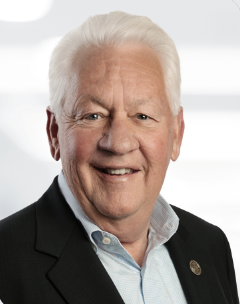 Bob Brinkmann, Brinkmann Constructors, St. Louis
Even on a national scale, commercial construction still begins with local roots. Bob Brinkmann founded R.G. Brinkmann Construction Co. back in 1984, and built it into today’s Brinkmann Constructors before stepping down in 2024. It morphed from a St. Louis base into a full-service commercial and design-build firm operating in 40 states. The company remains headquartered in the St. Louis region while delivering projects that shape communities far beyond Missouri’s borders. His civic footprint matches the business reach. He has served as chair of the Missouri State Highway Commission, board member of the St. Louis Metropolitan Police Foundation and the St. Louis Police Chief’s Club, and executive board member of Junior Achievement. He is a past chair of the Board of Trustees at Missouri University of Science & Technology, his alma mater, and continues active involvement with projects such as the Gateway Regional Police Training Facility, KidSmart–St. Louis, and Lafayette Academy: A Classical School, among other charitable initiatives. An Academy of Civil Engineers member and honorary state trooper with the Missouri State Highway Patrol, Brinkmann treats infrastructure, public safety and community investment as extensions of the same responsibility that drives his firm: building things that last and serve the public good. In a sector where national scale often pulls companies toward the coasts, he has kept both the enterprise and his civic engagement firmly anchored in Missouri.
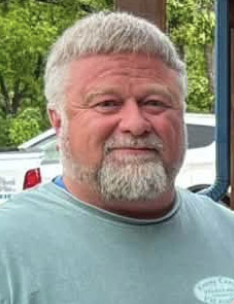 Kenny Carroll, Kenny Carroll Excavating, Camdenton
Limestone, steep grades and a shoreline economy that never sits still make excavating around the Lake of the Ozarks as much a reading of the ground as a business. Kenny Carroll has spent nearly 30 years scratching a living out of that ground and changing the face of the lake region. Born and raised at the lake, he went to work young for grandparents who ran a Linn Creek gun club. Trap shooting took him across the country; he became a world-class shooter, extract from that the work ethic and dedication he still uses. After Camdenton High School he married his sweetheart, Naia. They like to joke that their wedding anniversary and business anniversary fall on the same day. May 2027 will mark 30 years of both. A brief factory job confirmed what he already knew: he could not spend his life inside. He needed sunshine; the heavy equipment had a special appeal. “Stick with what works but never be afraid to change direction when needed,” he says. Pride in the work, doing more than expected, finishing the job and never asking anyone to do what he would not do—those are the rules he tries to pass along. Also: answer the phone and return the call. He and Naia credit mentors, employees and customers for three decades on a lake they call unique in its mix of social life, one-of-a-kind economy and community. They raised their children there and cannot imagine living anywhere else. The geologic stubbornness of the place is simply the job: read the rock, stay outside, and follow through to the end.
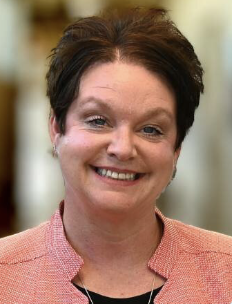 Kristy Carter, Jordan Valley Community Health Foundation, Springfield
Access to health care and access to food are neighboring problems—often within the same households—and are common threads behind Kristy Carter’s work and impact. She spent a decade at the Least of These food pantry in Ozark, Mo.—rising from marketing and development into the executive director’s chair—as demand climbed far past pandemic peaks. The pantry, Christian County’s only full-service operation, was serving more than 1,400 families a month and running on a budget that approached $5 million on her watch. Dual-income households became regular clients. The work was about keeping people fed while the rest of the safety net strained. In April 2025, she shifted gears and became the first executive director of the newly created Jordan Valley Community Health Foundation, the charitable arm standing alongside Jordan Valley Community Health Center. The center itself is among Missouri’s largest federally qualified health centers: founded in 2003 with one provider and two exam rooms, it now serves more than 67,000 patients a year across Springfield, Marshfield, Republic, Hollister, Lebanon and other southwest Missouri communities. At the foundation, she’s focused on enlarging that capacity through philanthropy: charitable support that improves health and well-being beyond what operating revenue can reach.
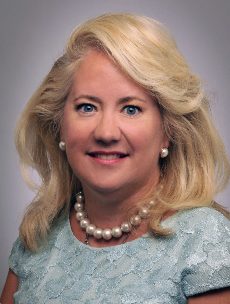 Jacqueline Clark, Town & Country Strategies, Lee’s Summit
Results, not credit, have been the working theory of Jackie Clark’s life as, in her words, “more of a counselor” than a leader. But that hasn’t kept her off the field. After decades directing government relations and public affairs for category-leading corporations, including Hallmark and Ash Grove Cement, she now runs Town & Country Strategies, a practice built on word of mouth and long-term relationships. The aim is a continuation of her corporate-world work: helping clients, non-profits and candidates get from a need to a result. The skill set started in rural Jackson County on a high-school debate team, an experience she likens to doubles tennis: “You have a partner, and we killed it.” Debate taught speaking, preparation and a lesson she repeats: you alone are never the sole force behind a win. She has carried that into federal, state and local lobbying, with a clear preference for state work. Washington, she notes, is “just not Midwest nice.” Missouri, by contrast, rewards people who will initiate and collaborate. “I’m not a ‘can’t’ person. I really want, whatever the group is, whatever the need is, to focus on how do we get there?” Family, too, kept her here, and the culture suits her: the urban/rural dynamic, game days at Arrowhead or The K, a cultural outing or fine dining in town. Voters later put her on the Lee’s Summit R-7 school board; national peers had made her a public-relations icon. But throughout it all, the same framing: speak clearly, build the team, and get there.
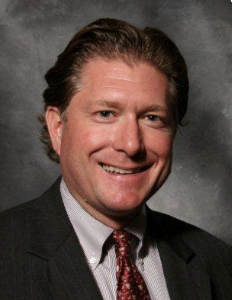 Judge Robert Clayton, Missouri Court of Appeals Hannibal
Serving on the appellate bench was never part of the original plan. Robert Clayton grew up watching his father practice law in a small town, representing clients large and small because “all deserved an advocate.” That example, combined with a family tradition of public service, led him to study law and, while still a student at UMKC, to run for the General Assembly. The experience forced him to learn citizen concerns from every corner of the state. Becoming a judge, he says, was “beyond my wildest dreams.” Looking back on the body of his work, he hopes simply to have upheld the public trust—“following the law carefully, respectfully and judiciously.” Serving as a member of the judiciary has been the highlight of his career. Missouri and Hannibal kept him rooted. Family is here; opportunities for work, service and life are here. Outsiders, he notes, often miss the state’s regional variety—from rural traditions to urban sophistication, jazz and blues, the western frontier and the Ozarks—and the deep loyalty Missourians feel toward the Kansas City Chiefs. In Hannibal itself, the legacy of Mark Twain and Molly Brown still animates a hard-working, eclectic community that celebrates through fairs, festivals and a Main Street that remains one of the state’s most distinctive.
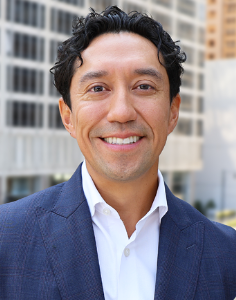 Pat Contreras, McCownGordon Construction, Kansas City
For Pat Contreras, service was always a constant thread, from his youth in Kansas City’s urban core—the West Side and downtown—where his grand-father, a World War II veteran, instilled a simple charge: work hard, fight for what you believe in, and do things in service of others. A high-school mentor at Bishop Miege saw potential in Contreras early, taking him to a youth conference in Chicago, where he met peers already driving change in their own communities That showed him what leadership could look like. That orientation carried him through St. Louis University, a master’s at Columbia University, and a career as a U.S. Foreign Service officer with postings that included Mexico and Pakistan. Along the way, he learned resilience, humility and the ability to understand perspectives far different from his own. After coming back home for a run for state treasurer let him travel Missouri and see communities that, despite surface differences, wanted the same fundamentals: safe neighborhoods, good schools, solid health care, good jobs and a better future for their families. “We are not as divided as people sometimes believe,” he says. Nearly a decade at McCownGordon has given him a platform to translate that outlook into both private-sector growth and public stewardship, and as a Kansas City Parks and Recreation commissioner, he helps oversee more than 200 parks and community centers that are key quality-of-life assets here.
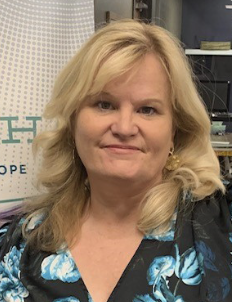 Amy Cox, Flourish Furniture Bank, Kansas City
Serving others was a core family value in the St. Louis home where Amy Cox grew up. Those early lessons sparked a lifelong commitment to helping others and ultimately shaped a career that has moved through politics, government, the investment industry and non-profit leadership. Today she channels that experience into Flourish Furniture Bank, working to strengthen communities by meeting basic needs with dignity. A naturally shy child, she deliberately sought leadership roles in student government and other activities, discovering that leadership is “less about recognition and more about creating opportunities for others to succeed.” One high-school teacher and mentor, Alan Mitchell, proved especially formative. He challenged her to think critically, pursue ambitious goals and embrace opportunities that once felt beyond reach. “His guidance helped shape the course of my career and gave me the foundation to pursue a path of leadership and service,” she says. Having lived and worked in St. Louis, Columbia and Kansas City, Cox has remained invested in Missouri because of its people. “I believe in the people and communities that make our state special,” she notes. Outsiders, she says, often miss this city’s world-class businesses, research institutions and entrepreneurial energy.
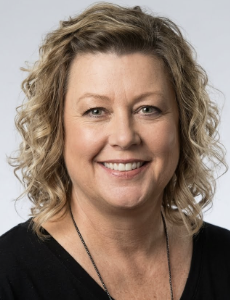 Paula Cunningham, Jon Primus Farms, Columbia
To the uninitiated, it started with some competitive fire on a WNBA court in June, stretched into a 22-second silent confrontation, then went viral around the world with Sophie Cunningham’s signature “point.” But the origin of that zeal, for anyone familiar with Mizzou athletics, began decades before the Internet memes started to fly. You can trace it back to the family farm near Rocheport and to Paula Cunningham—affectionately known as “Mama P”—who once donned the black and gold herself, throwing javelin for the MU Tigers’ track team. Her husband Jim, his brother and their father all played football at MU, too, long before Sophie and her sister took to the basketball court there. Athletics were simply the family language, and with Mama P, accountability was never soft-pedaled. The result? A toughness that has traveled well beyond college basketball environs and helped make their younger daughter a media sensation this summer. Her daughter’s fearless style and recent viral exchanges are extensions of a household that treated hard work, honest feedback and resilience as non-negotiable. Paula’s own athletic past and steady presence through both triumphs and heartbreaks helped forge that edge, along with her farming roots put down on a traditional row-crop operation in Callaway County.
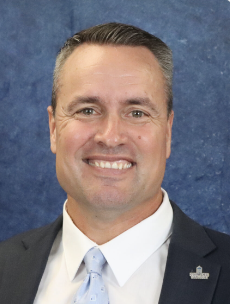 Chett Daniel, Crowder College, Neosho
Few college presidents can say the institution they lead once changed their own life’s trajectory. Chett Daniel can. A first-generation student who earned his associate degree at Crowder College in 1999, he returned years later, served in multiple roles beginning in 2017, was named interim president in Feb. 2025, and became the college’s 10th president that April. His path wound through nine years in the Marine Corps as an infantry machine gunner and combat instructor, then through teaching and various positions at Walmart in stores, logistics and the home office before higher-education leadership. When the Board of Trustees chose him, chair Andy Wood called him “a true servant leader” who already understood Crowder’s mission of serving southwest Missouri and the region. Daniel’s doctorate research focused on economic development for rural areas—work that now informs partnerships linking local employers with talent pipelines through apprenticeships and work-force programs. “Crowder College changed the trajectory of my life when I attended here as a first-generation college student nearly 30 years ago,” he has said. “I am humbled and honored to have this opportunity to work alongside Crowder faculty and staff to serve the residents and communities of southwest Missouri,” which is why he treats the presidency as both personal repayment and regional responsibility.
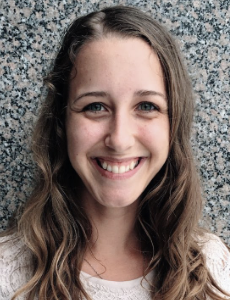 Samantha Dickey, Dept. of Higher Ed & Work-force Development, Jeff City
“Fair is not equal, and equal is not fair.” Samantha Dickey’s mother, a special-education teacher in rural northeast Missouri, repeated the line often enough that it became a working philosophy. Equity, not sameness, still shapes the way Dickey approaches postsecondary policy for the state. A chance conversation redirected the rest of the path. Interviewing for a public-relations internship at Truman State, she was steered by Heidi Templeton toward the Missouri Government Internship, quickly paired with a legislator, and set on a trajectory that has kept her inside state higher-education policy for more than eight years. She serves as assistant commissioner for postsecondary policy, work hat ranges from transfer and articulation to adult-learner strategy and the practical machinery of student success. Missouri itself is the reason she stayed. “I’ve seen the way Missouri’s communities support their people through the good times and the bad,” she says, “and am driven by the opportunity to make a positive impact in the lives of Missourians for generations to come.” On work-force development, she is clear-eyed. Higher education remains a solid investment, she argues, but only as one piece of a larger education-and-training ecosystem. The real challenge—and opportunity—is helping individuals identify, at any given stage of life or career, which credentials or programs will move them toward the goals they have set for themselves.
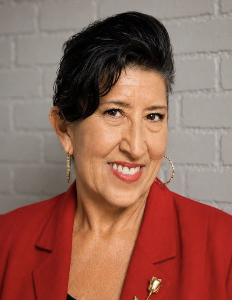 Sharon Donat, Excelsior Springs Standard, Richmond News, Excelsior Springs
In an era when local newspapers face relentless pressure, Sharon Donat is proving that community journalism still matters. As publisher, she has spent the past several years guiding Excelsior Springs Standard through the same headwinds that have shuttered many of its peers—declining ad revenue, shifting reader habits and the constant need to adapt—while keeping the focus on what readers actually need: reliable local news, a record of community history and a place where neighbors stay connected. When she took the reins in 2022, longtime publisher Frank Nixon became an important sounding board. “Frank reminded me that while newspapers have changed over the years, the reason they exist really hasn’t,” she says. That perspective has shaped her leadership: serve readers first, then find practical ways to move the paper forward. Missouri has been home since 1994, and the state’s small towns are what keep her invested. “There’s something special about Missouri’s small towns,” she notes. “You don’t just know the names of local business owners, elected officials and non-profit leaders; you know their stories.” Donat grew up in Shawnee and earned a marketing and management degree from Kansas State University. Early stints in restaurant management and industrial sales taught her leadership under pressure and the value of long-term relationships—skills she now applies to the daily work of keeping community journalism alive in northwest Missouri.
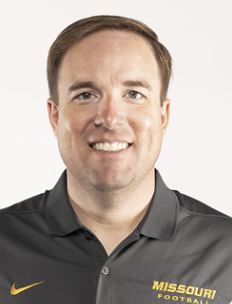 Eli Drinkwitz, University of Missouri, Columbia
Community and interdependence shaped Mizzou’s Eli Drinkwitz long before he reached a major-college sideline. Growing up in Alma, Ark., he learned that reaching full potential required relying on everyone around him. That same dynamic drew him to football coaching: a game in which success depends on constant mutual reliance. Two moments redirected his path. College mentors Tom McMurray and Frank Vines urged him to pursue coaching, convinced he would be an asset. Later, in 2012, he faced a choice between remaining on the field as co-offensive coordinator at Arkansas State or taking an off-the-field role at Auburn under Gus Malzahn. He stayed, earned the opportunity from Brian Harsin, and set the trajectory that eventually brought him to Missouri, where it was love at first whistle and a 46-29 record in six seasons. “I just love the people of the state of Missouri. I love the community of Columbia,” he says. He remains appreciative of the administration’s support and clear-eyed that “the job that we came here to do is not done yet.” Outsiders, he believes, sometimes miss the state’s deep pride—in being the Show-Me State and in its professional teams from the Chiefs and Cardinals to the Blues and beyond. At the university level, what stands out is Missouri’s commitment to serving the state itself. In Drinkwitz’s view, the institution meets Missourians where they are and helps them become the best version of themselves—an institutional purpose that aligns with the team-first values that first drew him to coaching.
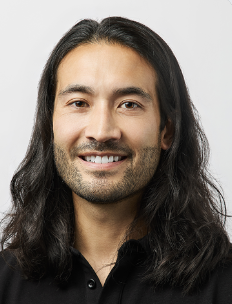 Tyler Enders, Co-owner, Made in KC & Rainy Day Books, Kansas City
Independent retail is a hard business in the digital age. Tyler Enders has spent the past decade proving it can still thrive when it is rooted in genuine community connection. As co-owner of Made in KC and Rainy Day Books, he has helped turn two local brands into household names by treating stores as gathering places rather than mere points of sale—an approach that has made both enterprises more resilient than many of their peers. Rainy Day Books embodies that philosophy most clearly. The shop hosts more than 100 author events a year, draws more than 10,000 attendees, runs a dozen book clubs and stages 20 elementary-school book fairs. “Independent bookstores represent the pinnacle of local retail,” Enders says, quoting founder Vivien Jennings’ description of them as “a community’s well-spring of ideas.” The challenge is obvious—convenience, endless online selection and algorithmic recommendations—but the demand for human recommendation remains strong. “People are seeking community, and stories remain one of the foundations of human connection.” What keeps him invested in Missouri is the same quality that makes the businesses possible. “Nobody loves Kansas City like Kansas City,” he notes. Outsiders often underestimate the state’s breadth of opportunity; Enders sees a microcosm of national markets paired with uncommon kindness and collaboration. In that environment, local enterprises can grow into regional or national ones without losing their sense of place—an advantage he has no interest in leaving behind.
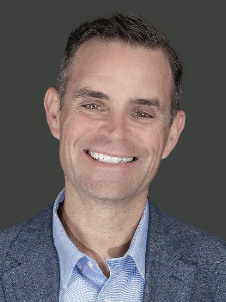 Andrew Grabau, William Guitar Little Foundation, Columbia
Poverty looks different in a Chicago public-housing project than it does in rural Missouri, yet the underlying barriers are the same. That realization, reached during graduate work at DePaul University, redirected Andrew Grabau’s career toward bridging urban and rural approaches to community challenge. Today he leads the William Guitar Little Foundation in Columbia, applying lessons learned from both settings. Raised partly in Joplin after early years in Omaha, Grabau saw first-hand the barriers created by rural poverty and the difference that focused philanthropy, sound policy and community action can make. Books assigned by high-school teachers—To Kill a Mockingbird and Jonathan Kozol’s Savage Inequalities—further sharpened his sense of systemic inequity. Mentors including Congressman Ike Skelton, MU Chancellor Brady Deaton and Bill Little reinforced that “leadership is a form of stewardship fulfilled through service.” He has stayed in central Missouri because the scale allows him to see impact clearly. “We are large enough to have access to resources, while small enough to see the feedback loop in action,” he says. Missouri philanthropists, he has found, are solutions-oriented and eager to support innovative approaches rooted in thoughtful planning and measurable outcomes.
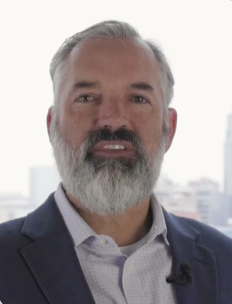 Tye Grant, Police Foundation of KC, Kansas City
Public safety is a business consideration as well as a civic one. Companies weighing expansion or Downtown investment still factor violent-crime trends into decisions about risk and opportunity. Tye Grant has spent his career on both sides of that equation—first as a Kansas City Police Department major who led the Violent Crimes Division, and now as president of the Police Foundation of Kansas City, the nonprofit created by local business leaders to fund public-safety work beyond the department’s annual budget. He grew up around Joplin in a sports- and community-focused family. Grandparents modeled hard work and doing the right thing. “I first realized the ‘choice’ of work,” he says. “It just seemed a waste to spend so much time working and not doing it in a manner that you were proud you had done your best.” Mentors later pushed him into roles he would not have chosen alone. The lesson: “It is not ambition that gets you the next chair, what matters is doing a great job in the chair you are already in.” After 26 years with KCPD, he retired as a major, after watching key core districts fill with investment, from the central business district to the West side to River Market. The city, he says, is defined by people and businesses willing to give back—the Police Foundation itself an example of professionals volunteering resources to make Kansas City safer for everyone.
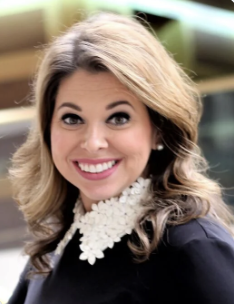 Michelle Hataway, Department of Economic Development, Jefferson City
Economic development in Missouri rests on the ability to make the state competitive for investment, talent and growth. To that end, Michelle Hataway leads that effort as director of the Department of Economic Development. She brought more than nine years of experience inside the department when she assumed the top post in 2024. She had already served as regional manager, deputy director and director of the Division of Regional Engagement before becoming deputy director of the full agency and then acting director. That progression gave her a ground-level view of how state tools—incentives, work-force programs, community development resources and business recruitment—translate into results across urban centers, mid-sized cities and rural counties. Before joining state government she worked in her family’s 90-year-old business and later at Netflix, experiences that sharpened both commercial instincts and an understanding of large-scale organizational dynamics. “Economic development takes collaboration, and we’re fortunate in Missouri to have a wide range of supportive partners across the public and private sectors,” she has said. In a state whose economy spans advanced manufacturing, agriculture, logistics, life sciences and emerging technology, her team is focused on strengthening existing businesses, attracting new investment and helping communities position themselves for long-term prosperity.
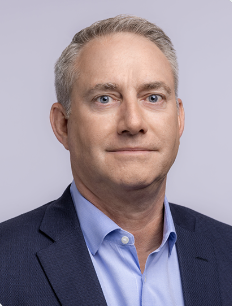 Greg Heckman, Bunge, St. Louis
Connecting farmers to consumers around the world is both a global business and a local one. Greg Heckman leads Bunge, the agribusiness giant whose corporate headquarters now sits in the St. Louis region, from a career that began in the fields of a small Illinois town of about 1,200 people. Planting and harvesting corn, wheat and soybeans taught him early that “when farmers succeed, food systems work and communities thrive.” His first job after college, as a commodity merchant trainee at ConAgra, introduced him to markets, logistics, risk management and the lasting importance of relationships and integrity. Missouri keeps him invested because it is an important hub for agriculture, food and innovation. “St. Louis combines deep agricultural roots with world-class companies, research institutions and a growing ag-tech ecosystem,” he says. Bringing Bunge’s global headquarters here was a natural fit: the region already served as a major North American hub and offered talent, transportation infrastructure, customers and a concentration of food, agriculture, animal health and plant science organizations. For a company whose purpose is connecting farmers to consumers, it is a place where business and industry naturally converge. The collaborative spirit of the region, he adds, remains one of its strongest assets.
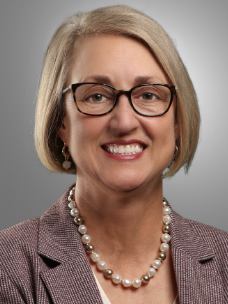 Jennifer Ingraham, Kansas City University, Joplin
Philanthropy, at its best, is less about writing checks than about opening doors. Jennifer Ingraham has spent 25 years connecting people’s generosity to missions that expand opportunity—first in the performing arts, then in higher education and health sciences. That work now centers on Kansas City University and related civic efforts that link education, service and community strength across Missouri, from major institutions to smaller communities. A defining shift came when she left a field she loved—the performing arts—for higher education. “I recognized in myself a deep passion and respect for higher education’s mission of access and opportunity,” she says, “and for the power of philanthropy to make that education possible for so many.” The move expanded her view of what the work can accomplish: scholarships that change a student’s trajectory, investments in research and health that strengthen entire communities. Missouri is where her personal life, professional purpose and commitment to service align. Outsiders sometimes mistake the state’s modesty for a lack of ambition. In reality, Missourians confront difficult problems, form unlikely partnerships and stay engaged for the long term. In KC and Joplin, she sees the same collaborative spirit daily—universities, health systems, foundations, businesses and civic leaders building something larger than any single institution. Leadership, to her, is measured not simply by what an organization accomplishes, but by whether the broader community is stronger because of it.
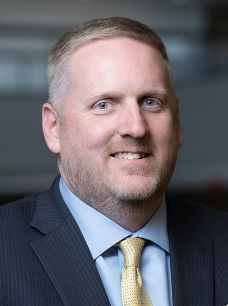 Geoff Jolley, LISC Greater Kansas City, Kansas City
Sept. 11, 2001, redirected Geoff Jolley’s life even though he was a thousand miles away from Ground Zero, in law school at Mizzou. Watching a Boone County FEMA search-and-rescue team deploy to New York, he felt compelled to act. He joined the Boone County Fire Protection District as a volunteer firefighter, later served on its urban search-and-rescue team, responded to Hurricane Katrina and the Joplin tornado, spent six months as a firefighter at McMurdo Station in Antarctica, and worked nearly 11 years with the Kansas City Fire Department. He continues to serve on the search-and-rescue team nearly 24 years later. That path of service runs parallel to a career in public policy and community development, and he gives full credit to three friends—Aaron Thomas, James Nelson and Jason Gines—for valuable life guidance. After interning in a congressional office through the encouragement of mentor Jack Holland, Jolley spent nearly 14 years as district director and general counsel for Rep. Emanuel Cleaver. At LISC KC, he works with colleagues, community members and partners to expand affordable housing and economic opportunity for those who need it most. A Kansas City native, Jolley remains invested because the region poured so much into him. He wants the next generation to experience the same sense of belonging and opportunity.
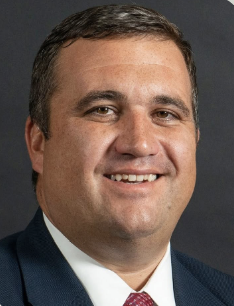 Caleb Jones, Assn. of Missouri Electric Cooperatives, Jefferson City
Caleb Jones grew up in Moniteau County, one of eight students in his eighth-grade class, the son of a farmer-sheriff who raised four children after Jones’ mother died when he was 11. His earliest political memory is riding in a 1948 Chevy pickup for his father’s sheriff campaign and learning, after a bloody-nose fight with his brother over parade candy, that politics is…messy. He later lost a race for Mizzou student-body president, left law school for a presidential campaign, then went back to school. Three days after earning his agricultural-economics degree, he packed a Toyota Tacoma and drove to Washington. Those detours, he says, taught him more than the titles that followed: congressional and White House work, three terms in the Missouri House, and a turn as Gov. Eric Greitens’ deputy chief of staff. The constant was his father, Kenny Jones, and one rule that travels from a farm kitchen to a Capitol hallway: treat people the way you want to be treated. After living elsewhere, he chose Missouri again as the place to raise his family. That choice now sits at the center of his job as CEO of Missouri Electric Cooperatives, the statewide association for 47 member-owned systems. Those co-ops power more than 600,000 homes, farms, and businesses and serve about 2 million member-owners across rural Missouri—neighbors who still depend on the same mutual-aid ethic that built the lines in the 1930s.
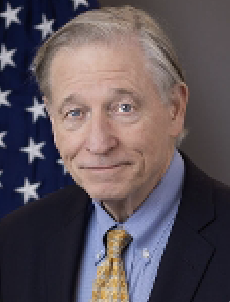 Crosby Kemper III, Multiple Institutions, Kansas City
Just try to find a business card big enough to contain the titles: Crosby Kemper III has spent a career moving fluidly between banking, civic leadership and cultural stewardship, leading at roles as director of the National Institute of Museum and Library Services, CEO of UMB Financial Corp and director of the KC Public Library. And those just touch the tip of his career and service resume. A KC native and scion of the family that laid the foundation for UMB Financial Corp., he served as president of UMB Bank in St. Louis and later as CEO and chairman of the parent company before leaving the corporate world in 2005 to assume leadership of the library. Under his leadership, it earned the 2008 National Medal for Museum and Library Service and became a nationally recognized hub of community programming. In 2020, President Trump nominated him—and the Senate unanimously confirmed him—to lead the Institute of Museum and Library Services, the primary federal agency supporting the nation’s libraries and museums. He held the post through 2024, overseeing pandemic-era recovery efforts and the reestablished President’s Committee on the Arts and Humanities before returning home. Along the way, he co-founded the Show-Me Institute, chaired the Missouri Commission on the Future of Higher Ed, and helped launch major cultural institutions including the Heart of America Shakespeare Festival. A lifelong bibliophile and Yale grad, Kemper continues to shape Kansas City’s cultural and civic landscape after a national tour of duty.
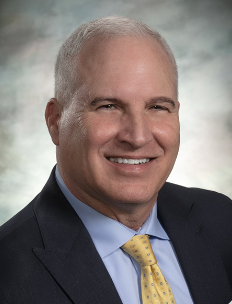 Scott Koelliker, Mosaic Medical Center–Maryville, Maryville
In rural Missouri, access to acute health care can be measured in hours rather than minutes. Scott Koelliker has spent four decades trying to shrink that distance. Now president of Mosaic Medical Center–Maryville, he leads a hospital whose mission is straightforward yet demanding: deliver world-class care close to home, recruit the physicians who make it possible, and keep the institution financially stable for the next generation of patients. He began as a trauma nurse in St. Joseph and never lost the patient-first instinct. “In each role, I only built a hospital service or hired physicians that I would use for me or my family,” he says. “This was personal.” Recruiting talent to a place without mountains or oceans requires a different pitch. His answer is the people themselves—kind, caring and centrally located within a short flight of anywhere in the country. Results under his leadership have been measurable: more than 20 new providers recruited in 2025, market-share gains, stronger caregiver retention and a swing from a negative operating margin to a solid positive one. He still arrives at 5:30 a.m., begins in the hospital chapel, then walks the floors to visit overnight staff. “They are a constant inspiration of dedication and caring,” he notes. “At the end of the day, they are the secret of our success.” In a region where medical deserts remain real, that daily commitment keeps essential care within reach.
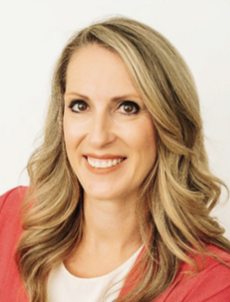 Marcie Lawson, Bootheel Progress with Partnership, Sikeston
Missouri’s Bootheel has long been defined by fertile farmland, Mississippi River access and a practical, production-oriented economy. What it has sometimes lacked is a single, coordinated voice for growth. Marcie Lawson is helping change that. As president and CEO of the Sikeston Regional Chamber and Area Economic Development Corp., she co-leads Bootheel Progress with Partnership, a new regional initiative uniting Scott, Mississippi and New Madrid counties. The three counties now present a streamlined approach to site selectors—shared messaging, aligned leadership and a joint focus on site identification and readiness. Early results include a 28 percent increase in project proposals. The partnership also prioritizes work-force development and child-care solutions, recognizing that long-term growth depends on more than available acreage. Lawson and her counterparts in New Madrid and Mississippi counties emphasize collaboration across public and private sectors, infrastructure improvements and quality-of-life investments that benefit the entire region. The Bootheel’s underlying assets remain substantial: highly productive agricultural land, river and rail logistics, and a manufacturing base that includes agribusiness processing and related industry. By treating those assets as a regional portfolio instead of isolated county advantages, she helps make Southeast Missouri more competitive for investment that can sustain communities for generations.
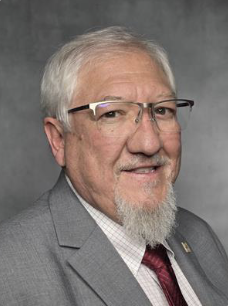 Terry Leeds, Garver, Kansas City
Clean water and reliable wastewater systems rarely make headlines until they fail. Terry Leeds has spent more than three decades making sure they do not. A KC native and Missouri S&T-trained civil engineer, he rose through KC Water to become its director, leading the city’s over-flow-control program and helping secure the first federal consent decree that incorporated green infrastructure to manage sewer overflows—work that set a national precedent for combining traditional engineering with environmental solutions. Two influences shaped the path. A presentation by Independence Water Pollution Control Director Dick Champion showed him that non-engineering decisions often determine infrastructure outcomes as much as technical ones. Later, then-KC Water Director Gurnie Gunter told him he had what it took to lead the utility someday—confidence that propelled him into the director’s chair and, eventually, into private practice as Missouri Team Leader for Garver’s water practice. He still operates by the same standard he carried at the utility: “execute each project and initiative with the goal of making KC a great place to live, work, and play.” Family kept him rooted—he and his wife, Dana, raised five children next door to his parents—while the chance to improve water quality for residents and the environment kept him professionally committed. In a city that remains both a major transportation hub and a place where “pop” is still the preferred term for soft drinks, Leeds treats engineering as quiet but essential civic service, one project at a time.
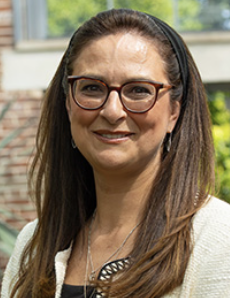 Lúcia G. Lohmann, President and Director, Missouri Botanical Garden, St. Louis
One of the world’s leading botanical institutions is led by a scientist who didn’t have “botanist” checked on her dance card growing up. Lúcia Lohmann, raised in São Paulo, discovered the field on a high-school trip to Brazilian national parks. That “aha moment” launched a 35-year career cataloguing tropical plant diversity across the Amazon and some of the most remote places in Latin America. Choosing to pursue graduate work in Missouri proved decisive. At the University of Missouri–St. Louis and the Garden, she found mentors including Peter Raven, whose vision showed her that “science carries a responsibility extending far beyond discovery” and that knowledge should improve lives and help conserve the planet. She now stewards an institution whose herbarium holds 8 million specimens, whose living collections number more than 51,000 plants, and whose scientists work in more than 50 countries on biodiversity, food security and climate resilience. “Returning to Missouri felt less like starting over and more like coming home,” she says. The Garden welcomes more than a million visitors yearly, yet functions equally as research powerhouse, conservation organization, classroom and civic resource. Its mission—to discover and share knowledge about plants in order to preserve and enrich life—anchors her leadership.
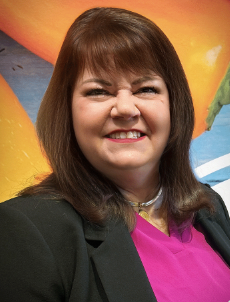 Lindsay Young Lopez, The Food Bank for Central & Northeast Missouri, Columbia
Lindsay Young Lopez grew up on a farm outside Fayette, where her parents’ commitment to service—from the local community to the international stage—shaped her understanding of what it means to give back. Accepted to Stephens College at the age of 16 after her sophomore year of high school–neither of those are typos–she later transferred to the University of Missouri, earned her bachelor’s degree, and never collected a high-school diploma. “I have always been one to forge my own path,” she says, “and those were definitely formative years.” A sales job after graduation led to an 18-year career in advancement at Mizzou and Columbia College. Participation in the Greater Missouri Leadership Challenge class of 2012 clarified her desire for more direct community impact. In 2014, she became only the third person to lead The Food Bank for Central & Northeast Missouri. “I am incredibly proud of our work, which provides nutritious food to 100,000 neighbors each month across one-third of the state of Missouri,” she notes, as the organization prepares to mark its 45th anniversary. Deep family roots keep her grounded. With her sister, she owns four farms in Howard and Chariton counties, one held since 1857. “This family history is deeply meaningful to me, and that’s why this is home,” she says. A Columbia resident since 1988, Lopez continues turning personal history into statewide impact.
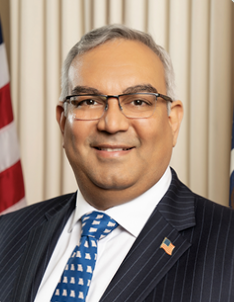 Vivek Malek, State Treasurer, Jefferson City
Vivek Malek arrived in Missouri on Aug. 11, 2001, with two suitcases and $300 after his first plane ride from Rohtak in his native India. That’s it: $300. Today he oversees the finances of a state with an annual budget of more than $50 billion and 6.3 million residents, as Missouri’s 48th treasurer—the first person of color elected to statewide office in Missouri history and the highest-ranking Republican Indian American in elected office nationwide. Appointed by Gov. Mike Parson in January 2023 to finish Scott Fitzpatrick’s term, Malek won a full term in 2024 after carrying 111 of Missouri’s 114 counties by nearly 20 points. His “Three P’s” guide to the office: protect taxpayers’ dollars, provide opportunities, and promote the promise of America. He led the disinvestment of state pension funds from Chinese enterprises, returned record unclaimed property to rightful owners, expanded the MO BUCK$ linked-deposit program that helps farmers and small businesses secure below-market loans, and boosted participation in MO ABLE accounts for people with disabilities and the MOST 529 college-savings plan. After an MBA from Southeast Missouri State Univ. and an LL.M. from the Univ. of Illinois College of Law, Malek built a St. Louis immigration practice helping others pursue the same American Dream he has personally lived. The fourth immigrant to hold the treasurer’s post, he and his wife Riju are raising three children—Naija, Viraj and Myra—while he continues turning an empty-handed arrival into stewardship of the Show-Me State’s public purse.
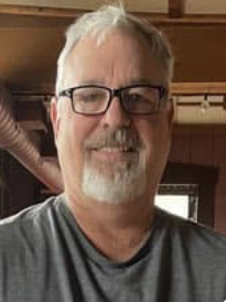 Richard Marquart, Marquart’s Landing, Washington
A restaurant and tavern have occupied the same riverfront building in Washington since 1855. Richard Marquart has kept that tradition alive since purchasing the landmark in late 2002 and renaming it Marquart’s Landing. Originally built as the Pacific House to serve railroad workers, the three-story structure has housed a hotel and tavern for more than 170 years. Marquart, a Union High School graduate with a marketing degree from what is now Missouri State University, left a sales career to take over the business because he enjoyed working with people. He preserved the historic character while adding modern touches—flat-screen televisions, an expanded patio overlooking the Missouri River, live weekend entertainment and a menu known for its fresh-ground Landing Burgers and legendary pizzas. Families still celebrate milestones here; generations of locals return for classic American fare and cold drinks. The spacious patio offers views of the river and passing trains, with Amtrak service just across the street. In a town whose riverfront identity remains central, Marquart’s Landing continues to function as both a working restaurant and a living piece of Washington’s commercial history—proof that a carefully tended local landmark can still anchor community life.
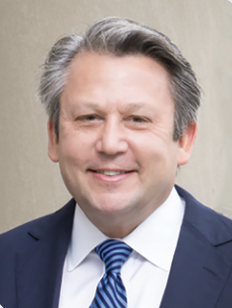 Ken McClain, Humphrey, Farrington & McClain, Independence
Convinced that a welcoming, attractive downtown is a value for any city, Ken McClain has spent 28 years, working with his wife Cindy, proving the point on the Independence Square. “The more we improve ours, the better the city is perceived,” he says. The work continues with plans for a new hotel, following the establishment of multiple restaurants and revival of the historic Harry Truman neighborhood corridor, including more than 20 restored century-old buildings. In addition to his high-profile litigation career, he and Cindy operate the family’s businesses on the Square, treating the place as both investment and civic obligation. That same determination shapes the courtroom side of his life. A nationally recognized trial lawyer specializing in complex toxic and mass-tort litigation, McClain has recorded one of the top 100 verdicts in the country in six of the past 10 years. Verdicts and settlements for clients exceed a billion dollars. Early tobacco cases, “popcorn lung” litigation and other high-stakes exposure lawsuits established the firm’s national profile, while the Square projects kept him rooted in the same few blocks of Independence. He’s a model of tenacity and dedication on all fronts: “If you don’t quit,” he once told an interviewer, “you can’t lose.” For McClain, the Square remains unfinished business—and the clearest proof that patient capital and personal persistence can not only keep a city’s history alive, but add to it.
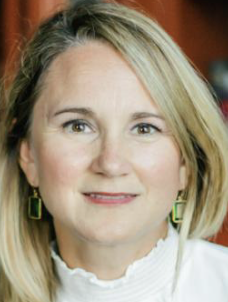 Anne McGregor, Herschend Family Giving Collective Silver Dollar City Foundation, Branson
Deep in the Missouri Ozarks, where the Herschend family first turned a cave tour into Silver Dollar City, the work of giving back has always been as intentional as the attractions themselves. Anne McGregor now stewards that legacy. As chair of Neighbor—the family’s philanthropic investment arm—and chair of the Silver Dollar City Foundation, she directs resources toward nurturing the children and families of Stone and Taney counties, helping today’s kids become tomorrow’s thriving adults. A third-generation owner of Herschend Family Entertainment, McGregor helps keep the company’s culture of service alive with family members spanning multiple generations. Neighbor, launched in 2016, was designed to reinforce family values while channeling charitable investments into measurable local impact. The Foundation’s core efforts—meeting immediate physical needs through partnerships with local schools and awarding Hope Grants that strengthen family bonds—extend the same focus that began under her grandmother Mary Herschend’s early emphasis on caring for one another and sharing success with employees. The family’s broader purpose, “bringing families closer together” and living out a commitment to “live, love, and serve together,” finds practical expression in this work. In a region whose natural beauty and tourism economy still rest on the foundations her grandparents and her parents’ generation built, her dual roles ensure that commercial success continues to elevate the communities that sustain it—quietly linking entertainment, family and place into a lasting civic contribution.
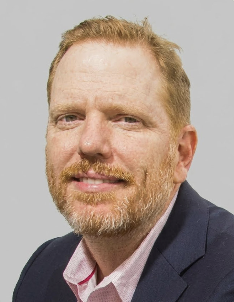 Matthew Miller, The Vecino Group, Springfield
“Vecino” is the Spanish word for neighbor, which makes that single word a fitting anchor for the mission of this Springfield real-estate firm Matthew Miller co-founded in 2011. The Vecino Group adds a new aspect to real-estate development with efforts to promote projects that are socially conscious—affordable and supportive housing, student housing, and public-private partner-ships designed to transform communities one project at a time. The company’s stated purpose is “development for the greater good,” and it approaches every deal seeking to maximize impact. Miller’s firm has reshaped significant pieces of downtown Springfield, as well. Projects such as Sky Eleven, The Sterling, and The U at Springfield revitalized the Park East neighborhood around Park Central East. The $13.5 million Sankofa development, a 43,000-square-foot mixed-use affordable-housing and community project built in partnership with Harmony House and the Multicultural Business Association, was conceived to strengthen north Springfield. Collaborations with Missouri State University and the city have also advanced IDEA Commons, expanding the downtown innovation district. Nationally recognized among Affordable Housing Finance’s top developers, Vecino blends social justice, environmental responsibility, and elevated design into a new model for development, still balancing expansion with neighborhood health, Miller treats real estate as a tool for lasting local impact rather than purely financial return.
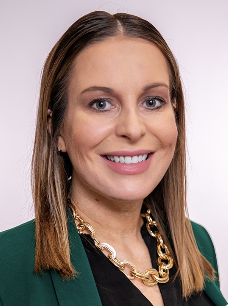 Rachel Munday, Missouri State University, Springfield
Economic development, at its core, is about people. Rachel Munday leads Missouri State University’s efforts to connect businesses, entrepreneurs, researchers and communities across southwest Missouri and beyond. After years directing the university’s eFactory business incubator, she now serves as assistant vice president for economic development, shaping strategy that turns local talent and ideas into lasting growth. Raised in Springfield in a family that valued service, she left for Los Angeles and New York, then returned with clearer eyes. “When I came home, I saw more clearly what makes this community special: relationships matter, people care about one another’s success, and an individual can make a meaningful difference.” That insight drives her work. She has helped expand entrepreneurial support, workforce programs and university-industry partnerships that serve thousands of entrepreneurs, students and employers. Outsiders often assume innovation happens only in major metros. Munday sees the opposite. “Missourians are resourceful. When they see a problem, they do not wait for someone else to solve it. They bring people together, roll up their sleeves and get to work.” Springfield’s balance—strong institutions paired with accessible leadership—lets good ideas find a table. For Munday, the state is not a place to settle, but a place to build.
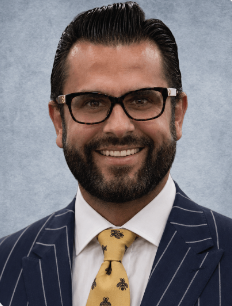 Alex Perez, Marcus & Millichap, St. Louis
Most people do not walk away from a secure, well-paying career after watching a closed-deal email and a few episodes of Million Dollar Listing. Alex Perez did—and within 90 days had listed and closed a $3.5 million deal and a $52 million shopping center. That leap launched a commercial real estate practice that now spans markets across the country while remaining firmly rooted in the St. Louis region. The decision rested on two pieces of advice that still guide him. A mentor in Chicago taught him that “the day you stop being uncomfortable is the day you stop growing.” His wife offered the more decisive counsel: she had complete faith he could adapt and succeed at whatever he chose. He acted on both, leaving a safe income for the uncertainty of deal-making. What keeps him in Missouri is a practical combination of cost of living, business opportunity and Midwestern temperament. He sells properties nationwide and sees the contrast clearly. Outsiders often reduce the state to rural imagery or outdated perceptions of St. Louis. They miss the resilient, affluent neighborhoods—Clayton, Ladue, Town & Country, St. Charles County—and the community’s habit of showing up after floods or tornadoes to help neighbors rebuild. For Perez, the region offers the same professional reach as larger markets without sacrificing the openness, dining culture and quality of life that make it a place worth staying and building.
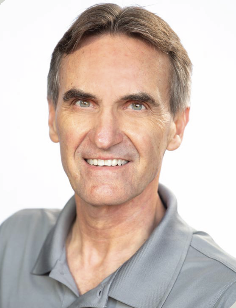 Bucky Pescaglia, Missouri-Pacific Lumber Co., Fayette
Missouri grows more American black walnut than any other state, and it’s not even a close call: It produces more American black walnut than the next two states combined. Bucky Pescaglia has spent nearly half a century turning that natural advantage into a specialized, family-run hardwood business. Missouri-Pacific Lumber, consolidated on a 51-acre site in Fayette after the 1993 floods destroyed the earlier New Franklin mill, produces a whopping 3.5 to 5 million board feet of lumber annually, with roughly 95 percent of it high-grade, steamed, kiln-dried black walnut. The mill maintains more than 1.5 million board feet of inventory ready for domestic and export shipment. The company’s origins were accidental. In the 1930s, Pescaglia’s grandfather, a coal deliveryman in Illinois, accepted mining timbers as payment after an uninsured truck damaged his vehicle, and he astutely discerned that lumber offered a better living than shoveling coal. Three more generations have followed. Bucky joined after graduating from the National Hardwood Lumber Association inspection school; his sons Tony, Vince, and K.C., along with a cousin, now work alongside him. The mill utilizes the entire log—lumber, bark for landscaping, chips for mulch and fuel for the University of Missouri’s boiler—operating under the informal motto “we sell everything but the squeal.”
 Brad Puff, High Adventure Ranch, Cook Station
Deep in the foothills of the Ozarks, Brad Puff operates one of the largest big-game hunting ranches in the United States—and the only preserve of its kind in Missouri. One normally does not reach the High Adventure Ranch without a certain level of…intentionality. Founded in 1983, the ranch spreads across more than five square miles of prime natural habitat and offers year-round hunting for elk, bison, New Zealand red stag, native whitetail deer, wild boar and a range of other species. Puff’s signature policy is simple and rare in the industry: “No Game, No Pay.” Guests receive all-inclusive packages that cover lodging in the hunting lodge or private cabins, three home-cooked meals a day, guaranteed hunting licenses, guiding, field dressing and full meat processing—hand-cut, vacuum-packed and held in a walk-in cooler. From the moment hunters arrive at the gate until they leave with processed meat, the ranch handles every detail. The operation has hosted politicians, actors, doctors, race-car drivers and visitors from Europe, the Middle East and across the United States. Puff describes it as fundamentally a “people business.” Decades of continual reinvestment in accommodations, a dedicated staff and a fair-chase setting have turned the ranch into a destination that regularly brings guests back.
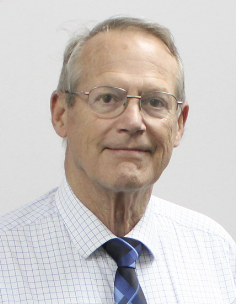 Steve Rasmussen, Interim Solutions, Camdenton
City government and military command share more DNA than most people realize. Steve Rasmussen has spent nearly three decades translating the latter into the former. Born at Fort Francis E. Warren in Wyoming and raised in Cheyenne, he was headed toward pre-med at Johns Hopkins when an Air Force Academy appointment changed everything. He cross-commissioned into the Army, became an airborne ranger with the 82nd Airborne Division, and later served as base commander at Fort Campbell, home of the 101st. Mentors such as Lt. Col. Dave Ohle, Col. Richard Timmons and Gen. Robert Sennewald shaped a leadership style built on motivation and the long-term good of the organization. After retirement, that experience proved a natural fit for city administration. He has served as city administrator or manager in three cities, assistant in two others and interim three times—five of those roles in Missouri, currently in Ashland, and previously in Kennett and earlier as city manager in Cameron. The chief difference, he notes, is political: “Whereas in a military leadership role, the long-term good of the organization is paramount, in city government the immediate political issues often override all else.” Missouri keeps drawing him back. This is really the heartland,” he says, “and what happens here in Missouri so often defines what happens elsewhere.”
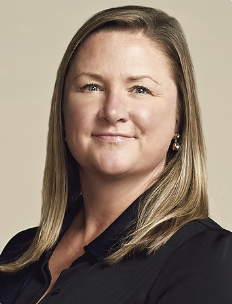 Stephanie Regagnon, The Yield Lab Institute, St. Louis
The world’s biggest challenges in food, agriculture, and climate will not be solved in isolation. Stephanie Regagnon has spent more than two decades building the partnerships and ecosystems that move innovation from possibility to impact. As executive director of The Yield Lab Institute, she leads a nonprofit dedicated to enabling entrepreneurs who are revolutionizing agrifood systems so the world can be fed sustainably. The organization’s vision is to build and support regionally rooted, globally connected innovation ecosystems that foster collaboration and accelerate solutions across the agricultural landscape. Her earlier roles included executive director of innovation partnerships at the Donald Danforth Plant Science Center, where she spearheaded strategic collaborations to position St. Louis as a global hub for plant science, agtech, and geospatial excellence, and founding CEO of the multi-stakeholder collaborative FieldWatch. She also operates Inner Circle AG, a consultancy focused on agriculture, food, and innovation. Regagnon’s working premise is clear: “I believe the world’s biggest challenges in food, agriculture, and climate will be solved through connected ecosystems, trusted partnerships, and bold innovation.” Her work centers on convening farmers, researchers, entrepreneurs, investors, industry leaders, and public-sector partners.
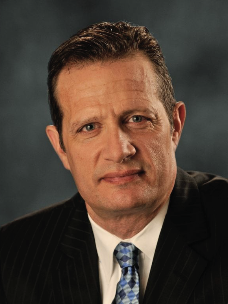 Taulby Roach, President and CEO, Bi-State Development, St. Louis
Regional progress rarely fits inside the municipal borders of a single city. So bringing that wider perspective to Bi-State Development, Taulby Roach leads an organization charged with delivering transit, economic development and public services across the Missouri-Illinois metropolitan area. With roughly 2,200 employees, an operating budget of about $369 million and a three-year capital budget of $726 million, the agency runs five enterprises: Metro Transit, the Gateway Arch Riverboats, St. Louis Downtown Airport, the St. Louis Regional Freightway and related civic assets. Since joining in 2019, Roach has kept average annual expense growth under 2 percent for six consecutive fiscal years—discipline he views as essential to long-term viability. At the same time he has advanced major capital projects. A $52 million Secure Platform Plan is installing security gates and fencing at all 38 MetroLink stations across the City of St. Louis, St. Louis County and St. Clair County; 11 stations were complete by April 2025, with full completion occurred in January of 2026. Federal funding has also secured 55 new light-rail cars under a $390.4 million contract to replace vehicles more than 30 years old, with deliveries beginning in early 2027. A frequent transit rider and avid cyclist, Roach keeps safety, reliability and financial stewardship at the center of his organization.
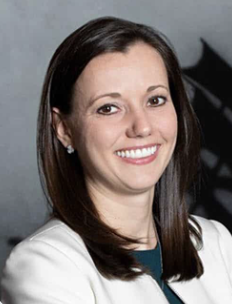 Bethany Ropa, JE Dunn Construction, Kansas City
A cold call in the fall of 2020 changed Bethany Ropa’s trajectory. A head-hunter inquired about a potential board role at JE Dunn Construction. She filled that seat in January 2021, and over the next several years gained a deeper understanding of the company’s people, values and long-term commitment to doing the right thing. By April 2025 she had moved from outside adviser to full-time chief financial officer of the family- and employee-owned firm. Seventeen years in real-estate investment banking at UBS in New York, including the depth of the 2008 financial crisis, taught her to stay calm under pressure, make thoughtful decisions with incomplete information, and maintain a long-term perspective when circumstances shift quickly. “Stay humble, stay hungry, and keep doing the work” remains the principle she still carries into leadership. What drew her to JE Dunn and Kansas City was the combination of opportunity, values and momentum. The company has a remarkable legacy while continuing to grow and evolve. She and her husband saw real parallels between their goals and what the region offered: a growing market, an entrepreneurial spirit, and a high quality of life in a more manageable city. Outsiders, she notes, often underestimate how many sophisticated, nationally significant businesses are based here.
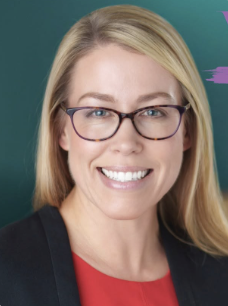 Sondra Rotty, Tarlton, St. Louis
Earlier this year, Sondra Rotty became the latest leader in a company that has been family-steered since 1946. Elected president by Tarlton’s board while retaining her role as chief operating officer, she steps into a firm that ranks among St. Louis’ largest general contractors and construction managers and is celebrating its 80th year in business. Rotty joined Tarlton in 2005 as a project engineer and rose steadily through the operational ranks before being named COO in 2024. She has played integral roles on some of the company’s most visible projects at high-profile locations that include Washington University’s campus, the Gateway Arch site, museums and other venues. More than 80 percent of Tarlton’s work comes from repeat clients—a figure the firm cites as evidence of long-term relationships. A Missouri S&T graduate in architectural engineering and engineering management, Rotty also serves as treasurer of the Missouri Gateway Green Building Council and chair of the Building Division of the Associated General Contractors of Missouri. “Tarlton has always been about people, partnerships and doing things the right way,” she said upon her promotion. The transition continues a multi-generational commitment to craftsmanship, client service and the city the company has helped shape for eight decades.
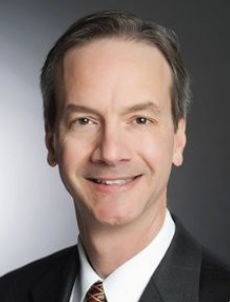 Ed Scavone, Central Bank of Boone County, Columbia
At the end of every bank transaction is a person, a family or a business. That simple observation drives Ed Scavone, president and CEO of Central Bank of Boone County, Columbia’s largest bank with approximately $3 billion in assets and 14 branches serving Columbia, Boonville, Ashland, Centralia, Hallsville and Sturgeon. A U.S. Navy veteran who served during Desert Storm—including 13 months aboard an aircraft carrier—Scavone moved to Columbia at age 14 and has spent the bulk of his career at Central Bank. He started as an auditor, spent 20 years in lending, and was named president four years ago. He works primarily with business clients and remains active on boards that include OATS Transit, Scouting America–Great Rivers Council, REDI and the Columbia College President’s Advisory Council. He prioritizes clients above a crowded calendar: “Anyone asking me for help is the client,” he says. The industry’s next big challenge, he believes, is speed—customers expect immediate, accurate, frictionless access to their finances. The banks that deliver it will win. Outside the office, he plays a mean saxophone in the Columbia Jazz Orchestra, logs volunteer hours in city parks, and still treats Columbia, after nearly five decades, as home. “Helping others is very motivating,” he says of the work that continues to give the job meaning.
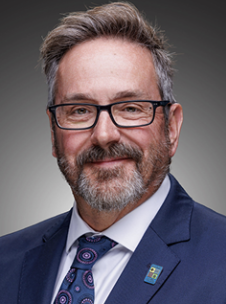 Kurt Schaefer, Missouri Office of Administration, Jefferson City
The state’s central operating machinery is changing hands: Just days ago, Gov. Mike Kehoe named Kurt Schaefer commissioner of the Missouri Office of Administration, effective this month, pending Senate confirmation. Schaefer moves from the Department of Natural Resources, which he has led since the start of the Kehoe administration, into the agency that stewards budgeting, purchasing, facilities, technology and personnel for state government. The assignment fits a career spent at the intersection of law, appropriations and agencies. A former state senator from Boone County, he chaired the Appropriations Committee for six years—work that now reads as rehearsal for OA. He practiced more than two decades as a partner at Lathrop GPM and earlier served as an assistant attorney general, special assistant U.S. attorney, and DNR deputy director and general counsel. A University of Missouri geography graduate, he holds a law degree and a master’s in environmental law from Vermont Law School. At DNR he pressed efficiency, communication and stakeholder engagement. Kehoe called him a valued Cabinet member whose public- and private-sector experience will travel well. For a Show-Me state that measures government by whether it works, OA is where that test is administered every day. Schaefer’s task is to make the back office as disciplined as the policy it is supposed to serve.
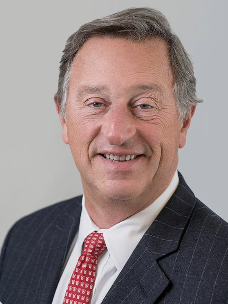 Craig Schnuck, Schnuck Markets, Inc., St. Louis
More than two decades after handing the CEO reins to the next generation, Craig Schnuck remains one of St. Louis’ most consistently engaged civic leaders. As Chairman Emeritus of the family grocery chain his grandparents founded in 1939, he continues to advise on growth while devoting substantial time to institutions that shape the region’s education and health-care landscape. He currently serves as a trustee of Washington University, where he is immediate past chairman of the board and sits on its Executive Committee, the Investment Management Company board, and the Facilities and Campus Planning Committee, which he chairs. He is also an emeritus member of the Barnes-Jewish Hospital board and has previously chaired Civic Progress, the United Way of Greater St. Louis and John Burroughs School, and held board seats at U.S. Bancorp and BJC Healthcare. Those civic roles rest on a substantial business record. During 17 years as chairman and CEO for one of the region’s premier grocer brands, Schnuck guided acquisitions—most notably the 1995 National stores transaction—that solidified the company’s position as St. Louis market leader and expanded the chain across multiple states while keeping it family-owned into a third generation. The combination of commercial success and sustained, high-level community leadership has made him a durable force in the region’s public life long after most executives step back.
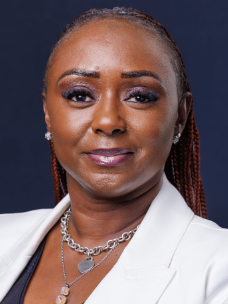 Tina Shannon, Ameren Missouri, St. Louis
Tina Shannon has spent two decades helping ensure Missouri’s largest electric utility can make the investments customers now expect. As director of government relations for Ameren Missouri, she leads the team that works with lawmakers to modernize an aging grid so it can support the digital devices and reliability standards of the next century. Ameren Missouri provides electric service to approximately 1.3 million customers across central and eastern Missouri, including the greater St. Louis area, spanning roughly 60 counties and more than 500 communities. That scale makes the policy work concrete: decisions in Jefferson City directly affect the reliability of power for homes, hospitals, manufacturers and farms. Her path began with campaign work as a teenager and continued as chief of staff to a state senator and deputy director of legislative affairs for a governor before she joined Ameren in 2005. After earlier attempts at significant energy legislation fell short, she helped redesign the approach in 2018—paring the proposal so it was, in one lawmaker’s phrase, “short and sweet and to the point.” The resulting bill, and its later extension, cleared the path for critical system upgrades. Shannon treats public service as both professional duty and personal commitment. “I’ve been afforded these blessings in life, and now I am going to give back,” she declared after joining the Lincoln University Board of Curators in 2022.
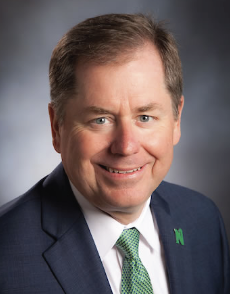 Lance Tatum, Northwest Missouri State University, Maryville
Regional public universities rarely make national headlines, yet they quietly change the economic trajectory of entire families. Lance Tatum leads one of them. As president of Northwest Missouri State University since 2023, he leads an institution whose mission—providing an affordable, high-quality education that serves its region—reflects the path that shaped his own life. He did not set out to become a university president. His journey began in 10th-grade English, when teacher Barbara Hicks recognized something in him that he had not yet recognized in himself. She encouraged him to join the high school newspaper and later made him editor, showing him “what a great educator can do: recognize a student’s potential before the student necessarily recognizes it.” That experience, reinforced by his own time as a college student, shaped his belief that education can fundamentally redirect a life. He began his career in the classroom, then saw the potential to make a difference on an even broader scale. That perspective ultimately drew him to Northwest. The university’s strong identity, deep community ties and commitment to service resonated with him immediately. “I have spent my career believing deeply in the mission of public regional universities,” he says. He’s been struck by Missouri’s regional diversity and the pride people have in their communities, and has also seen first-hand how closely education and economic development are connected.
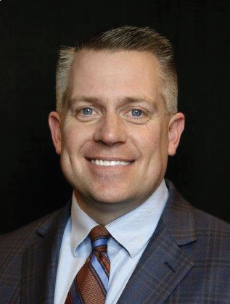 Brad Thurman, O’Donnell-Thurman Life Celebration Home, Palmyra
Farming and funeral services share more than most people realize. Brad Thurman grew up on a family farm north of Monroe City and felt a calling to funeral service from a young age. Both demand unpredictable hours, attention to detail, respect for tradition and a willingness to do whatever it takes. “It comes down to working hard and just doing whatever it takes to make a difference,” he says. Mentors have reinforced that standard. His parents taught countless life lessons through their own hard work. In the profession, the O’Donnell family impressed upon him a simple, exacting truth: families get only one chance to be served, so every detail matters. Thurman has never considered practicing anywhere else. “Missouri is my home and the few vacations I take are staycations in Missouri. Any impact I can make in any small way I want to make here.” Outsiders, he believes, underestimate the opportunities available across both city and rural settings, each with its own history and attractions. Northeast Missouri retains a small-town character in which neighbors help neighbors. “This community has been good to me and my family,” Thurman says. “You work here, play here, give here, never expecting anything in return but always feel fulfilled—and that’s just what community is.” In a corner of the state where personal relationships still define daily life, he continues to serve families with the same steady commitment that first drew him to the work.
PUBLISHED AUGUST 2026