
HOME | ABOUT US | MEDIA KIT | CONTACT US | INQUIRE
HOME | ABOUT US | MEDIA KIT | CONTACT US | INQUIRE
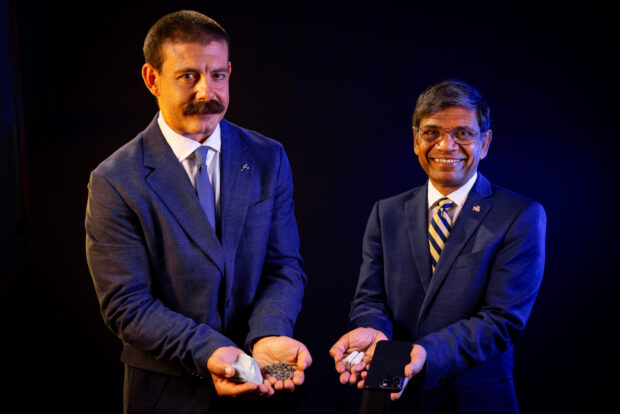
The U.S. National Science Foundation has selected the UMKC-led Critical Materials Crossroads to receive up to $160 million for critical materials innovation, commercialization and workforce development. Photo credit: Brandon Parigo.
Posted July 14, 2026
The National Science Foundation announced it has selected the University of Missouri-Kansas City-led Critical Materials Crossroads as a recipient of a grant that could help elevate the region as a national hub for critical materials.
The NSF awarded the Critical Materials Crossroads Engine, led by UMKC, a grant of up to $160 million over the next ten years, according to a Tuesday release. Critical Materials Crossroads will first receive $15 million over two years, with potential to receive the full grant amount over the decade-long lifetime if the initiative “demonstrates progress on well-defined milestones.”
The initiative is expected to create approximately 10,000 jobs by 2036, according to research conducted by the University of Missouri Extension. Over the next ten years, the initiative could increase the Kansas City Metro region’s GDP by $17 billion and more than $40 billion in Gross Output.
“Critical Materials Crossroads represents a once-in-a-generation opportunity to strengthen America’s economic and national security while positioning the Kansas City region as a global leader in critical materials research and innovation,” UMKC Chancellor Mauli Agrawal said in the release. “This initiative reflects what is possible when a region unites around a bold vision with national impact.”
Critical Materials Crossroads, which is made up of more than 260 partners, aims to develop the region as an ecosystem for production of the metals and advanced materials that manufacturers use, such as batteries, aircraft engine parts, semiconductors and medical devices. In January 2025, UMKC announced the Critical Materials Crossroads was a finalist for the NSF national competition.
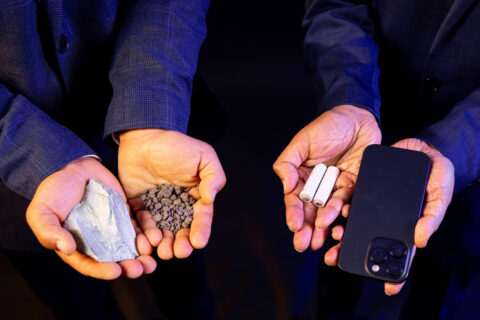
As a National Science Foundation Regional Innovation Engine, Critical Materials Crossroads will work to increase production of the metals and advanced materials in the Bi-State region. Photo credit: Brandon Parigo.
On Tuesday, the NSF revealed 12 U.S. teams across 20 states would be recipients of the grant; among them is the Critical Materials Crossroads.
“These new NSF Engines will be transformational for America’s innovation infrastructure — helping secure our national competitiveness in technologies and future industries that will be critical to our economic and national security for decades to come,” NSF Director Brian Stone said in the release. “These engines will unlock innovation and enable technologies that will improve the quality of life and result in good-paying jobs for all Americans.”
The inaugural NSF Engines program awarded nine recipients two years ago. To date, an initial investment of $135 million in the inaugural NSF Engines has generated over $2 billion in matching commitments from private industry, philanthropy and state and local governments, according to the NSF.
“For decades, the United States has steadily lost much of the workforce, infrastructure and manufacturing capacity required for critical materials production,” Anthony Caruso, UMKC vice chancellor for strategic initiatives and Critical Materials Crossroads founder, said in the UMKC release. “This investment allows us to rebuild that capability here in America — creating jobs, strengthening our national resilience and ensuring the technologies that power our future can be produced domestically.