
HOME | ABOUT US | MEDIA KIT | CONTACT US | INQUIRE
HOME | ABOUT US | MEDIA KIT | CONTACT US | INQUIRE
University Health’s CEO, steeped in civic engagement and public policy, reflects on the current state of civic engagement and ways young executives—and their companies—can strengthen it.
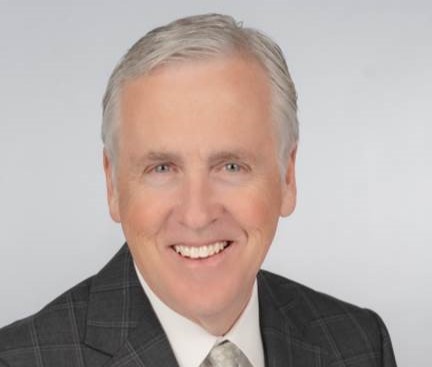
Charlie Shields, President and Chief Executive Officer of University Health.
PUBLISHED APRIL 2026
“The most optimistic thing you can do is plant a tree under whose shade you will never sit. It’s the same with engagement.”— Charlie Shields, President & CEO, University Health
Q: You’ve worked in retail, the Missouri House and Senate, and now the C-suite at University Health while maintaining deep civic involvement for decades. What first pulled you into public service, and how has the definition of “civic engagement” changed in your own life from legislator to CEO?
A: It’s interesting. In high school, I worked for two gentlemen who owned a store in Independence, where I grew up, and both were involved in the civic community there. I thought it was what I was supposed to do, just by their example. Right after graduate school, I was recruited by Venture. When I started work for them in St. Joseph, the model they had was if you opened stores in a community, they expected managers to be involved, get out, talk to people, become engaged, become part of civic life—that was an expectation.
Q: Is that what paved the way to the General Assembly?
A: I was always involved in politics in college, and was part of the College Republicans at Mizzou when I was there. I worked on different campaigns, for Kit Bond and Wendell Bailey—my wife and I, our first date was to Kit’s inauguration. We moved to St. Joe, lived a bit south of town, in the Mid-Buchanan district. My neighbors had asked me to fill an open position on the school board and that was my first political office. I was in my late 20s, didn’t even have children at the time, but served 17 years on that board, and that overlapped with time in the General Assembly.
Q: So across that time, what are the biggest shifts you’ve seen in the way Kansas City’s business and civic leaders approach community involvement?
A: One of the advantages of having grown up in the community is being able to watch the iconic leaders in the community—the Dunns or the Blochs, the Halls, Kauffmans, Kempers and Stowers. You run down the list and these were all people who ran Kansas City-based businesses that took a very long almost generational perspective on how to grow a community. It was their lives’ work.
Q: And now?
A: That is a little different today. Part of that is because the leadership in the community, I think, now tends to believe they have a shorter time frame by which to make a difference. They may be president of the board of the chamber for a year, or the Civic Council leadership, but they are there for a finite time. In addition, some have not lived in the community their entire lives, so they don’t have that sense of generational work to build on. That doesn’t mean it’s bad, it’s just a different approach. But they believe they have a more compressed time and they go at with a lot of vigor.
Q: Are different value sets of today’s young executives reshaping the traditional model of civic leadership exemplified by those figures you mentioned?
A: The leadership I’ve served with on the Chamber or Civic Council board, these great leaders committed to this community—I’m encouraged by the people I have the benefit of working with. I also think the younger generation coming up are really committed to that service. Look at the people I work with at University Health, a lot of folks that work here, they love the job and the organization, and they are really mission-driven. They believe in the mission of University Health and what they’re doing, and it’s the kind of organization they want to work for. I think that’s not entirely unique to us. For a lot of young people, work has to be meaningful for them. They want to work at an organization they can be proud of.
Q: Traditional civic pillars-the Chamber, non-profit boards, economic-development groups—have long relied on established executives. What’s driving engagement with younger leaders?
A: I’ve heard people sometimes say the younger executives are not as willing to engage, and I don’t know that I blame those younger folks for that; I think it’s the responsibility of the organization or business they work for to encourage that kind of involvement. You do have that group of businesses that encourage people to join Kansas City Tomorrow or Centurions and create those leaders of the future. But we do need more of that. In my early career, that was part of the expectation, and my worry is that for some businesses, that’s not the case. If they don’t encourage that, it’s short-sighted on their part.
Q: Our experience with the youngest executives coming up suggests they see engagement as something they can do immediately, impulse donations of $10 or $20 at a time on their phones, and doing that more frequently, seeing that as a preferred form of engagement.
A: It’s easy for people to give money through an app or to a cause they believe in. A couple of observations: One, I do see younger people involved in the community with their neighborhood association or local school board, and I think that’s very encouraging. The other thing I draw a lot of encouragement from is, every year I do a session with KC Tomorrow, talking about what it takes for young business folks to become engaged in the political side, the policy side, what means to run for office, and why we need good, smart business folks, people with competencies in large organizations, to run for public office. The thing that encourages me is, often it’s a year or two later and I talk to people who went to those sessions and decided to run for the school board or alderman in their community. That’s very encouraging to me to see people who believe that public office and engagement in public service is still a valuable thing.
Q: As a CEO who came out of elected office, do you believe today’s business leaders have a higher, lower, or simply different obligation to civic life than they did 20 or 30 years ago?
A: One, I think the organizations they work for have a responsibility to encourage that involvement, and to make time for that involvement. That’s critical. It’s a little hard when a young business person is working 50 or 60 hours a week to say “Oh, by the way, we expect you to be involved in the Chamber or school board” or things like that. It falls on business to make time for them so they can do that.
Q: University Health’s safety-net mission puts you at the intersection of business operations, public policy, and community health. How has that role shaped your views on what effective civic engagement looks like today?
A: We have to encourage younger executives to be willing to take on public service. It doesn’t always have to be as a leader, but many times, it does. Some businesses gripe about what policymakers are doing for us or against us, but at the same time, won’t let people run for office because it takes too much time. They say workers or leaders can’t be in Jefferson City or Topeka for four or five months out of the year. But one thing that seems important to me is, if you don’t like what’s happening from public officials, get better public officials. You can do that from within your own ranks. It takes a major commitment from business to support a legislator from your staff: you have to provide the flexibility, but it can be done. That’s how I got started in the legislature. We do that ourselves at University Health; we have a current state representative in office, have had a state senator who worked for us. We will support them and make that happen, not because we want to tell everyone what to do, but because it’s important to be part of that process.
Q: You’ve preached that message to business leaders; what kind of response have you received?
A: I think a lot of businesses just don’t know how to do it. You go back over time, there was time in history when KCP&L had folks in the legislature, Hallmark had folks there, Lathrop & Gage, and Heartland Health where I worked, obviously. You just have to make the decision on how to do that and know why it’s important.
Q: With major employers navigating layoffs, sector shifts, and talent retention in the region, how can those companies help keep Kansas City’s economic momentum alive?
A: When we’ve had economic downturns, I think sometimes business leaders sort of retreat back to their foxholes, say “Man, times are tough, we’ve got to focus on the task at hand, reduce memberships and organizations we’re part of, and tell people to focus on work, because we can’t be that civically engaged.” That’s a short-term way of thinking, in my mind. As business leaders, you have to think, ‘how do I make things better and what does the next cycle look like?’ Missing the opportunity to create that business cycle seems like a bad strategy to me. The other thing, during difficult times, people seem to get less engaged with elected officials, but that’s exactly the time to be more engaged with elected officials, to figure out how to pull out of that difficult cycle and get on to a better one.
Q: What practical steps have you seen-or would you like to see-business leaders take to mentor or partner with younger executives whose priorities may differ from their own?
A: Somehow, we have to encourage more young executives to get involved in board leadership, not-for-profits, civic leadership and policy leadership in local political office. I think we have to encourage that more. The benefit is, one, you’re creating a better community for business to exist in, and two, the leadership lessons that come from broadening perspective outside the walls of the businesses. Serving on non-profit boards, that comes back and benefits the organization because people are gaining a different perspective on things. I think there was a time when the business community realized that more than we do now. It was part of my job evaluation at one point.
Q: Any closing observations, or things we haven’t touched on?
A: I encourage people to become engaged, realizing that you may not always see the results of the work you do. That doesn’t mean the work is not important. You can make a lasting impression on the community even if you’re not in it to see all those good things happen. Every spring, I plant trees. It goes back to that proverb about the most optimistic thing you can do is plant a tree under whose shade you will never sit. It’s the same with engagement. There’s some long-term aspects to seeing results, but the best time to get after it is right now.