
HOME | ABOUT US | MEDIA KIT | CONTACT US | INQUIRE
HOME | ABOUT US | MEDIA KIT | CONTACT US | INQUIRE
PUBLISHED MARCH 2026
For more than three decades, Women Executives—Kansas City has celebrated a simple but powerful idea: leadership is shaped not just by titles or balance sheets, but by values, vision, and perseverance. What began in 1992 as a small gathering of women in executive roles has grown into a vibrant tradition of recognizing those who are reshaping commerce and community in Kansas City. Over the years, as the presence of women in boardrooms and C-suites has grown—though still far from proportional with their numbers in the workforce—the awards have highlighted not only achievement, but the journeys, principles, and mentorship that fuel it.
The 2026 class of honorees continues this tradition with 19 remarkable women whose leadership spans nearly every sector of the regional economy. They guide companies in banking, insurance, finance, health care, energy, construction, design, manufacturing, law, and philanthropy, among others. Each has followed a distinct path, but all share a commitment to excellence and to lifting others as they climb. Many will tell you that their leadership is grounded in lessons learned long before their first corner office: the importance of honesty, integrity, respect, and service, often modeled at home by parents, mentors, and early role models. These foundational values shape the decisions they make, the teams they lead, and the culture they foster.
What makes these women exceptional is not simply what they have accomplished, but how they have done it. They combine strategic insight with empathy, tenacity with collaboration, and ambition with a responsibility to the wider community. Many have benefitted from the guidance of others along the way—and they, in turn, are committed to mentoring and inspiring the next generation of leaders, ensuring that the city’s future is built on the same principles that guided them.
As we recognize this year’s honorees, we celebrate more than individual success. We honor the enduring spirit of leadership, the power of values passed from one generation to the next, and the ongoing journey toward equity and representation in executive ranks. These women are not just shaping Kansas City’s businesses—they are shaping its culture of leadership. Their work reminds us that true accomplishment combines skill, vision, and heart, and that every rung climbed opens new possibilities for those who follow.
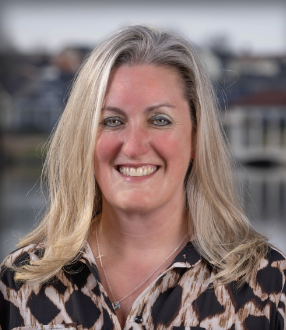 Amy Allen, General Counsel/CAO, ESS Companies
In an industry where women leaders are still breaking new ground, Amy Allen stands out as a strategic force reshaping heavy civil construction from the inside. Starting with a high-school fascination for the justice system that propelled her to law school, she traded courtroom advocacy for in-house impact—first advising executives, then steering people and strategy as a top HR/legal leader. When ESS Companies came calling during its rapid-growth phase, the fit was undeniable: a people-first, employee-owned culture ready for the strong systems and collaborative vision she excels at building. The result? A transformed enterprise poised for lasting national success. Amy Allen serves as Chief Administrative Officer & General Counsel at ESS Companies (the parent entity encompassing Emery Sapp & Sons and related brands), a major employee-owned heavy civil construction and infrastructure firm with a significant footprint in Missouri. Originally from Lincoln, Neb., Allen credits her family—particularly her father (a coach-like figure) and older brother—for instilling core values. “I learned early that if you wanted something, you worked for it,” she says. Her parents provided stability and encouragement, attending every game from childhood through college. “My dad was both a father and a coach,” instilling discipline, accountability, and moral values. Growing up often as the only girl on sports teams built her confidence in male-dominated spaces. Mentors and a key legal advisor added strategic thinking and instinct-trusting to her toolkit. Her legal path sparked in high school: “It started with a criminal justice class I took…I was immediately hooked.” When she told her teacher she wanted to be a federal judge, the response was straightforward: “Well, then you have to go to law school.” She pursued it without regret, gaining skills in critical thinking, advocacy, and problem-solving. From private practice—where she observed what drove profits and strong cultures—she moved in-house as Chief Legal Counsel and EVP of Human Resources. This solidified her as a “people-focused leader.” Joining ESS aligned perfectly: “ESS aligned with how I think about leadership…sustainable growth requires strong systems, thoughtful leadership, and a culture built on trust and accountability.” The collaborative executive team and ESOP structure were draws. In nearly six years with ESS, “the company has almost quadrupled in size. Her teams manage enterprise-wide functions: legal, risk management, compliance, governance, benefits, and administration. On women in construction, Allen celebrates progress: “It has established many opportunities for the generations to come…Women in leadership positions play a pivotal role in showing that construction is a viable, rewarding sector.”
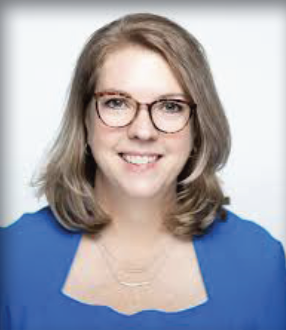 Jennifer Atkins, Chief Network Officer, Blue KC
For Jennifer Atkins, leadership isn’t about avoiding risk—it’s about learning what happens when things tip over. She still thinks about those early lessons, growing up around Lake Michigan and inland waters of the Midwest, racing small sailboats with her family. “You’re always afraid the boat’s going to capsize,” she says. “But once it happens, you realize it’s slower than you think—and you can fix it. You have a way out.” That mindset—steady in uncertainty, confident in problem-solving—has carried her through a career defined by complexity and change, and now into her role as chief network officer at Blue Cross and Blue Shield of Kansas City, where she oversees one of the organization’s most critical assets: its provider network. “I’m essentially responsible for what we sell,” she says. “Access—to physicians, hospitals, the entire network—and all the nuts and bolts that make that work.” Her path to that role wasn’t pre-scripted. An English major by choice—“I loved to read and write, and still do”—Atkins initially ruled out law school, even as she jokes now about marrying a lawyer and reconsidering that stance. Instead, she followed a different model: her father, an entrepreneur who left an executive role to build and eventually sell his own manufacturing company. “I always admired that,” she says. “He taught himself engineering, designed his own products. That curiosity stuck with me.” An MBA followed, then a career that began far from health care, tackling everything from environmental negotiations to complex contracting assignments across industries. “You learn how to boil things down,” she says. “What’s the most vital component needed to get a deal done?” That skill translated seamlessly when she made a leap into health care—despite being told in her first interview that she wasn’t “remotely qualified.” She got the job anyway. “I like to remind him of that,” she says with a laugh. “He made the monster.” From there, her career became a deliberate exploration of both sides of the system: provider and payer. Leadership roles with Mercy, Anthem, and the Blue Cross Blue Shield Association gave her a national perspective on network strategy, payment models, and the evolving push toward value-based care. At Blue KC, she brings that full-circle experience to a role that is increasingly technical and strategic. Beyond contracts and relationships, her team drives payment innovation, health equity metrics, and the systems that connect providers and payers. “It’s more tech-heavy than it used to be,” she says. “But once you understand how the pieces connect, you can make the system work for you.” At its core, though, her leadership is still about people—developing teams, solving hard problems, and expanding what others see as possible. “My goal is to grow leaders,” she says. “You need to be able to step into my job so I can go do something else.” Like a boat righting itself after a sudden shift, it’s a philosophy grounded in motion, trust—and the confidence that even in disruption, there’s a way forward.
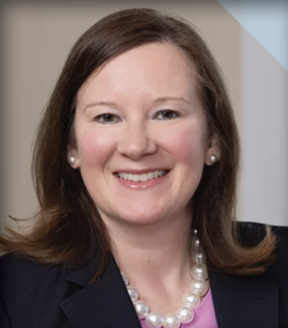 Amy Brozenic, Partner, Lathrop GPM
For Amy Brozenic, the practice of law isn’t transactional—it’s relational. And that distinction traces directly back to her roots. “I am a KCK native and proud to be from a community rich in history and culture,” she says, reflecting on a childhood shaped by deep family ties in Strawberry Hill and an upbringing grounded in consistency, connection, and accountability. “We’re salt-of-the-earth people who believe in family and authentic, long-term relationships.” That ethos now defines her leadership as partner-in-charge of Lathrop GPM’s Overland Park office and as a leader in its trademark and copyright practice. In a field built on protecting ideas, brands, and identity, she sees something more human at play. “A trademark…represents identity and vision and how a brand connects with consumers,” she says. “To truly support their goals and dreams, you need to know them and their values.” Her path to intellectual property law wasn’t linear, but it was logical. A liberal-arts foundation in French and European history sharpened the analytical and cultural lens she now applies to international IP strategy. “That academic foundation didn’t just shape my worldview; it sparked my interest in international issues,” she says. After law school, she joined the U.S. Patent and Trademark Office, where she examined thousands of applications—work that built both technical expertise and a long view of how ideas become protected assets. But Kansas City called her home. At Lathrop GPM, she found something more than a platform—it was a culture. “There’s a clear entrepreneurial spirit here,” she says. “Time and again, I see young lawyers given meaningful exposure to clients and the work that builds thriving practices.” That spirit mirrors the environment she now helps lead, one that emphasizes mentorship, trust, and opportunity. It also extends into the community, where she has invested time mentoring students and supporting entrepreneurial programs. Her work today sits at the intersection of creativity and complexity, especially as digital platforms and artificial intelligence reshape the IP landscape. “The dramatic rise in content platforms has created incredible opportunities…but it also introduces new risks,” she notes. “Artificial intelligence adds another layer of complexity…forcing courts and lawmakers to rethink traditional IP frameworks.” For Brozenic, staying ahead of that curve isn’t just about legal acumen—it’s about understanding people, ideas, and the connections between them. That perspective, rooted in community and carried into leadership, continues to define both her practice and her impact.
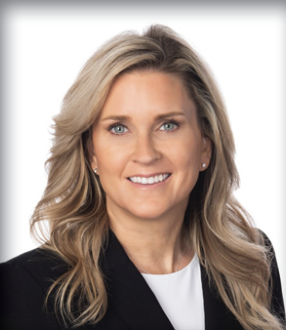 Natalie Daney, Chief Sales Officer, Delta Dental of Kansas/Surency
When Natalie Daney was promoted to management early in her career, the assignment that followed came with little in the way of instructions. Her supervisor handed her three major initiatives—negotiate a new sales partnership, redesign the company’s small-business product suite and help develop a new insurance offering—and expected results. There was only one complication: She had never led a team before and wasn’t entirely sure how to accomplish any of it. Looking back, Daney sees that moment as the beginning of the leadership philosophy that guides her today as chief sales officer for Delta Dental of Kansas and Surency, organizations that now deliver insurance products and services in more than 30 states. The lesson, she says, was learning to operate comfortably in the face of uncertainty. Solutions rarely arrive fully formed. They emerge through hard work, data, benchmarking and broad collaboration. And more often than not, they depend on the people assembled to solve the problem. “People are everything,” Daney says. “With a great team, the potential is limitless.” That belief has become central to how she leads a sales organization responsible for bringing health-benefit solutions to employers, providers and employees across a wide geographic footprint. In her view, leadership is less about directing outcomes than about creating the conditions where talented people can deliver them. It’s an approach shaped partly by personal experience. Daney grew up in Raytown, the daughter of a barber and a stay-at-home mother, and she saw early how confusing the health-care system could be for families without experience navigating it. That perspective eventually drew her toward a career in the insurance and benefits sector, including earlier roles with Blue Cross and Blue Shield of Kansas City and Bukaty Companies. Today, she helps guide sales strategy for a company whose mission centers on improving health outcomes through affordable benefits, strong service and a simpler user experience for employers and employees alike. Increasingly, that work relies on data-driven insights that allow companies to better understand the health of their workforces and tailor benefits accordingly. But even as analytics and technology reshape the industry, Daney believes culture remains the most powerful driver of results. The firm’s culture has created an unusually strong pipeline for women leaders within the organization, something Daney considers both a point of pride and a competitive advantage. Her own leadership style reflects those values: hire exceptional people, give them the tools and autonomy to do their jobs, and remain their strongest advocate as they pursue results. “We spend a lot of our lives at work,” she says. “If you create an environment where people feel trusted, where they can share ideas and even fail fast and learn, you build teams that accomplish incredible things.”
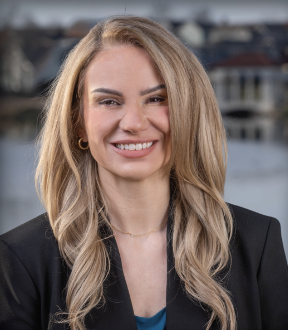 Sunny Foutes, Chief Financial Officer, McInnes Group
Sunny Foutes didn’t grow up aspiring to a career in accounting. What she did develop early, though, was a comfort with leadership. “I was always involved in leadership activities—student government, student council and cheerleading,” says the Northland native and Park Hill High School graduate. “I think I was naturally drawn to those kinds of roles early on.” Those experiences helped shape a management philosophy she still relies on today. “I like to set clear expectations up front, make sure people have the tools they need, and then give them room to do their jobs without feeling micromanaged,” she says. Her eventual path into accounting was less a childhood plan than a discovery in college. At the University of Missouri, Foutes knew she loved math and analytical challenges. “My favorite class was actually calculus,” she says. “I had to take the one for math majors to fit my schedule and ended up loving the challenge.” An accounting scholarship offered during her sophomore year nudged her toward the field. Once she began the coursework, the appeal became clear. “Accounting is basically solving puzzles and understanding how businesses actually work,” she says. “Once I discovered that, it clicked for me.” Foutes spent the first 15 years of her career with a subsidiary of DST Systems, later acquired by Broadridge Financial Solutions, rising from staff accountant to a leadership role overseeing revenue analysts responsible for roughly $500 million across four locations. “I feel incredibly fortunate that my early career was at DST,” she says. “Their finance and accounting organizations were exceptionally well run. Everything was done the right way—strong controls, clear processes and very high standards.” As her responsibilities expanded, leadership opportunities followed. At one point, she managed a seven-person team across multiple locations while standardizing processes to close financials within four business days. That experience revealed one of the most rewarding aspects of her work. “Through that experience, I realized how much I enjoy helping people grow and reach their full potential,” she says. “There’s nothing better than watching someone achieve something they didn’t think they were capable of.” Her move to McInnes Group came after the DST subsidiary was sold, and she began exploring the job market. A recruiter mentioned a family-owned company practically up the street from her home. The deciding moment came when she met CEO Matt McInnes. “I knew right away we were going to work well together,” she says. “He had built a great business and culture and was looking for someone who could bring some corporate financial structure and strategy to the organization.”
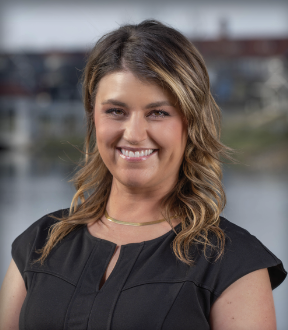 Lindsay Hampton, Principal, Pulse Design Group
Lindsay Hampton built a career on a steady accumulation of trust—doing the work well, taking on more when asked, and approaching each project with equal parts creativity and discipline. Leadership? That wasn’t part of her design. “I focused on doing good work—being reliable, paying attention to the details, thinking creatively, and staying driven,” she says. “Over time, those things opened doors.” That quiet, incremental rise ultimately led to ownership at Pulse Design Group, but the path there is as notable for what it wasn’t as much as what it was. “I’ll be the first to say I don’t fit the mold of a stereotypical leader, and I’m OK with that,” she says. “I lead with humility, and I see my role as supporting the people around me rather than having all the answers.” That philosophy took shape early in her career and solidified as she moved from project execution into team leadership. Hampton credits mentors who modeled a low-ego approach. “I’ve never believed leadership is about authority—it’s about serving your team,” she says. “People do their best work when they feel supported and challenged at the same time.” That mindset proved to be a natural fit at Pulse, where she started straight out of college after studying interior design at Kansas State University. The firm offered something more than a first job—it provided runway. “There were opportunities to take on responsibility early, and the culture and the people made it easy to see myself here long-term,” she says. Ownership followed not from ambition, but from investment. “Pursuing ownership wasn’t something I initially planned,” she says. “It came from a deeper commitment to the firm and the team.” Today, Hampton helps lead work that operates at a far broader level than aesthetics. Her team focuses on health-care environments, an area she sees as undergoing fundamental change. “Health care is at a turning point,” she says. “We have an opportunity to help shift it from a system centered only on treating illness to one that truly supports wellness, prevention, and whole-person care.” Design, in that context, becomes a tool for impact. Working closely with providers, her team translates complex operational needs into spaces that are “more welcoming, more human, and more connected to the communities they serve.” When done right, she says, those environments “reduce stress for caregivers, support families in really vulnerable moments, and make care feel more accessible and approachable.” Her leadership style has continued to evolve alongside her personal life. As a working mother, she’s become more deliberate about where and how she invests her time. “It’s made me much more intentional with my priorities,” she says, noting that balance remains an ongoing challenge—but also a source of clarity.
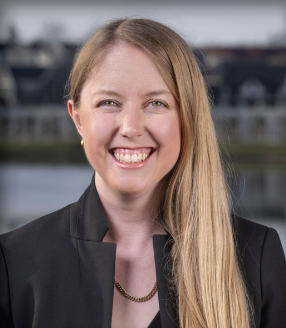 Kelly Holton, Senior Principal, Populous
For Kelly Holton, the work begins long before the first line is drawn Populous, one of the world’s pre-eminent sports-architecture firms. It starts with a question: What does this place feel like? “We’re really trying to capture the spirit of a place,” she says. “The people, the region, the brand, the fan culture—and how to express that through experiences.” That instinct—to translate identity into environment—has defined her career, from museum exhibit design to some of the most iconic sports venues in the world. But its roots trace back much earlier, to a childhood steeped in creativity. “My mom put me in art classes as a kindergartner,” she says. “And I had teachers who really encouraged me—they saw potential.” One of her drawings was even displayed for a year in Congress. At home, exposure came through her father’s family printing business. “I spent a lot of time in the scrap-paper box,” she says, a detail that now make her career path feel almost preordained. She arrived here in 2003 to attend the Kansas City Art Institute, already certain of her direction. “I always knew I wanted to go into the arts,” she says. What she discovered along the way was how expansive that could be. Early work in exhibit design—particularly with civil rights and cultural institutions—sharpened her focus. “It was about people, stories, places, authenticity,” she says. “How do you structure information so people can step inside a story?” That question translates seamlessly to her work at Populous, where she has spent the past 13 years shaping fan experiences across major venues. The scale may be larger, but the core remains the same. “It’s still about storytelling,” she says. “Helping clients express their vision in new ways.” Few projects illustrate that better than her work on Wrigley Field. “The Cubs have such a treasure trove of history,” she says. “Being able to pull from that to create authentic experiences was incredibly rewarding.” At Climate Pledge Arena in Seattle—the world’s first net-zero-carbon arena—she led efforts to integrate storytelling with sustainability. “We created a 250-foot living wall with LED portals,” she says. “It became an iconic expression of the brand and the mission.” Her path into leadership, she says, “organically evolved over time,” shaped by exposure to a wide range of projects and perspectives. “I’ve been able to wear many hats and see all sides of the business,” she says. “That’s given me insight into how to care for people, clients, and teams.” That culture of inclusion is intentional. “Ideas come from anywhere,” inside the firm, she says. “We design for everyone, so we need diverse perspectives at the table.” It’s an approach that has not only supported her own growth—“I’ve always felt seen and heard”—but also reflects broader shifts in the industry. “Women’s sports are gaining huge momentum,” she says. “And seeing more women in leadership is inspiring.” Progress, she adds, is ongoing. “There are shifting tides,” she says. “But I’m hopeful. The more access and support we create, the more momentum we’ll build.”
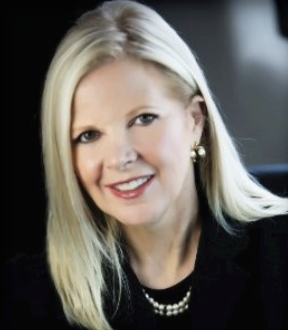 Deborah Knight, Founder/CEO, Women’s Executive Club
Deborah Knight’s leadership is rooted in discipline, perspective, and a series of decisions that reshaped not just her career—but her purpose. “I am a native of Kansas City and have resided in Kansas since birth,” she says. Her foundation was built early. “My parents…instilled in me, at a very young age, a strong work ethic.” As the middle of three daughters, she also developed a skill set that would later define her leadership style. “I am a natural negotiator and collaborator. I can see things from various peoples’ perspectives, and I easily get along well with various personalities.” She was also, by her own description, driven from the start. “From an early age, I emerged as a leader, an innovator, and a quietly ambitious high-achiever. If something didn’t exist that was needed, then I created it.” Knight became the first in her family to attend a four-year university, enrolling at the University of Kansas with a clear sense of purpose. “I knew that I would attain my college degree because I saw it as a pathway to career success.” A business degree led naturally to law school. “I am analytical and intellectually curious, so a law degree was a great fit for me.” She completed KU’s accelerated program, earning her degree in two years. As a civil trial attorney, she thrived. “I was the only woman attorney at the law firm, and I was always the only female trial attorney in the courtroom,” she says. The environment was intense—and she excelled, the result of being well prepared, working smart and working hard. But success brought a difficult reality into focus. “Unfortunately, the law firm and caseload allowed no time for me to be both a trial attorney and a mother,” she says. “I was very successful and I loved my career as a trial attorney…I loved my son more. So I chose my son and I chose to change careers.” She transitioned into wealth management, where she again distinguished herself, building a $15 million book of business in 18 months. Just as important: “I achieved this while not missing any of my son’s school, sporting, or extracurricular activities.” That balance—and the lack of support structures for achieving it—became the catalyst for her next chapter. “I found other women who excelled professionally and wanted to move forward,” she says. “So I’d ask them ‘What was missing for you?’ Their answers were like mine.” What emerged was the Women’s Executive Club. “It appeared that women needed a safe, confidential place to discuss these matters to accelerate their career success,” she says. Today, WEC provides exactly that: “a safe, confidential space for non-competing peers to discuss impactful business strategies…and to gain new insights.” Knight sees growing momentum, including unexpected allies. “Top level executive men have asked to support WEC,” she says, noting that many recognize its impact on both leadership development and business performance. “We’re making progress,” she says.
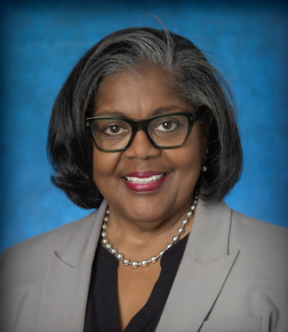 Natalie Lewis, COO, Great Jobs KC
For Natalie Lewis, leadership starts with a simple but radical premise: talent is everywhere—even where systems fail to see it. “We have talent in uncounted places that we can’t afford to leave behind,” she says, a belief rooted not in theory, but in lived experience. Growing up in Houston, she describes her childhood as “like a social science experiment,” surrounded by stability, expectations, and exposure that would eventually carry her to MIT. “My parents didn’t mess me up,” she says with a laugh—but beneath that is a serious point about preparation, rigor, and belief. Her path rarely followed a straight line. Chemical engineering at MIT. Three years at Mobil Chemical. Then a pivot: “I realized I wanted it to be something creative,” leading to an MBA in marketing and a career that spanned Hallmark, Sprint, education, non-profit leadership, and even teaching in Kansas City Public Schools. “Nothing overwhelms me,” she says. “That learning serves me every day.” Each stop added dimension. Engineering taught her to “design systems.” Marketing sharpened her understanding of behavior and communication. Managing nine-figure budgets built operational discipline. Teaching revealed the fragility—and potential—of the talent pipeline. “When you talk about systemic change,” she says, “we’re a big non-profit, so it helps that I understand budgets…and how we need to run like a corporation.” That convergence made Great Jobs KC feel inevitable. “If I’m paying attention, I don’t have to make a lot of tough decisions,” she says. The deciding factor was the chance to work with Earl Martin Phalen. “When I knew I’d get to work with someone whose mind works at that level—disrupting industry—that was a no-brainer.” Her work now sits at the intersection of workforce development and economic mobility, but she’s clear-eyed about the barriers that persist—especially when viewed through a broader lens. “If you’re talking about all women, progress has been made,” she says. “But if you’re talking about African-American women, little progress has been made.” Real progress, she argues, requires confronting uncomfortable truths. “You have to be courageous enough to disaggregate the numbers.” Even solutions like childcare remain unfinished business. “Missouri businesses lose $1.35 billion a year because of childcare-related issues,” she notes. “But we’re still not funding it.” Lewis doesn’t frame these gaps as obstacles so much as design flaws—systems that can, and must, be rebuilt. “That’s all a chemical engineer does,” she says. “Design systems.” And in her hands, leadership becomes exactly that: a deliberate effort to construct pathways where none existed before.
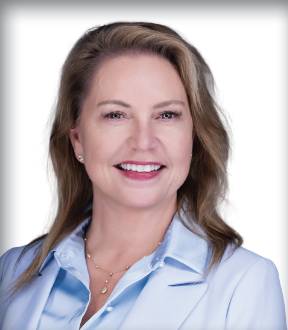 Rita Luukkonen, General Counsel, Master’s Transportation
Growth, when it’s done right, doesn’t just scale a business—it reshapes the experience of everyone connected to it. That’s the impact of Rita Luukkonen’s work at Master’s Transportation, one of the region’s fastest-growing companies—and now one of its biggest. As general counsel, her role extends far beyond legal oversight. She operates at the center of strategy, finance, workforce development, and risk—helping guide a company expanding at more than 30 percent annually while building the infrastructure to sustain it. The most visible expression of that leadership is the company’s new Kansas City headquarters, a $72 million investment that consolidates five locations into a single, purpose-built campus. But the project wasn’t just about scale; it was about intention. From structuring complex financing—including PACE funding for energy-efficient geothermal systems—to aligning public and private stakeholders, Luukkonen helped bring the project across the finish line on schedule. The result is a facility designed as much for people as for production: climate-controlled workspaces, improved collaboration, and capacity for hundreds of jobs. That focus on workforce is a defining element of her leadership. She restructured the company’s human-resources function and developed a labor strategy designed to support rapid hiring while maintaining culture and continuity. Partnerships with organizations like Great Jobs KC reflect a broader commitment to building talent pipelines and expanding access to opportunity. At the same time, she has strengthened the company’s financial resilience through innovative risk strategies, including the development of a captive insurance program and new approaches to managing operational exposure. Those efforts haven’t gone unnoticed. Industry recognition, including being named one of Busline Magazine’s Women to Recognize, underscores her influence in a sector where female leadership remains relatively rare. Yet the metrics—square footage, financing structures, growth rates—only tell part of the story. What distinguishes Luukkonen’s approach is how those elements come together around a clear philosophy: that investing in people drives better outcomes across the board. That belief is embedded in the design of facilities, the structure of teams, and the systems that support both. It’s visible in decisions that prioritize employee well-being alongside operational efficiency, and in strategies that link business expansion with community impact. In a capital-intensive, operationally complex industry, that kind of alignment isn’t accidental. It’s the result of disciplined thinking, cross-functional leadership, and a steady focus on long-term value. For Kansas City, it means more than a new headquarters. It signals a model for growth that is both ambitious and grounded—driven by results, but defined by people.
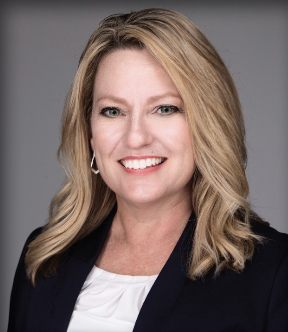 Kristi Macaluso, Chief People Officer, KBP Brands
Raised in the kind of small town where reputations are built one interaction at a time, Kristi Macaluso learned early that leadership is less about authority than accountability. Growing up in Marshfield, Mo., she says, “People notice how you treat others and whether you follow through on your commitments,” a standard that has stayed with her and now shapes a leadership style she describes as practical and people-focused. “I care about results,” she says, “but I also believe how you treat people matters.” Her path into business leadership was not mapped out so much as constructed. In college, she chose finance less out of passion than pragmatism. “I didn’t know exactly what I wanted to do,” she says, “but I knew I wanted a degree that would be broadly useful.” Finance offered a way to understand how organizations function at their core—knowledge she still leans on today. “It gave me a strong foundation that I still rely on.” That foundation carried her into an analytical role at the Federal Reserve, where she worked on financial modeling, system implementations and process improvements. But it was a rotational opportunity into human resources that ultimately reframed her career. “Once I moved into HR,” she says, “I realized I was particularly interested in achieving business results through the lens of people, leadership and culture.” From that point forward, the trajectory was set. Management followed as a natural extension of that interest. “It gave me the opportunity to influence outcomes more broadly,” she says—an inflection point that shifted her from supporting strategy to helping shape it. That orientation made KBP Brands an appealing next step. The company’s growth pace—driven by a steady stream of acquisitions—offered both opportunities and complexity. “I was excited about being part of a company that was growing, moving quickly and building something,” she says. “I wanted to be part of a company that was known for growth, but also for how it treated people.” Sustaining that balance is no small task. Growth at KBP is not simply a matter of adding headcount; it requires building the infrastructure to support it. “One of the biggest challenges is not just keeping up with the growth itself,” she says, “but building everything around it to support it.” Hiring is only the starting point. “It’s about having the right talent strategies, processes and technology in place so you can scale in a way that actually works.” Acquisitions add another layer. “There is the added complexity of bringing together teams, processes and cultures,” she notes. Much of her team’s focus, then, is forward-looking: “How do we create the right employee experience, and how do we use technology to help us scale and support the business more effectively?”
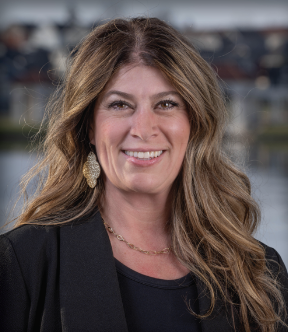 Kristie Nichols, Controller, Cable Dahmer Auto Group
In a business defined by motion—inventory turning, deals closing, customers coming and going—Kristie Nichols found her footing by standing still long enough to recognize what mattered most: the people around her. Raised in Independence and a graduate of William Chrisman High School, her path into the automotive world wasn’t mapped so much as discovered. At 19, she went looking for a job and found something more enduring at Cable Dahmer Auto Group. What began as an entry-level role filing dealer trade paperwork has evolved into a 29-year career shaped less by ambition than by curiosity—and by the steady influence of Carlos Ledezma. His early belief in her capabilities, she says, proved foundational. But just as formative were the quieter lessons gathered along the way: observing leaders worth emulating, and others who clarified, by contrast, the kind of leader she did not want to become. Those experiences coalesced into a philosophy rooted in humility and service—an understanding that leadership is less about direction than it is about development. Nichols’ ascent through the organization reflects that mindset. She said yes often—yes to learning new systems, yes to stepping into unfamiliar roles, yes to understanding how each part of the dealership ecosystem connects to the next. Sales, finance, operations—each stop along the way expanded her view of the business and reinforced the interdependence of its moving parts. By 2009, that breadth of experience positioned her for a shift into leadership as office manager for one of the group’s flagship locations. A series of expansions and acquisitions followed, and with them, increasing complexity. Nichols helped guide the transition to a centralized accounting structure, consolidating financial operations across nine dealerships into a single hub. Today, her team supports not only automotive sales and service functions but also adjacent ventures, including car wash operations by building the systems that allow frontline teams to focus on customers. It’s work that happens largely out of sight but is essential to scale. Accuracy, compliance, and efficiency form the back-bone of growth, and Nichols’ role is to ensure those elements remain steady even as the business evolves. In an industry long dominated by men, she has witnessed a gradual but meaningful shift. More women are stepping into leadership roles, bringing perspectives that strengthen organizations in both subtle and profound ways. For Nichols, however, the more persistent barriers are often internal—the hesitation to step forward before feeling fully ready. That insight now shapes her focus. Increasingly, her measure of success is not personal advancement but the growth she sees in others, particularly the women on her team. Confidence built, careers advanced, leadership potential realized—those, she suggests, are the outcomes that endure. In a fast-moving industry, Nichols has built a career on enabling others to move forward. And in doing so, she has redefined what leadership looks like from the inside out.
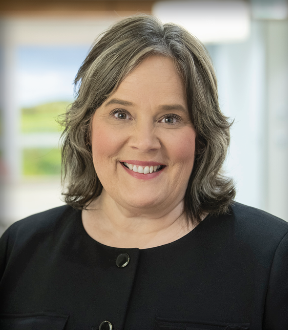 Amy Pieper, Director, Institutional Client Sales Commerce Bank
Amy Pieper learned about business before she ever stepped into a bank. “I remember when I was 8…my dad said, ‘You guys are going to start a business, and I’ll finance your first lawn mower,’” she recalls. What followed wasn’t just yard work—it was negotiation, customer service, accountability. “It was not just about lawn mowing.” That early immersion, paired with watching her father serve as both banker and community leader, shaped a philosophy she still carries. “In small towns, everybody had to pitch in,” she says. “He was involved in everybody’s lives…and was not afraid to get his hands dirty.” Today, that translates into a simple but durable principle: “Without strong relationships, you’re not operating as effectively as you could be.” Her own path into banking wasn’t preordained. At the University of Missouri, she initially leaned toward journalism. “I loved to write,” she says. “But with classes like math and economics, I realized those were more my strengths.” By her sophomore year, the pivot was complete. What followed was a steady climb through some of the region’s most prominent financial institutions, including Boatmen’s, UMB, and now Commerce, where she has spent more than a decade. Along the way, an early leadership test left a lasting imprint. At just 24, she was asked to manage a team in trust real estate operations—an area she barely knew. “The tenured associates were asking, ‘What does she know?’” she says. “I told myself I have to figure this out.” So she did—by learning every role on the team. “If I ever worked on a team, I wanted to know what everybody does…to understand their pain points and advocate for them.” Today, she leads Commerce Trust’s institutional business, overseeing relationships that span nonprofits, corporations, and government entities. “We help clients with their investment management needs,” she says, “but we’re also an extension of their staff.” Roughly half those clients are nonprofits, aligning closely with her personal commitment to service. Culture ultimately drew her to Commerce. “It’s such a small world in Kansas City banking,” she says. “I knew and respected a lot of people here.” The fit became even clearer when her role allowed her to blend professional expertise with volunteer passions. As for the evolution of women in banking, Pieper has seen the shift firsthand. “It looks a lot different than when I joined Boatmen’s in 1993,” she says. While barriers have largely fallen, she believes one remains internal. “Sometimes women say, ‘I can do seven of the eight requirements, so I’ll wait,’” she says. “That’s going away—but it’s probably the last barrier.”
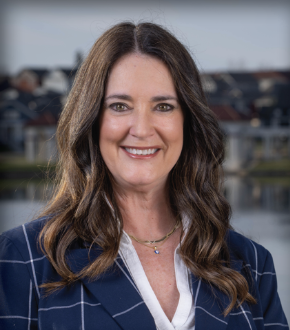 Laurie Roberts, Senior Advisor, Parris Communications
Laurie Roberts’ career was shaped less by a grand plan than by a willingness to step into the room—and then prove she belonged there. That instinct, first sparked in high school, set the tone for a professional arc that has carried her from pre-dawn radio shifts to the strategic front lines of corporate crisis communications. Her entry into journalism was as pragmatic as it was ambitious: take the job that’s available, then earn the next one. A receptionist role at a radio station quickly turned into an on-air reporting position, launching a stretch of years that demanded both stamina and adaptability. Balancing college coursework with 3 a.m. wake-up calls, Roberts learned early that discipline and resilience weren’t optional traits—they were prerequisites. Those early experiences also reinforced something more enduring: the importance of energy and engagement in the workplace. She credits her mother, an advertising professional who modeled creativity and connection in leadership, with shaping that sensibility. It’s a lesson Roberts carried forward, particularly when she later assumed leadership roles herself. Her move to Kansas City in 1995 to anchor evening news marked a professional high point, but also a turning point. When a wave of newsroom layoffs in 1999 included her, Roberts was prepared—mentally and strategically—for what came next. Public relations had long seemed like a natural extension of journalism, and the opportunity to join Parris Communications offered both continuity and reinvention. What began as a career pivot became a calling. Over 25 years with the firm, much of it leading as president, Roberts has developed deep expertise in crisis communications, guiding corporate leaders through moments that define not just outcomes, but reputations. The work demands more than messaging; it requires judgment, empathy and the ability to navigate competing interests under pressure. For Roberts, those challenges are the point. “There is nothing that will better define who you are,” she notes, “than navigating your company and employees through challenging times.” Her leadership path evolved organically within a company committed to internal growth. With each new responsibility came an opportunity to mentor others—an aspect of leadership she embraces as both duty and privilege. Management, in that sense, was never a departure from her work; it was an extension of it. Across industries—from telecommunications and health care to infrastructure and energy—Roberts has maintained a consistent approach: listen carefully, learn quickly and communicate with purpose. It’s a philosophy rooted in journalism, refined in public relations, and sustained by a belief that the way leaders respond in difficult moments ultimately defines their legacy.
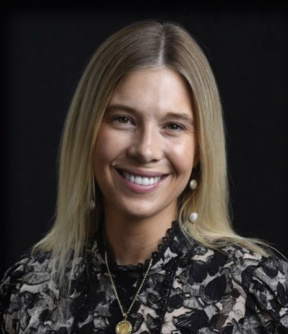 Brooke Runnion, EVP/Partner, Lockton
Resilience came early for Brooke Runnion—long before she ever stepped into a business development role. “I was born in Pasadena, California, and I am definitely a California girl at heart—a free spirit for sure,” she says. But that sense of identity was shaped alongside constant change, and would come into play with her leadership at the world’s largest independent insurance brokerage. “My dad worked for IBM, so we moved five times before settling down in Kansas City when I was in third grade.” That experience, she says, proved formative: “Moving around so much as a young girl built up my resilience, something that has served me well in a business development role…when you are being told ‘no’ or ‘not now’ on a regular basis.” Her father’s influence extended beyond adaptability. “My dad influenced my leadership style a lot,” she says. “He would say things like ‘people buy from who they like.’” Over time, she refined that idea into something more grounded. “To me, it hasn’t been as much about being likeable. It’s been about building trust, being a truth teller, pushing people to think differently—and have fun along the way.” That mindset—equal parts candor and connection—has guided a career built less on a prescribed path than on relationships and curiosity. At the University of Colorado, she paired economics and psychology, drawn to the intersection of behavior and decision-making. “I really loved the psychology behind behavior change when viewing things through a financial lens,” she says. “What would motivate people to change—or not change?” Insurance wasn’t the plan. After time with Cerner, where she was encouraged to begin in HR to better understand the business, she eventually set her sights on something new. Her move to Lockton was deliberate. “The opportunity didn’t present itself,” she says. “I pursued an opportunity because I thought the company could be a great fit for me.” What sparked that pursuit was simple: “One former Cerner coworker…told me that ‘he couldn’t believe he gets to work at such an amazing place.’” At Lockton, her role reflects a collaborative model of leadership. “Our model…is a bit different in that I don’t have any direct reports,” she says. “I lead teams as we pursue new client relationships and then partner with our consulting team.” Her growth, she adds, has been tied directly to leadership development. “My evolution and growth at Lockton has 100 percent been the result of growing and developing as a leader.” That investment stands out. “I’m not aware of another company that invests so much in developing its people,” she says. Today, her work centers on “insurance, risk management, and benefits consulting,” but the foundation remains unchanged: resilience, relationships, and a willingness to challenge assumptions.
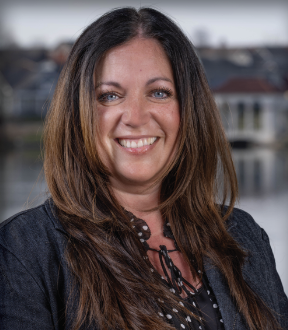 Amy Small, Executive Director, Institutional Custody, UMB
Amy Small doesn’t separate leadership from everyday behavior. For her, it starts with something much simpler: “If you see something needs to be done, just do it.” That mindset traces directly to her upbringing. Her father, a lifelong minister, modeled servant leadership; her mother rose from bus driver to director of transportation. “Both were leaders,” she says, “but more importantly, they were really good parents.” That distinction matters. “I don’t want my own kids to notice I have a career,” she adds. “I want them to notice how I show up.” Her path into finance was anything but traditional. College wasn’t assumed, so she built it herself—working full-time, attending classes at night, managing a household along the way. “I always loved learning,” she says. “Still do.” What began in a call center evolved quickly into leadership; by 21, she was managing people, and before 30, she had become the youngest director in her organization’s history. “It certainly wasn’t a goal,” she says. “I just kept learning.” That appetite for growth defined her trajectory. “If there’s a license I’ve got to get, I get it,” she says. Over time, she built deep expertise in institutional asset servicing, eventually joining UMB in 2018 after years as a client. “It felt almost like moving departments,” she says. Today, she leads a business responsible for custody and administration of hundreds of billions in client assets. “We take the administrative burden away from portfolio managers so they can focus on investments,” she explains. Under her leadership, that business has scaled dramatically—from $62 billion to $239 billion in assets under custody. But her focus extends beyond metrics. She’s intentional about creating space for others, especially women. “I notice women will still defer,” she says. “If someone speaks over them, I make sure they get the platform.” Recognition matters, too. “If a woman has an idea and it gets repeated, it matters whose idea it was.” She’s also seen a cultural shift. “Women are allowed to be women now,” she says. “We don’t have to just be robots at work.” That evolution, paired with more women in executive roles, has reshaped leadership dynamics in ways both subtle and profound. Barriers remain, she acknowledges—particularly around career pauses—but even those are changing. She points to a recent hire who returned after 15 years out of the workforce and quickly rose back into leadership. “There’s a perception that moms don’t want to work late,” she says. “I feel like that doesn’t exist anymore.” For Small, progress isn’t theoretical. It’s visible—in careers resumed, voices amplified, and a workplace where leadership looks more like the world it serves.
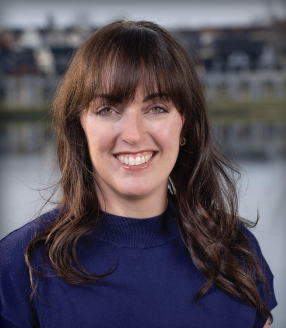 Emily Tilgner, Building Performance Solutions Leader, McCownGordon Construction
Emily Tilgner doesn’t romanticize leadership. She defines it in practical terms: vision, trust, and momentum. “Good leadership is less about having the answers and more about creating clarity,” she says. “And building trust.” That mindset has carried her through a career that didn’t follow a traditional construction path—but ultimately positioned her to help lead one of the region’s largest builders. A Kansas City native, Tilgner began on the design side, earning a degree in architectural engineering and spending nearly 15 years with an MEP consulting firm. Over time, she moved from designer to professional engineer, then into project management and ownership. “I was always looking for ways to improve outcomes,” she says. “I don’t like standing still.” Her move into construction came at an inflection point. “I was thinking hard about what the next phase of my career should look like,” she says. When McCownGordon approached her, the opportunity offered something distinct: “the chance to build something, not just inherit it.” It was a leap into unfamiliar territory—but one that reshaped her perspective. “Getting exposure to the construction side fundamentally changed how I understand projects, teams, and outcomes,” she says. The complexity—and the potential for impact—was larger than she’d seen before. Today, she leads the firm’s Building Performance Solutions group, a multidisciplinary team designed to improve how projects are conceived, executed, and delivered. “We exist to make sure projects perform the way they’re intended to—technically, financially, and operationally,” she says. That means bringing together expertise in MEP systems, structural engineering, virtual design, building enclosures, commissioning, and sustainability. “Our role is to remove friction, increase clarity, and help teams deliver better outcomes.” Leadership, for Tilgner, emerged early—not by title, but by approach. “I was decisive, comfortable speaking with authority, and consistent,” she says. “People knew I was looking out for the best interests of the team.” Over time, that translated into broader influence. “The right leadership can change the trajectory of a project, a team, even an organization.” She’s also mindful of the path that made her own ascent possible. “Having someone else go first makes it easier for others to follow,” she says, noting the impact of women who created space in the industry. Still, construction presents unique challenges. “Women make up about 11 percent of the workforce,” she says, with even fewer in field roles. “That makes it harder to build early experience and credibility. Much of that comes down to exposure. Construction wasn’t presented to me as a career path.” Changing that narrative is key. “The opportunity now is to be more intentional—how we attract people, support them early, and create clear paths forward,” she says.
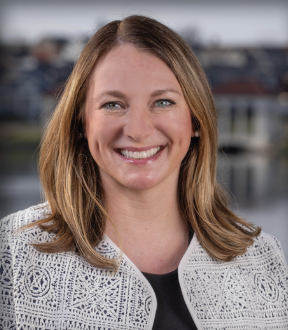 Kasey Vena, VP-Operations, Newmark Zimmer
Kasey Vena built a career not by specializing early, but by refusing to. “I was one of those people whose knowledge was a mile wide but an inch deep,” she says. “I wanted to try everything.” What might sound like a lack of focus became, over time, her defining strength—and ultimately, the foundation of her leadership style. Growing up in Lansing, Kansas, on a former dairy farm, she experienced a kind of openness that shaped her approach to work and life. “Everybody played sports, everybody tried different things,” she says. “You could be good at something or not—but you still had the opportunity to try.” That environment, less structured and more exploratory than today’s hyper-specialized youth culture, fostered adaptability and curiosity—traits that would later define her career. Her résumé reflects that breadth: journalism, sports marketing, retail, and eventually commercial real estate. Each step added a new layer of understanding. “In sports, everything is always changing,” she says. “That gave me a base of being proactive, but also able to adapt.” Managing the pace and logistics of major sports operations—like a Major League Baseball season—required precision, communication, and the ability to pivot quickly. “You learn how to operate in a fast-paced environment where there’s no pause button.” That operational mindset carried into retail and then into commercial real estate, where she developed a deeper understanding of how physical spaces, tenants, and business strategy intersect. Today, at Newmark Zimmer, she brings all of those experiences together in a role that is as expansive as her background. She oversees internal operations across HR, IT, marketing, accounting, and property and facilities management. “It goes back to being able to move across functions and understand how they work together,” she says. “It’s about making everything run smoothly—not just within departments, but across the organization.” Her leadership style reflects that cross-functional awareness. “A lot of what I bring is organization, communication, and empathy,” she says. “Understanding how decisions in one area impact another is critical.” It’s less about controlling outcomes than enabling alignment—creating the conditions where teams can perform at a high level. What drew her to Newmark Zimmer was a structure she sees as increasingly rare: a firm operating at a high level nationally, but with local ownership and decision-making authority. “We get the best of both worlds,” she says. “We’re doing complex, high-level work, but we can make decisions based on what’s best for our people and our clients right here.” That local control, she adds, allows for a more intentional culture. “How we treat people, how we work as a team—that’s driven locally.” Even with that progress, she’s clear-eyed about the broader industry. “We still have a long way to go,” she says of women’s representation in the commercial real-estate space.
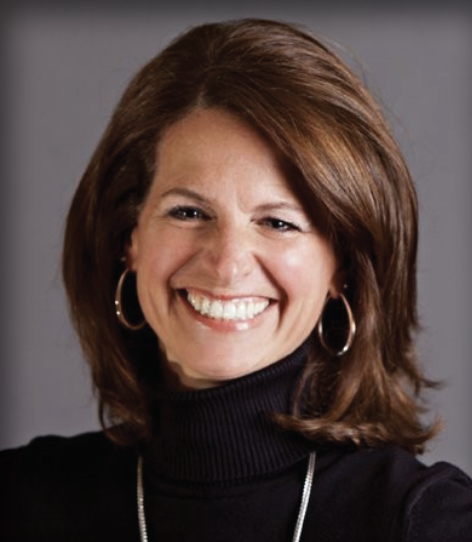 Marcia Youker, VP-Client Solutions, JE Dunn Construction Co.
In an industry built on concrete and steel, Marcia Youker has spent three decades proving that the most durable structures are relationships. Her path into construction wasn’t plotted early. “Construction wasn’t exactly on my radar,” she says, recalling a communications degree and an initial aim at advertising. But a marketing role with Gould Evans opened a door to the AEC world—one she never closed. “What started as a marketing opportunity quickly turned into a career path I truly loved.” More than 30 years later, spanning architecture, engineering, and construction, she has built a career around growth of markets, of companies, and, most intentionally, of people. That through-line traces back to her upbringing. Her father, she says, was “both a cheerleader and an enforcer,” a balance that still defines her leadership style. “My parents’ guidance was a lot like bowling with bumpers—they encouraged us to take risks and have fun, but those bumpers were always there to gently guide us back on track.” Add in years as a competitive swimmer at the University of Kansas, and the foundation was set: discipline, resilience, and a deep appreciation for team success. “The best [coaches] pushed me beyond what I thought I could do while helping me see I was part of something bigger than myself.” That sense of shared purpose now anchors her leadership philosophy. “I learned the importance of lifting others up, creating space for their voices, and helping them reach their potential,” she says. It’s a people-first approach reinforced by mentors and life experience alike. “True leadership means listening first, investing in people, and celebrating shared success.” At JE Dunn Construction, where she found what she calls “the perfect next step,” that philosophy translates directly into business impact. She leads Midwest business development efforts that “help JE Dunn build relationships, win projects, and share our story in ways that truly connect.” It’s work that sits at the intersection of strategy and storytelling—aligning brand, capability, and client trust. “Our team helps operational teams showcase their expertise,” she says, ensuring the company’s message reflects “quality, innovation, and collaboration.” But if the work is strategic, the draw was personal. “What truly made the decision easy was the people,” she says. “It says a lot when people you trust are proud of where they work.” That culture—rooted in teamwork, integrity, and community impact—continues to fuel her engagement across sectors from higher education to sports. Youker has also witnessed—and helped advance—the evolution of women in construction leadership. “Having diverse voices at the table fosters better problem solving, more inclusive culture, and richer dialogue,” she says. While progress is undeniable, she’s clear-eyed about the work ahead: “We’ve come a long way, but systemic and cultural barriers still exist.”