
HOME | ABOUT US | MEDIA KIT | CONTACT US | INQUIRE
HOME | ABOUT US | MEDIA KIT | CONTACT US | INQUIRE
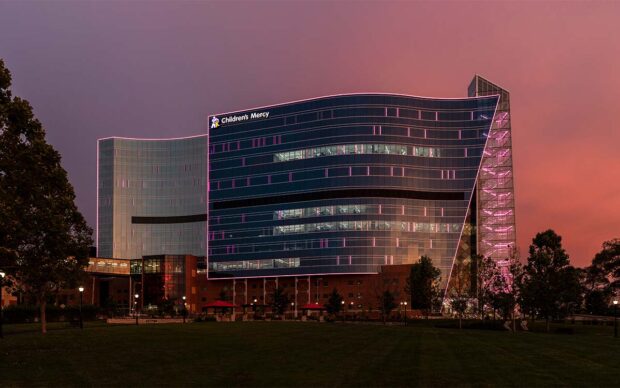
Children's Mercy and Vima Therapeutics have the exclusive license agreement for a new treatment for Dystonia and Parkinson's. FILE PHOTO.
Posted March 25, 2026
Children’s Mercy has partnered with a Massachusetts-based biotechnology company to commercialize an oral therapeutic for dystonia and Parkinson’s disease.
Children’s Mercy entered into a license agreement with Vima Therapeutics for the oral therapeutic in development, VIM0423. It is designed to target muscarinic cholinergic receptors in the brain selectively.
“This agreement accelerates innovation from the lab to the bedside, turning discovery into care,” Steven Leeder, Senior Vice President, Chief Scientific Officer, Children’s Mercy Research Institute, said in the release. “It’s more than a licensing deal; it’s a testament to what’s possible when innovation and compassion come together.”
Vima holds the exclusive license from Children’s Mercy to develop and commercialize VIM0423. VIM0423 has been granted Fast Track designation by the U.S. Food and Drug Administration for the treatment of isolated dystonia and is in Phase 2 of clinical trials. Vima recently added $40 million to its Series A financing for the treatment, raising the total funds to $100 million, according to a separate release from the company.
The company expects to initiate a Phase 2 trial in Parkinson’s disease in mid-2026. Vima will collect topline data from both trials in the first half of 2027.
“This collaboration reflects how we turn bold ideas into real solutions accelerating the journey from discovery to care, proving that when science and compassion unite, the future of medicine changes for the better,” Rob Steele, Senior Vice President, Chief Strategy & Innovation Officer, Children’s Mercy, said in a release.
Dystonia causes painful, involuntary muscle contractions, and its standard of care is often ineffective, with risk of side effects. Parkinson’s disease is a neurological disorder that causes involuntary muscle movement and issues with coordination. There is no cure for Parkinson’s.