
HOME | ABOUT US | MEDIA KIT | CONTACT US | INQUIRE
HOME | ABOUT US | MEDIA KIT | CONTACT US | INQUIRE
Anticipating Senate confirmation, markets could be poised to surge.
PUBLISHED FEBRUARY 2026
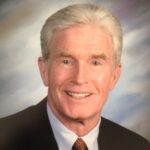 Some of the intense drama surrounding the Federal Reserve is finally ending. President Trump has announced his pick for the next chair of the central bank: Kevin Warsh received an enthusiastic nod. As a former Fed governor from 2006 to 2011, Warsh has long advocated for lower interest rates.
Who is Kevin Warsh and what does he want to see from the Fed? Warsh is first and foremost a conservative. He believes government institutions, including the Fed, cannot provide ab-solute answers to all economic problems. He also prefers a smal-ler, leaner, more focused Fed.
In a speech to the International Monetary Fund’s Group of 30 last year, Warsh warned about Fed mission creep and loss of focus. He believes the Fed’s first mission—to stabilize the dollar—should take precedence over all else. In modern terms, that means preserving the dollar’s purchasing power, and controlling inflation. This is a throwback, in a way, to Alan Greenspan, who led the Fed for 18 years from 1987-2006, one of the longest, strongest runs of economic growth in the nation’s history.
Greenspan believed that the Fed can best encourage full employment, thus fulfilling the other side of its dual mandate, by creating an environment where economic decision-makers are no longer preoccupied by inflation.
While Warsh has been a critic of the Fed, he is also a realist. His earlier experience on the board taught him some humility. He accepts that the Fed will not always get everything right. In terms of what might change with him at the head of the institution, Warsh has argued the Fed should pay more attention to money supply again.
Warsh is not a fan of forecasting or the constant parade of par-ticipants on the Federal Open Market Committee who discuss their policy forecasts or engage in conjecture about what the rest of the FOMC is likely to do. There will likely to be less public comment about rates from participants. Warsh’s biggest target for reform is the 2008 decision to shift from a lean balance sheet to a large one. The financial crisis that year saw that balance sheet double, to $2.2 trillion, and it has exploded in size since then, soaring to nearly $9 trillion before the Fed began scaling back, and it still stands at $6.5 trillion.
Warsh believes the Fed’s role as the nation’s leading bank regulator and supervisor has led to mission creep distracting it from its primary job. He has also advocated less bank regulation. “Regulation should act as a complement to market discipline, rather than a replacement for it.”
Markets have reacted to the Warsh pick favorably. Traders’ reactions owe to Warsh’s years of idealism and courage to buck financial fashion (as much as anything else). Of all the people Pres-ident Trump could have picked, Kevin Warsh is as unlikely as any to subject himself to the whims of the president. Warsh is not only an advocate of Fed independence; he is a strong believer that this goes both ways. The Fed should resist politicians’ efforts to pull the Fed from pursuing price stability, and the Fed should resist the temptation to tell politicians what to do. Independence is central to the Fed’s mission. In Warsh’s view, his mission is critical to a successful future of all institutions.
Frankly, it could be challenging for Warsh at the Fed, where he has few frie-nds among initial staff and colleagues. But there have been firm hands in the chair before—including Paul Volcker during the Reagan years, and Greenspan after him—who won over the staff and the FOMC by demanding excellence.
Assuming Warsh is confirmed by the Senate, he would succeed Jerome Powell in May. In the run-up to that, the markets could be poised for a meteoric rally for “risk-on” assets and “risk-off” assets alike, as market forces converge and boost prices to new highs. The S&P 500 breached the 7,000 level for the first time as January drew to a close, while gold also experienced its biggest one-day dollar gain in history, soaring $220 an ounce to reach a record high above $5,400, with rallies potentially continuing in the coming sessions.
Multiple tailwinds—runaway debt, Fed credibility concerns, global central bank gold buying—are fueling a ‘perfect storm’ for higher gold prices. Might gold even hit $7,000 by the end of Trump’s second term?
While investor defense seems to be driving the gains for precious metals, including silver, playing offense is also driving gains in equity markets, tackling both sides of investor strategies. The bench-mark S&P 500 continues to ring in “grand-new” milestones, after hitting 6,000 only a year ago, and 5,000 the year before that. Helping push it over the line this time around has been looser monetary policy, AI excitement, an earnings boost from a weaker dollar, and expectations for a continuing surge in economic growth.
The Fed paused on its rate-cutting as the month drew to a close, following three successive rate reductions, main-taining its benchmark rate at 3.50-3.75 percent. One question may be when the next cut will be announced—or are there any more cuts coming this year?