
HOME | ABOUT US | MEDIA KIT | CONTACT US | INQUIRE
HOME | ABOUT US | MEDIA KIT | CONTACT US | INQUIRE
PUBLISHED JANUARY 2026
“You’re only as good as your last performance. You have to bring your best every single day.”
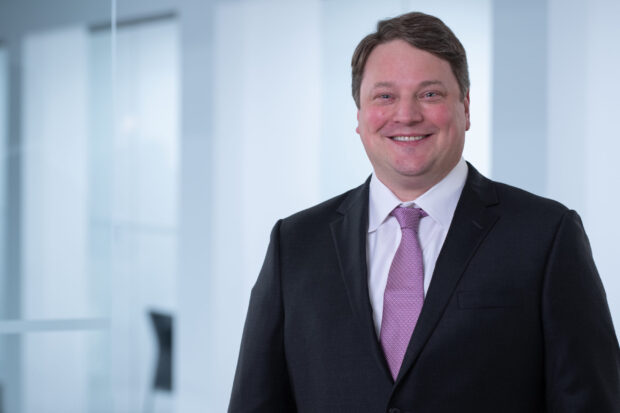
If you think of wealth management operations as a symphony, Jonathan Knapp conducts with a maestro’s flair, and not just because he wields a mean COO baton: His own operatic roots transform unexpected pivots into scalable success at Creative Planning, the region’s biggest wealth-management firm.
He’s Chief Operating Officer and with the Overland Park-based firm steering operations that have ballooned from $12 billion in assets under management at his hiring to more than $700 billion in AUM and AUA today. As organic growth and monster acquisitions have turned the firm into a national-level power, Knapp embodies adaptability. His arc from stage performer to C-suite strategist reveals a character wired for reinvention, blending artistic intuition with analytical precision to mentor teams through rapid growth, always asking the right questions to unlock potential.
A Kansas City lifer, Knapp graduated from Shawnee Mission East High School and UMKC with a degree in music, training as a classical voice major for opera. He performed briefly in San Diego, but a job loss forced a choice—“I had a job that was flexible enough for what I wanted to do to pay the bills, then that job went away, so I faced the decision to be a starving artist or not and chose to go to school.” That led him his MBA in finance.
With his wife, he co-founded a financial literacy firm for students, then shifted his focus to adults, earning his CFP in 2015 and opening the door to financial planning. At Creative Planning, he started as a financial planner, rose to director of financial planning for two years, and became COO in 2019.
Family and mentors shaped his ethos. Parents from rural farms—dad an engineer, mom with a master’s in dietetics—modeled diligence: “My parents both valued hard work. … They were the kinds of people who taught me that if I did the right things and was loyal, good things would happen.” Arts experiences highlighted human potential: “Coming out of the arts,” he says, he found that “people are capable of extraordinary things if given the opportunity, mentorship and guidance. … That empowers you.” Performing professionally also demanded excellence: “You’re only as good as your last performance. You have to bring your best every single day.”
His classic Gemini creative and analytic sides define his leadership, vacillating early but converging in finance: “It’s not about having the right answer for clients, but asking the right questions,” he says. In his leadership role, he helps assemble high-performing teams by hiring “people, not resumés”—smart, driven individuals aligned with the firm’s values: “You have to assemble teams that are comfortable working in that environment. … It’s about creating leaders, not followers.”
Mentorship, as well, is a core attribute: “To help people find ways to incorporate things into their own practices, not come to me for answers because they know the types of things I’ll ask.” This, he said, builds autonomy, and “allows us to work faster, be more efficient in decision-making because we have a shared metric for the way we look at things.”
Embracing a “player-coach model,” Knapp develops delegation skills: “People used to doing can hold so much back, and when they get into a crisis moment where they need the bandwidth, the team’s not ready. So I want to be involved in the early stages of any problem and know they know what needs to be done.” It’s critical, then, to avoid resume obsession: “It’s very easy to get attracted to or fixated on the resume or skill set. Some people thrive in a structured environment; some shut down because they need that guidance and structure.”
In growth mode, he balances “dreamers-doers-owners”: “The doers do that [current operations]. The dreamers think long-term vision. … This role has some component of all those.” Organic expansion, he says, demands more from teams: “The No. 1 driver is organic growth, which requires you to do more with the same team.”
Collaboration flourishes by playing to strengths amid challenges. On the entrepreneurial side, he says, “the core is looking at a problem from a different angle, asking different questions, why not try things this way or try an approach never done before.”
In a scaling firm—it had about 120 employees when he was hired, and is closing in on 3,000—it’s a constant challenge: “It’s an entrepreneurial exercise, thinking about the next evolution, because the way you did things in the past will not carry us into the future.”
It has been, he notes, a strange journey. “My whole life has been an unexpected turn–sales, business owner, performing,” he marvels. “The breadth of that journey has helped me in this role. … If you’d told me 20 years ago that this is what I’d be doing, I wouldn’t have believed it. … But I learned the way we do things, so I take those to my leadership role.”