
HOME | ABOUT US | MEDIA KIT | CONTACT US | INQUIRE
HOME | ABOUT US | MEDIA KIT | CONTACT US | INQUIRE
Walking the Walk to Meet the Need
In Kansas City, where we like to think that commerce pulses and opportunity abounds, the harsh reality is that not every need is met, not every plate is filled, not every person enjoys blessings that many of us take for granted. Ingram’s has long championed the engines of economic vitality—celebrating the companies and leaders that drive regional prosperity.
Yet beyond the boardrooms and balance sheets lies something deeper: the quiet, profound generosity of individuals who weave the true fabric of community.
Each December, in our Philanthropy Edition, we pause to honor these unsung architects of compassion through our Local Heroes feature. Launched in 2008, this tradition shines a light on remarkable men, women, and couples whose selfless commitments—whether to broad philanthropic missions or intimate local causes—elevate lives across the region.
This year, we proudly present seven such exemplars, each embodying the spirit of action over mere observation.
These honorees have done just that, transforming vision into impact—bolstering social services for the vulnerable, enriching the arts that nourish our souls, and guiding young minds toward promising futures through mentorship and opportunity.
None sought the spotlight; instead, their extraordinary efforts drew nominations from grateful organizations eager to share how these individuals are quietly reshaping our community for the better.
Their stories reflect the enduring culture of generosity that sets Kansas City apart—a legacy of caring that inspires neighbors, strengthens bonds, and reminds us all of our shared potential to uplift one another.
We invite you to read their profiles, draw motivation from their example, and join us in extending heartfelt congratulations to this year’s Local Heroes.
Mark Box
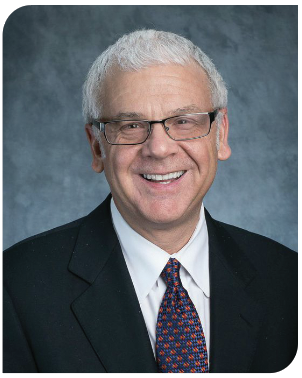 Mark Box, a Parkville native raised in the shadow of Kansas City’s skyline, once planned to follow his father into architecture. A single semester at the University of Kansas changed everything. “The drafting table wasn’t calling my name,” he says. Medicine did—fulfilling a dream his mother had been denied and reflecting her core belief: to whom much is given, much is required.
This sense of duty has guided Box’s remarkable life. A magna cum laude graduate of the University of Missouri School of Medicine, he completed a rheumatology fellowship at Washington University in St. Louis before returning to the Kansas City area in the early 1990s. For nearly four decades, he practiced at St. Joseph Medical Center, embracing rheumatology’s intellectual challenges and enduring patient relationships. Treating over 100 diseases, he cherishes the continuity: “I’ve seen patients start as teenagers who now have grandchildren,” he notes with pride.
During fellowship, Box saw faculty physicians partner with the Arthritis Foundation to provide specialty care for underserved patients. The model inspired him deeply. Upon returning to Kansas City, he began volunteering with the foundation in 1993, joined the local board in 1995, and has remained deeply engaged for over thirty years. He witnessed its evolution into a unified national organization and, in 2023, was elected to its national board.
Box’s contributions are extensive: leadership on the Med-ical and Scientific Committee, chairmanship of the Advocacy Committee, and steadfast support for fundraisers like Art for Arthritis, Walk to Cure Arthritis, and Jingle Bell Run. He recruits items, fills tables, donates, and consistently shows up. His office walls display nearly 25 years of artwork by children with juvenile arthritis and professional artists—a tangible reminder of impact.
Recognizing that patient care often depends on policy, Box became a dedicated advocate, lobbying in Jefferson City, Topeka, and Washington, D.C., through the Arthritis Foundation and other coalitions to improve access and affordability.
His philanthropy extends beyond arthritis. He advises the KU Honors Program, funding international medical experiences for students, and supports Wayside Waifs, the Heart of America Shakespeare Festival, and Harvesters. Service, for Box, is obligation, not ornament. “You don’t do this for your own gain,” he says. “We’re here to help each other.”
Honored with academic distinctions, leadership roles, and nearly every major Arthritis Foundation service award—including the national Champion Award—Box views recognition as secondary. Service is simply what he is “charged with doing.” Through his unwavering commitment, Kansas City is undeniably stronger.
David & Dee Dillon
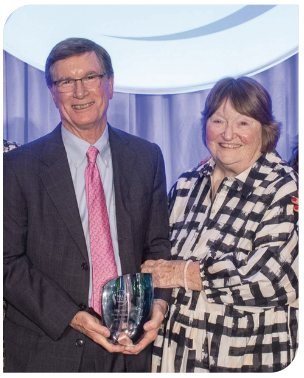 David and Dee Dillon’s philanthropy is defined less by individual gestures than by a lifetime of shared purpose, steady leadership, and deep belief in the power of strong institutions to change lives. Nowhere is that more visible than in their role as co-chairs of Ever Onward, the University of Kansas’ historic $2.5 billion capital campaign. As leaders of one of the largest fundraising efforts ever mounted in the region, the Dillons sit at the intersection of education, health care, and civic progress—an apt culmination of decades spent investing time, resources, and judgment in organizations they believe can endure and lead.
Their commitment to philanthropy is rooted in Kansas values; both were raised and educated there. David earned his business degree from KU in 1973 before adding a law degree and returning to the family grocery business. Dee, also a KU graduate, became an indispensable partner in both life and leadership.
A defining moment in their philanthropic journey came through The University of Kansas Health System. More than 20 years ago, Dee suffered a medical emergency on the morning of their son’s wedding. Rapid, compassionate care required immediate surgery—and ensured her full recovery in time to attend the ceremony later that day. The experience forged a profound bond with the institution, trust that later translated into leadership roles and sustained engagement, with David serving on the hospital authority’s board and eventually becoming its vice chairman, while also joining the executive committee of the KU Endowment Board of Trustees.
Health system leaders emphasize that the Dillons’ impact extends far beyond financial generosity. They are active participants—offering insight, asking thoughtful questions, and investing both time and conviction in the mission. Colleagues describe them as partners who give deeply of their own resources while helping strengthen governance, strategy, and culture.
David’s business career provides important context for the scale and approach of their philanthropy. Born into the grocery company founded by his great-grandfather in 1913, he rose through Dillon Companies before helping guide its integration into Kroger following the 1983 acquisition. His ascent at Kroger—from president of Dillon Companies to CEO—coincided with dramatic growth in revenue, work force, and industry influence. Yet his leadership philosophy has always emphasized collaboration, humility, and collective success rather than personal achievement. That mindset carries directly into his civic service. Over the years, he has chaired multiple KU chancellor search committees and served on a wide range of nonprofit and corporate boards, while Dee has remained an active, discerning presence in every engagement. Together, they are known for being humble, unassuming, and generous with both encouragement and support.
Brittany Faley
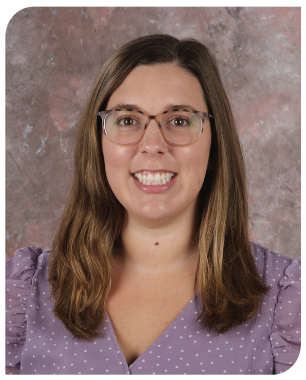 Brittany Faley’s sojourn into volunteerism is rooted in a lifelong commitment to service, beginning in her hometown of Johnston, Iowa, and continuing after her move to Kansas City. A trained pharmacist and federal employee, she first experienced the intersection of medicine and community outreach during pharmacy school, where volunteering at flu shot clinics and free medical clinics was encouraged. She extended this commitment by volunteering at a hospice in her home state, gaining early exposure to the profound impact of compassionate care.
After completing her pharmacy residency, Faley sought to engage with the Kansas City community. Her aunt, Allison White, recommended the Junior League of Kansas City as a gateway to local nonprofits. Through this connection, Faley met Abigail Swafford, executive director of HopeKids KC, a non-profit dedicated to supporting children with life-threatening medical conditions and their families. Faley’s first volunteer experience with HopeKids was the HopeWalk at Monarch Baseball Stadium, a chilly October day that highlighted the warmth of the community. “Seeing all the families turn out to support each other warmed my heart,” she recalls. What sets HopeKids apart, she says, is its holistic approach: the organization nurtures not only the child facing medical challenges but also the entire family, fostering connections between families navigating similar journeys.
Her professional background in pharmacy, specifically in pain medicine, provides a unique perspective on the challenges families face. While she rarely needs to apply her medical expertise during events, she remembers a moment when she treated a parent experiencing an allergic reaction, highlighting the intersection of her career and volunteer work. Over the past two and a half years, Faley has witnessed first-hand the transformative effects of HopeKids’ programs, both in moments of hardship and triumph, and finds herself continually drawn back by the organization’s impact.
Several experiences stand out. At a Goldfish Swim School outing, Brittany was present when a HopeKids participant swam for the first time since having a tracheostomy removed—a milestone that left a lasting impression. Each year, she is moved by the Christmas Market event, which allows more than 75 families to “shop” for gifts for their children, made possible by generous donations from the greater Kansas City community.
Faley encourages others to join the cause, emphasizing that obstacles such as time constraints or family obligations should not deter potential volunteers. “The possible excuses are endless, and I can tell you this: there is room for you and your family, whenever you decide to jump in,” she says. Her volunteer commitment not only enriches the lives of the children and families she serves but also strengthens the Kansas City community, demonstrating that service, compassion, and connection are inseparable elements of meaningful civic engagement.
Marvin Lyman
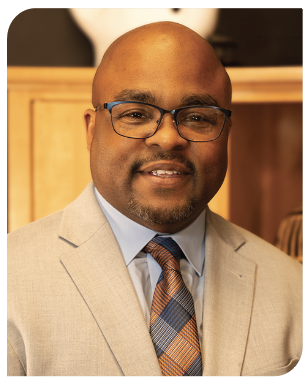 Marvin Lyman’s story of service begins at the intersection of home, church, and neighborhood. He often says he grew up in two places—“4308 Forest, where the family slept, and 18th & Vine, where the family served.” Long before chairing advisory councils or convening coalitions, Lyman’s world revolved around Papa Lew’s, the small restaurant his parents opened in 1982. “It wasn’t just a business; it was a classroom, a neighborhood anchor, and the first place I saw what service really looked like,” he reflects. From his father, the lead deacon at their church, Lyman learned that true leadership meant showing up for people—whether they could pay or not—and maintaining the church grounds without being asked. His mother carried that mantle long after his father pas-sed, feeding the hungry and homeless at no charge for 19 years. Those early lessons became a guiding call to action.
His first professional steps were in the classroom as a teacher, a path he’d envisioned even in his youth. “One of my goals in high school was actually to become superintendent” of the Kansas City school district, he says. Though his career path changed to commercial real estate, he continues to teach fundamentals of development to those underrepresented in the field.
That move came through a mix of opportunity and mentorship. While working full-time at Papa Lew’s, he developed a friendship with former City Councilman Troy Nash, who hired him at Newmark Zimmer. During a trip to Clinton, Mo., after answering technical questions for city officials, Nash told him bluntly, “You can be a developer.” That moment shaped Lyman’s professional identity around equitable placemaking.
That identity became essential when Prospect Avenue entered the conversation. In 2022, Lyman noticed a lack of participation from Black and minority-owned firms in the ProspectUS planning process. Having personal history with the corridor—including his family’s decade-long business on Prospect and displacement during the 18th & Vine redevelopment—he knew the stakes. He stepped in, convening stakeholders, launching the Heartland Equitable Development Symposium, and advocating for meaningful municipal commitment. Today, ProspectUS is a $6 billion blueprint, and Lyman emphasizes its potential: “This is Kansas City’s chance to lift the entire city, by first investing in the neighborhoods that have waited the longest.”
He also is an Armor Bearer at Harvest Church International Outreach, served 11 years on the board of University Health—earning Missouri Hospital Association’s Trustee of the Year in 2019—and chairs the Community Advisory Council for the Health Forward Foundation. He organizes Develop Prospect, leads the Heartland Developers Summit, and volunteers with Kansas City G.I.F.T., all guided by one principle: equity must be built, not admired.
Bobbi Jo Reed
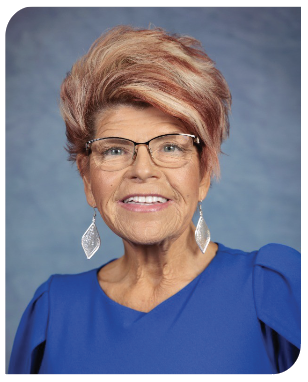 In the heart of Kansas City’s historic Northeast neighborhood, amid rising overdose rates and persistent treatment shortages, Bobbi Jo Reed stands as a beacon of hope and example of transformation. The founder and CEO of Healing House, Reed once navigated the depths of addiction herself—years marked by alcoholism, drug abuse, homelessness, and the harsh realities of street life. Her own recovery revealed a critical void: the treacherous gap between inpatient treatment and sustainable reintegration, where temptation, isolation, and instability often derail progress.
That insight became her mission. In 2002, alarmed by the disparity—nearly 900 women receiving inpatient care annually in town, but only about two dozen safe beds were available post-treatment, mostly reserved for those with children—Reed acted decisively. Investing her family inheritance, she purchased an old nursing home in a challenging area, converting its 23 rooms into transitional housing for single women. Skeptics abounded, but residents arrived swiftly, validating her vision.
By 2003, Healing House KC was officially born, grounded in the belief that a nurturing, home-like environment is indispensable for lifelong sobriety. From that single property, the organization has flourished into a robust network of 18 facilities: 15 private homes and three apartment buildings. Today, it serves around 220 men and women daily in recovery housing, while offering holistic support to rebuild lives. Over more than two decades, Healing House has impacted more than 15,000 individuals, guiding them toward stable, substance-free futures.
Reed’s model is comprehensive and grounded in empathy. New residents often arrive destitute—lacking identification, clothing, or basic hygiene items. The program meets them there: securing IDs, providing essentials, linking them to medical and psychiatric care, and progressing through three levels of housing. Education includes budgeting, parenting classes, and job training. “We build them from the ground up,” Reed explains, fostering family-like support systems that instill purpose and community integration.
A crowning achievement: the $3.2 million renovation of a former bowling alley into the state-of-the-art Recovery Community Center, complete with 350-seat auditorium, commercial kitchen, computer lab, and dedicated family reunification spaces.
Her story inspired the online documentary Bobbi Jo: Under the Influence, capturing Healing House’s growth and miracles. Despite progress, demand overwhelms supply—100 to 125 applicants turned away weekly. Reed urges community support: volunteer time, food donations, household items.
For Reed, this is about more than finding direction in life; it’s divine purpose: “When God shows you your passion, there’s no greater place to be. I live around miracles every day.”
In a community scarred by addiction, Reed’s legacy proves one person’s resolve can illuminate paths for thousands.
Kar Woo
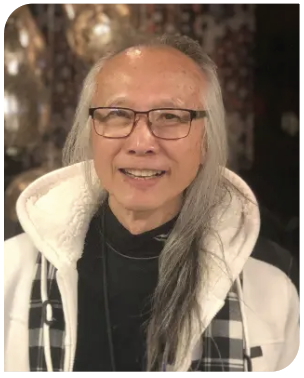 Kar Woo’s road to Kansas City began in the crowded streets of Hong Kong. Raised in poverty by a mother who had fled Communist China as a teen, he learned early that resilience and a “can-do” attitude were essential. “We had very little,” Woo recalls, “but she encouraged my sister and I to reach for our dreams.” Those lessons, paired with the heroic codes of the kung-fu novels he devoured, instilled a lifelong principle: help the next one up.
The principle was tested soon after he arrived in Kansas, when an apartment fire left him homeless, his belongings gone but his debts lingering. In that moment, the community reached back. A local mall donated a month’s collection from a wishing-well fountain, and a co-worker’s mother offered her basement. “I had no way to thank her then,” Woo says, a moment that clearly still resonates. Decades later, visiting her in hospice, he was able to fulfill her final request to help her own family—a profound, full-circle lesson in paying grace forward.
That lesson became action when Woo, by then an artist and gallery owner near The Country Club Plaza, began walking his dog in a nearby park and encountered homeless neighbors. He started simply, preparing 20 sandwiches on a Sunday when no meals were being served. Thus was born Artists Helping the Homeless. Woo’s work draws on his background in psychology, his artistic enterprise, and his own experiences of loss to create a distinctive philanthropic model. For him, giving is not a distant exercise in check-writing—it is measured in human milestones: first birthdays celebrated in homes that once seemed impossible, young adults pursuing education and careers, families thriving after periods of instability.
“Every time we see someone we helped thrive, and especially when they pay it forward…this is why I do what I do,” Woo reflects. His signature contributions lie in AHH’s innovative, gap-filling programs, from providing transportation to respite housing with wrap-around services. These initiatives address needs traditional funding often overlooks. One study in Douglas County demonstrated a positive return on investment when accounting for avoided jail time, ambulance calls, and emergency visits, not to mention the transformation of clients into employed, contributing citizens.
Woo’s philosophy for aspiring philanthropists is as practical as it is profound: “Enjoy what you do and listen to the customer,” he advises, turning a business principle into human service.
Through AHH and numerous collaborations, Woo has done more than serve meals or fund programs. He has built a living model of empathetic engagement, showing how personal loss, community solidarity, and creative action can become forces for healing.
PUBLISHED DECEMBER 2025