
HOME | ABOUT US | MEDIA KIT | CONTACT US | INQUIRE
HOME | ABOUT US | MEDIA KIT | CONTACT US | INQUIRE
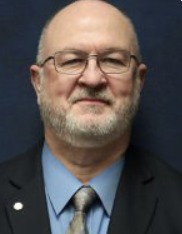 Steven Anderson
Kansas Inspector General, Topeka
After a distinguished military and federal career that took him across the globe, Steven Anderson found a deliberate home in Kansas, bringing a veteran investigator’s eye to the protection of state resources. His path into law enforcement was forged in the Air Force Office of Special Investigations, a stepping stone into a lifetime of work covering everything from violent crime to complex fraud. After federal retirement, the opportunity to lead the Medicaid Fraud Control Unit in the Kansas attorney general’s office was a perfect fit. Anderson quickly identified a critical vulnerability in the state’s systems, noting that “Kansas had vulnerabilities due to a lack of oversight.” This realization has defined his mission in Topeka. He plays a pivotal role in safeguarding public funds, arguing that the only way to limit losses is to aggressively hunt for fraud, as no system is foolproof. His strategy hinges on two key actions: strengthening the Inspector General’s function and, just as important, educating prosecutors on the nuances of public assistance programs. Anderson learned that once a prosecutor understands a program’s intricacies, they readily accept these complex cases. While acknowledging that Kansas is in the early phases of stopping losses, his work is foundational to building a more effective and efficient government, ensuring taxpayer dollars serve those who truly need them.
 Jill Arensdorf
Fort Hays State University, Hays
Jill Arensdorf’s journey to becoming provost at FHSU is a testament to the impact of rural Kansas mentors and a willingness to follow unexpected opportunities. She grew up in Hill City, where formative experiences in 4-H and FFA helped her hone her leadership and public-speaking skills, instilling a foundational skill set. Initially aiming for a corporate career after studying agricultural economics at K-State, a pivotal internship redirected her path toward education, leading to a master’s at Texas A&M. A teaching assistantship revealed a passion for higher education, and she soon “poured back” into the community by taking a role with 4-H in Hays. That led to a teaching position at FHSU, where a nudge from a colleague prompted a shift into administration. She discovered a talent for influencing strategy at an organizational level, eventually leading her to her current role as provost, a position she never initially aspired to but embraced to make a broader impact. In her leadership, Arensdorf champions initiatives directly benefiting Kansas’ work force. She highlights FHSU’s focus on upskilling adults with some college credit but no degree, creating flexible credit and non-credit pathways to meet regional needs. The university’s affiliation with technical colleges, she says, allows students to earn crucial credentials, like a CDL, alongside their degrees. cultivating a skilled work force for the state.
 Anita Bajaj Newton
CommuntyAmerica Credit Union, Lenexa
Anita Newton is a Kansas native whose influential career has been built on a blend of ambition and Midwestern humility. Growing up in a bustling Wichita household, she learned early that leadership is less about title and more about hard work, caring for people, and knowing you’re part of something bigger. “I was also incredibly lucky to have teachers at the University of Kansas and early mentors who saw potential in me before I fully trusted in myself,” she says. “Those nudges shaped how I view leadership today, which starts first and foremost, with building trust. If you don’t have trust, you can’t lead.” Her journey through corporate giants like Procter & Gamble and Sprint, followed by successful entrepreneurial ventures, led to her current role as Chief Innovation Officer at CommunityAmerica Credit Union, the largest in Kansas. That path reflects her belief that “KC is big enough to offer real career mobility, but small enough that you can pivot, grow, and reinvent yourself.” Innovation at CommunityAmerica isn’t a buzzword, she says; it’s a disciplined practice of creating things that are both novel and genuinely useful for members. Her leadership philosophy, shaped by early mentors, is built on a foundation of trust. She leads with a unique balance of confidence and curiosity, an approach that has helped her foster a culture where employees are highly engaged.
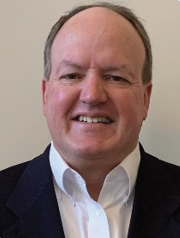 Jeff Bloomer
Sunrise Oilfield Supply, Wichita
Within a Kansas oil sector that generates roughly $2 billion in revenues from the wellhead each year, Jeff Bloomer leads the state’s largest supplier of the equipment drillers need. As a key leader at Wichita-based Sunrise Oilfield Supply, his career is deeply intertwined with the state’s industrial backbone. Sunrise itself is a critical support arm for the industry, providing essential products like valves, fittings, and production equipment to the operators who drill and pump Kansas crude. Bloomer’s professional narrative is one of local expertise and long-term commitment. His extensive tenure in the region has given him an intimate understanding of the unique demands of the Kansas oil fields, from the sprawling Hugoton gas fields to other active plays. This deep-rooted knowledge positions him not just as a supplier, but as a strategic partner to the companies driving the state’s energy economy. Sunrise plays a pivotal role in ensuring that the complex machinery of oil extraction keeps running, directly impacting the productivity and efficiency of its clients. Through his leadership, Bloomer exemplifies the durable, hands-on business culture that sustains this vital industry. He is more than an executive; he is a central node in the network that powers a significant sector of the Kansas economy, connecting the equipment in the field to the energy that fuels growth and commerce across the region.
 Amy Brozenic Kimbrough
Lathrop GPM, Overland Park
Amy Brozenic Kimbrough built a nationally focused intellectual-property legal practice shaped by deep cultural roots, artistic discipline and a global academic background. A Bishop Ward graduate, she earned her B.A. in French and European History at the University of Kansas before completing her J.D. at the University of Missouri–Kansas City. “My liberal-arts training taught me to think critically across cultures,” she says. “That curiosity naturally led me to international IP work.” After law school, she moved to Washington to join the U.S. Patent and Trademark Office as a trademark attorney. IP law clicked immediately. “Intellectual property is creativity made tangible,” she says. “A trademark represents identity, vision and connection—it’s incredibly personal.” Her lifelong involvement in dance and classical piano also shaped her perspective. “I’ve always believed in protecting artistry,” she says, a passion she continues through pro bono work with Kansas City Volunteer Lawyers and Accountants for the Arts. At Lathrop GPM, leaders recognized the value of her background from day one. “I was trusted with real responsibility early—client contact, meaningful matters and mentorship from some of the firm’s strongest IP attorneys,” she says. That culture of encouragement has defined her career, and she now advises clients navigating an IP environment transformed by digital platforms and AI.
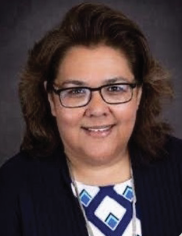 Irene Caudillo
Public Sector/Non-Profits, Kansas City
For Irene Caudillo, service is rooted in family. Born in Kansas City, Kan., and raised across the state line, she spent Sundays and summers in Wyandotte County’s Argentine neighborhood with her grandparents, whose journey from Guanajuato, Mexico, shaped her values. “My parents taught me hard work, education, and service to others,” she says. “Those lessons still guide how I lead—with empathy and authenticity.” After earning degrees from Mizzou and UMKC, Caudillo built a three-decade career in Wyandotte County with organizations including El Centro, Swope Health, Catholic Charities and Wyandotte Mental Health. She and her husband chose to raise their children there because they wanted them in a “diverse, resilient, welcoming community.” What keeps her rooted, she says, is the people: “Their generosity and determination inspire me every day.” Her commitment to non-profit leadership comes from witnessing both the challenges families face and the strength they show. “My focus has always been to create systems that empower families and elevate children,” she says. She is especially driven to uplift Wyandotte County’s Latino community and ensure it is recognized for its work ethic, entrepreneurship and aspirations. Most recently, she served outgoing Mayor Tyrone Garner as chief of staff, a natural extension of her service for, the first Latina in that role.
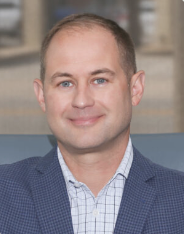 Chris Conrade
Conrade Insurance Group, Newton
Newton is home in every way for Chris Conrade. A 1998 Newton High School graduate, he still proudly claims “Go Railers!” and credits the town’s tight-knit support system for shaping his leadership style. “I have a tendency for the ornery,” he jokes, saying teachers like Sue Engel, Susan Lamb and James Regier helped channel his energy into something productive. Growing up in Newton also gave him lifelong friendships—two of his closest childhood friends still live nearby, raising families of their own. Staying in Newton to build his career felt natural. His father, Darrell Conrade, founded Conrade Insurance Group in 2006, and Chris joined him in 2009. Newton’s blend of innovation, compassion and community strength reinforced that decision. Organizations like EmberHope, Prairie View and Mirror, Inc. reflect a city committed to serving people across Kansas. And Newton’s central location allows Chris to visit clients statewide yet still return home each night. Newton’s business community is on the rise again, helped by its closeness to Wichita and boosted by major investments like GAF’s new $300 million manufacturing facility. Remaining independent in an era of mega-brokers is challenging, but Conrade sees opportunity in staying Kansas-owned and Kansas-focused. With a mission “to protect and preserve the families, businesses, and communities of Kansas,” Conrade Insurance Group continues to grow—fueled by organizations looking for a partner that makes them feel like they matter.
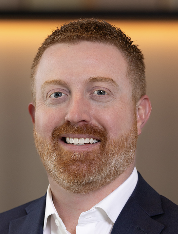 Adam Cox
JE Dunn Construction, Leawood
Adam Cox’s civil-engineering degree from Purdue University, was more than a frameable certificate: “The rigor of the degree program was challenging and an experience that made me better,” he says. The problem-solving skills he developed helped him understand that his path to success would veer into the other side of the business. He also cites his business-owning parents and their strong work ethic for helping him build his career and leadership as Midwest Region president for JE Dunn Construction, the region’s largest builder. Cox has witnessed first-hand the company’s dramatic geographic and financial expansion. “This year, we’re likely to be at $8 billion in revenue, which is nearly 10 times the value when I started,” he notes. His rise to leadership was fueled by mentors within the company and a hands-on love for construction, where he values the tangible, lasting results of his work. A key milestone was the company’s conversion to employee ownership, which he sees as foundational to its enduring, family-like culture. Assessing the industry’s health, Cox sees a bifurcated market. “While several market sectors are depressed with the current state of debt financing, there are others like data centers and industrial that are absolutely booming.” Continuing labor shortages remain a concern, but he notes that Dunn’s diversified portfolio across strong and recovering sectors has positioned Dunn for significant growth.
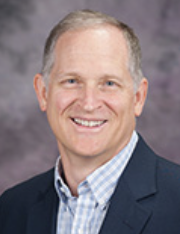 Christopher Culbertson
Kansas State University, Manhattan
Christopher Culbertson is a Florida native whose journey to becoming the dean of K-State’s largest academic college—Arts & Sciences—was shaped by influential teachers. A first-generation college student, he was encouraged by a high school teacher to apply to an Ivy League school, leading to an unexpected acceptance at Harvard. His academic path was not linear; he changed majors four times before a fascination with biology and chemistry, sparked by work at the New England Aquarium, solidified his direction. This blend of interests led him to graduate school and research at Oak Ridge National Lab. Arriving at K-State in 2002, Culbertson and his wife were drawn by the strong family ethos of both the university and Manhattan. While academic administration was never his initial calling, he was encouraged into leadership roles, first as an associate dean and now as dean. He finds honor in supporting the college’s faculty and witnessing students develop into capable adults. The College of Arts and Sciences directly addresses work-force needs by updating longstanding programs and creating new ones in addiction counseling, criminology, and environmental science. These efforts and many others help ensure a steady pipeline of qualified graduates and job candidates ready to solve complex problems for Kansas and beyond.
 Lathi de Silva
Signal Theory, Wichita
Born in Sri Lanka but Kansan through and through, Lathi de Silva of the communications firm Signal Theory views the earth as a “giant global playground.” Her global perspective enriches the agency’s approach to assisting clients from offices in Wichita and Kansas City. Her path to success began with a degree in business communications from the University of Kansas, leading to a nearly 25-year tenure with the firm once known as Sullivan, Higdon & Sink. As managing director of the Wichita office and the leader of public-relations functions agency-wide, de Silva is critical to the firm’s success. Signal Theory is a communications firm that specializes in bridging information gaps between parties. It helps clients use strategic signals—like branding and advertising—to communicate their quality and intent effectively to their audience. Lathi’s expertise spans stakeholder alignment, crisis management, and strategic communications planning. Her commitment extends deep into the community, where her passions for economic development and servant leadership shine. An accredited PR professional and former president of the Kansas PRSA, she has served on multiple local boards, strengthening the fabric of Wichita. In all her endeavors, collaboration is key. “Creative thoughts and positive energy build momentum,” she says. “For clients who are passionate and proud of their work, I’m eager to jump in.”
 Aron Dunn
Allen, Gibbs & Houlik, Wichita
For Aron Dunn, growing up in Valley Center meant growing up seen. In a small town where most people knew your name, responsibility wasn’t wished for—it was expected. He credits that close-knit community, along with family and longtime friends, for shaping his work ethic and leadership style. “Being connected to so many people pushed me to be relationship-focused and look for leadership opportunities,” he says. Those habits still drive his approach to clients and teams three decades later. Accounting first caught his attention in high school. He already loved math, but accounting offered something more: financial problem-solving and critical thinking. An uncle who owned a CPA firm reinforced that the field offered stability, challenge and support if he ever needed guidance. It was an easy choice when he arrived at Emporia State. After college, Dunn stayed close to home. Wichita was familiar, and AGH offered both opportunity and culture. An internship there during college led to extended work and a full-time offer. Thirty years later, he’s still at the firm—now a senior vice president in assurance services. Working extensively with agribusiness clients has given him a front-row seat to an industry being reshaped by technology and generational transition. For Dunn, those changes underscore why strong financial guidance matters now more than ever.
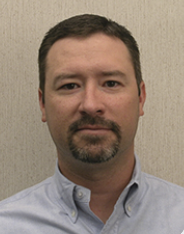 Ryan Durst
Bradbury Group, Moundridge
From the quiet landscape in a community of just over 1,700, Ryan Durst helps lead a global industrial empire that belies its humble ZIP code. As president of The Bradbury Group, he helps leads a sprawling family of more than a dozen companies that design and manufacture sophisticated metal-processing equipment for a worldwide clientele. This is not a typical story of rural enterprise; it is a testament to the power of deep roots, a global vision, and nearly three decades of dedicated tenure. A graduate of Baker University with a degree in business, Durst began his career outside the manufacturing sector before finding his professional home at Bradbury in 1996. His journey within the family-owned company was a deliberate and steady climb from an inside-sales role, through management, to the pivotal position of vice president of sales and marketing for 16 years, before ultimately assuming the presidency in 2019. This long-term apprenticeship gave him an intimate understanding of the company’s core values and its diverse technological offerings, from roll-forming lines to automated controls. Under his leadership, the “Bradbury advantage” extends from its Kansas heartland to operations and partners in Spain, Australia, New Zealand, the United Kingdom, and beyond. Durst exemplifies how a leader, grounded in the tenets of personal improvement and community, can skillfully steward a 60-year-old, home-grown company to international prominence.
 John Ferguson
Saxon Unmanned, McPherson
Kansas has an aviation history that goes back well more than a century, but John Ferguson is taking it to…well, new heights. His company, Saxon Unmanned, carves out a unique and vital niche within Kansas manufacturing. While Wichita is globally renowned for its legacy of manned aviation, Saxon Unmanned operates at the cutting edge of a different frontier: the design and manufacture of long-endurance, custom remote aircraft and terrestrial robot crawlers. This positions the company not as a traditional parts supplier, but as an engineering firm for the robotic age, solving complex problems from industrial inspection to 3D mapping with tailored, turnkey systems. Ferguson himself is a military veteran whose 25-year career runs the gamut of remote-system venues: terrestrial, aerial, and subsea. That deep, cross-domain expertise in robotics informs Saxon’s innovative approach, particularly in its advanced airframe and propulsion technologies that allow its UAVs to achieve flight durations substantially outclassing competitors. This technical prowess is matched by a profound sense of mission that extends beyond commerce. Ferguson’s parallel, voluntary work as a Border Protection Specialist reveals the human imperative driving the technology; he actively seeks to deploy Saxon’s state-of-the-art systems to curb child sex trafficking and narco-terrorism.
 Paul Fischer
Burns & McDonnell, Kansas City
In leading operations for the largest engineering/construction firm in the Kansas City region, and one of the nation’s biggest, Paul Fischer draws on lessons learned at an early age. “Growing up, I was surrounded by construction,” he says, recalling days spent on job sites working with his father and “learning what hard work really meant. Those experiences shaped my entire outlook on life and leadership.” Armed with a civil engineering degree from Colorado State—and with values grounded in respecting others and their contributions—he signed on with Burns & McDonnell in Kansas City. The fit was a case of glove meeting hand. “From the start, I was drawn to the character of the employee-owners of Burns & McDonnell,” he says. “I admired the commitment to clients, the depth of mentorship and the integrity of our culture. What stood out most was the pride people took—in their work, in each other’s success and in building something they truly owned together.” After 16 years in the Denver office, he came back to Kansas City, a place he calls a hidden gem. After strong growth over the past decade, the firm’s future looks bright. “We have tremendous opportunity in all our markets, including being ranked No. 1 in power and data centers and are industry leaders in several other growing areas,” Fischer says.
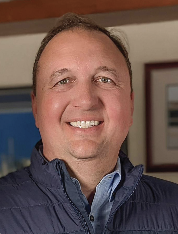 Scott Foote
Foote Cattle Co., Hoxie
Scott Foote grew up just south of the Johnson County line, but fate and the family business ensured that he’d drop anchor in far western Kansas, where he’s part of a brotherly trio operating Foote Cattle. It’s a huge agribusiness concern as one of the nation’s largest family-run feedyards and beef-cattle operations. After graduating from Aquinas High School, he headed for Hoxie in Sheridan County in 1997. Cultural shift? A bit. “This was a challenge for sure, but turned out to be a huge blessing in my life,” Foote says. “My wife, Michelle, has been very important in joining me and supporting me and my family in establishing our business here as well.” The east-west dynamic brands him as an authentic Kansan; “I truly consider the entire state as ‘home,’ ” he says. He partners with brothers Brad and Greg, with Brad based in Imperial, Neb., and Greg in Bucyrus. “The secret is a true sense of brotherly trust between us. We communicate several times every day and truly are a team, each with our own skill sets that we bring to our family business,” Foote says. “This partnership is very important to me and the success of our family enterprise. Our Catholic faith is also extremely important in guiding our decisions as a company and family.” Cattle and beef underpin the state’s largest ag production sector for good reason: Demand for beef has held up, Foote says, because “consumers crave the great taste and health benefits of Kansas grain-fed beef.”
 James Franko
Kansas Policy Institute, Wichita
For James Franko, prosperity is downstream from policy. He’s president of the Kansas Policy Institute, deeply connected to the state he aims to improve. A native of Stilwell and a K-State graduate with a degree in business and economics, he helps lead a free-market think tank by fostering policy changes that create better conditions for all Kansans. The goal: empowering individuals and local communities over government directives from Topeka or Washington. In more than a decade at KPI, Franko has been instrumental in achieving significant legislative accomplishments. A primary victory he often highlights was the passage and subsequent expansion of Kansas’s only school-choice program for private institutions. That aligns with his broader advocacy for educational freedom, a common theme in his opinion pieces published in state and national media. Franko’s policy positions, articulated through various speeches, articles, and KPI’s published papers, cover a wide range of fiscal issues. He consistently argues for tax relief and government spending restraint, contending that a lighter tax burden is essential for economic growth. His work also advocates reducing regulatory hurdles for businesses and has included critiques of Medicaid expansion, proposing instead free-market solutions to health-care accessibility.
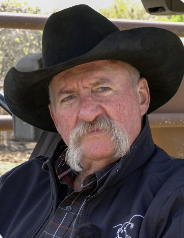 Dick Gehring
Black Kettle Buffalo, Moundridge
For Dick Gehring, the call to serve has taken two distinct forms. For over two decades, he answered the alarm as a Battalion Chief for the Newton Fire Department. But even while managing emergency responses, a quieter, deeper calling was taking root near Moundridge, where he was raised. What began over 35 years ago as a pragmatic venture into bison production quickly evolved into a profound passion that would define his life’s second act. At Black Kettle Buffalo, a 200-cow-calf operation, Gehring found himself schooled by the very animals he raises. He learned that bison are not domesticated cattle; he calls them wild, resilient survival machines whose instincts cannot be bred out of them. This respect for their nature guides his low-stress, hands-off approach, allowing the bison to live on grass as they were meant to, with no antibiotics or hormones. For Gehring, this isn’t just a business model—it’s a commitment to a more natural form of agriculture. His dedication extends far beyond his own pastures. A foundational figure in the Kansas Buffalo Association, Gehring’s mentorship has been invaluable to a new generation of ranchers, eventually earning him the role of president of the National Bison Association. He is driven by a vision to see the national herd grow, sharing his hard-won knowledge to help others take their first or next step in the industry.
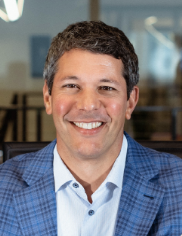 Chris Giuliani
Spring Venture Group, Overland Park
Chris Giuliani didn’t just arrive in Kansas City; he fell in love with it. After marrying his wife, Dara, a local, he planted roots and discovered his passion for data, earning an MBA from Baker University. This analytical edge became his professional super-power, perfectly positioning him for his role at Spring Venture Group, the online insurance-brokerage platform. Joining the company in 2011 when it had just 15 employees, he began a meteoric trajectory. He first successfully launched and sold an auto and home insurance venture within 18 months. Soon after, he was named CEO, embarking on a remarkable growth journey. Under his data-driven leadership, SVG has exploded into a powerhouse with nearly 1,400 employees. He credits this success to cornerstone investments in technology and, most importantly, “amazing people.” His influence extends beyond the office. As a member of the Kansas City Civic Council, Giuliani is actively shaping the region’s future. He is a champion for the area’s potential, noting, “The region has incredible talent and a desire to be great while staying humble.” He points to the affordable, welcoming culture and the booming tech scene as key drivers. For Giuliani, building a world-class company and investing in his community are one and the same mission.
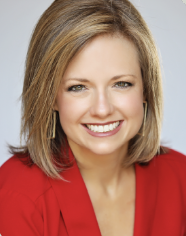 Lesle Griessel
Northwestern Mutual, Leawood
Lesle Griessel’s Kansas roots run deep. She grew up in the state, built her education and career here, and has never felt far from the community that shaped her. “Kansas has always been home,” she says—a constant even as her leadership role with Northwestern Mutual expanded regionally. She credits her upbringing for the values that define her leadership. “I grew up surrounded by people who valued work ethic, service, and doing what is right,” she says. Mentors reinforced those lessons and encouraged her to lead with both excellence and heart. At KU, she was drawn to business and finance because of the connection she saw between “people and possibility.” Strong financial planning, she believed, could change lives. Her internship with Northwestern Mutual in 2002 confirmed that instinct. She found a culture grounded in trust, clarity and long-term impact, and over the next two decades, she held nearly every major leadership role. What keeps her there is simple: the chance to help others build careers “they are proud of, in a place defined by purpose and belonging.” Today, she sees the talent pool tightening as many advisors retire and competition for new professionals grows. Her focus is on developing people through leadership training, mentorship and a strong sense of ownership. On the client side, she sees Baby Boomers moving from building wealth to thinking about how to pass it on. Nationally, she believes earlier financial education is key so more families can build lasting security.
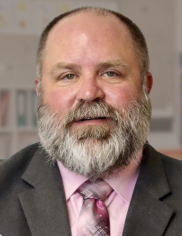 Josh Guymon
USD 457, Garden City
Last spring, after a nearly 28-year ascent within Garden City’s public schools, Josh Guymon reached the summit as superintendent of the largest district in southwest Kansas. He leads a district he has served as a teacher, principal, and central office administrator, having demonstrated decades of steady, student-centered leadership and deep commitment to his community roots. To that role, he brings a wealth of experience from nearly every level of the system, from teacher and principal to central office leadership positions such as deputy superintendent. Guymon assumes this permanent role at a critical juncture as the district navigates the significant challenge of serving one of the highest percentages of non-native English speaking students in the state of Kansas. According to state data and local reports, a large plurality of the student body is English Language Learners, a demographic reality that places immense importance on the district’s specialized language programs and culturally responsive teaching practices. His outlined priorities are directly aligned with these challenges. Guymon will guide the implementation of a new English Language Arts curriculum and drive a district-wide initiative to strengthen reading achievement at every grade level. He will also oversee major operational changes, including a grade reconfiguration and a middle-school expansion.
 Kimball Hales
Finkle + Williams Architecture, Overland Park
After making his way to Kansas in 2007, Kimball Hales says he’s now lived here longer than almost anywhere else—a sign of how firmly he’s planted in the region’s design community. His leadership style was shaped early. Growing up in a large family, he learned to lean into his strengths. “My dad encouraged all of us to find that thing we were good at and loved doing,” he says. Supportive teachers helped him do that, especially high school drafting instructor John Howden, who “was pivotal in opening doors for career development.” A two-year missionary experience in Guatemala before college was “life-changing” and deepened his sense of service and purpose. Architecture first caught his attention when he was 14 years old, through a Boy Scout merit badge. Because BYU didn’t offer an architecture program, he completed a construction management degree. After graduating, mentors encouraged him to understand construction before moving into design. He went on to earn dual master’s degrees in Architecture and Construction Management from the University of Illinois. His portfolio includes the nation’s first LEED-certified high school, national projects for Veterans Community Project, Journey Church, Lenexa Justice Center, more than 100 custom homes, and his family’s own “LiteHouse,” focused on “basics done beautifully.”
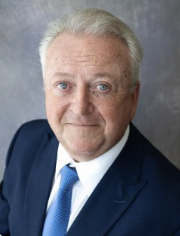 Dorsey Hall
Community National Bank, Seneca
When Dorsey Hall came to take the reins in 2019, Seneca-based Community National Bank secured the talents of an executive who brought a system-wide perspective to a bank with $854 million in assets. As president, CEO and board member, he steers a financial institution that operates as a good corporate citizen, emphasizing its deep community roots and a commitment to local decision-making. Hall’s extensive career in banking provides a formidable foundation for his current leadership. His experience is remarkably comprehensive, encompassing start-up de novo bank charters, mergers, acquisitions, and holding the top executive roles in two large regional banks with assets exceeding $1 billion. This deep industry knowledge is further bolstered by a significant tenure in regulatory oversight of the banking system at both the state and federal levels, working at banks in Kentucky, as well as on the Community Development Board for the Federal Reserve Bank of Cleveland. Complementing his professional practice, Hall possesses a robust educational background specific to the industry. He earned a Bachelor of Business Administration from the University of Kentucky and is a graduate of the prestigious Graduate School of Banking at Louisiana State University. His commitment to civic engagement is demonstrated through leadership roles outside of banking, including a term as president and CEO of a local YMCA.
 D.J. Henderson
Messer Americas, Otis
Wheat? Sure. Beef? Yep. Dairy products? By the tons. But helium? Yes, it’s a Kansas thing, too, and D.J. Henderson stands at the helm of a critical operation in the American heartland, where the legacy of helium is as rich as the gas itself. The modern helium industry was born in Kansas in 1903, when a drilling operation near Dexter struck a gas geyser that, to everyone’s surprise, would not burn. This first discovery unlocked a unique natural resource, establishing the region as a cornerstone of the global helium supply chain for over a century. Today, as the helium zone production manager for Messer Americas, Henderson manages this legacy from Great Bend in west-central Kansas. That helps the state claim its status as the nation’s top helium producer, at more than 4.3 billion cubic feet per year—twice the output of No. 2 Texas. Henderson oversees the sprawling Otis facility, a complex nexus featuring multiple purifiers and helium liquefiers, representing the largest operations budget within Messer. This site is a powerhouse, processing raw helium into the liquid gold vital for MRI magnets, semiconductor manufacturing, and space exploration. Henderson’s role expanded significantly in 2022 when he also assumed responsibility for the Cliffside Helium Enrichment Unit in Amarillo, Texas. His work ensures Messer Americas remains a pivotal player in the continued story of helium, bridging its historic past in Kansas with a technologically demanding future.
 Jenny Housley
Blue Cross and Blue Shield of Kansas City, Overland Park
St. Louis native Jenny Housley came to Kansas in high school and never left. She built her family here, as well as a career that will peak at the end of 2026 when she takes the reins of the region’s biggest health insurer. “Kansas is where I met my husband and where we chose to raise our children,” Housley says. “I can’t imagine living anywhere else.” Her leadership style was shaped early. “My parents modeled incredible work ethic,” she says. A strict grade-school nun taught her the value of preparation, and a long list of coaches pushed her to stretch, compete and lead. Those lessons carried into her time at the University of Kansas, where she majored in communications as “the perfect foundation for law school.” Law school never materialized—because a Lockton leader changed her trajectory. “He told me if I didn’t love employee benefits, he’d pay for law school,” she recalls. “He was right. I fell in love with the people, the clients and the work.” The industry’s complexity and constant change became a proving ground for her leadership development. At Blue KC, she’s focused on affordability and access. She points to ARPA and the Inflation Reduction Act as policy shifts that expanded subsidies and helped more people secure coverage. Looking ahead, she notes Blue KC is one of only four carriers in the country reducing ACA prices for 2026. “Whatever happens in Washington, we remain committed to improving the health of our members,” she says.
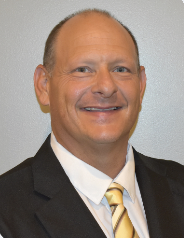 Corey Isbell
Fort Hays Tech Northwest, Goodland
Corey Isbell grew up in Beloit, surrounded by hands-on work. His father’s work in collision repair exposed him early to people who built and fixed things for a living. In high school, he excelled in woodworking, and a teacher’s encouragement set him on a path toward education. Family, friends and coaches reinforced the same lesson: never settle and “always shoot for the stars.…I was always working on things and building things,” he says. Teaching soon led to leadership roles in middle school, high school and higher education, always connected to CTE and its impact on students. After 13 years as vice president at Fort Hays Tech North Central, learning from “amazing individuals with a true passion for technical education,” moving into the presidency at Fort Hays Tech Northwest felt like the natural next step. The draw, he says, was the people—both those who shaped him and those who welcomed his family with “an open mind and an open heart.” Isbell sees opportunity even amid population decline in western Kansas. “Our communities desperately need skilled labor,” he says—plumbers, electricians, mechanics, technicians—and Northwest Tech is built to meet that need. Through its affiliation with Fort Hays State University, the college is expanding pathways and removing barriers so students can build strong careers “right here in western Kansas.”
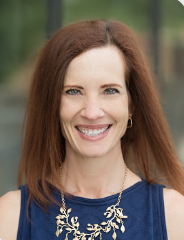 Sheri Johnson
McCownGordon Construction, Lenexa
Sheri Johnson grew up in Colorado Springs as one of four children—including younger twins—in a family where effort mattered more than outcomes. “When you commit to something, you see it through,” she says. That expectation, paired with a competitive streak and strong work ethic, helped shape her leadership style. At the University of Denver, she first planned to be an international journalist and even studied Russian. But after realizing the long career climb, she shifted to communications and paired it with psychology because, as she puts it, “it made sense if I wanted a career centered on understanding people.” After graduation, she followed a simple goal: “I just wanted to live near the beach.” A round of informational interviews during spring break led to an internal communications role at City National Bank in Beverly Hills, launching her career. Kansas City became home when her husband began medical school at Kansas City University. After nearly a decade of training, the couple stayed because it was a great place to raise a family, she says. McCownGordon was a natural fit with its reputation, values and growth strategy. Her previous communications-agency experience prepared her for work in a fast-growing firm, and as it expands, she’s focused on building a more intentional, consumer-minded marketing approach in an industry that rarely leads on marketing innovation.
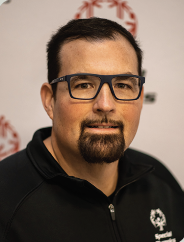 John Lair
Special Olympics Kansas, Overland Park
Growing up in Pittsburg shaped John Lair long before he stepped into statewide leadership. He points to a handful of people who set his compass early—his father, who showed him that “hard work and compassion pays off,” and longtime mentor Helen Cherry, who taught him to dream big, stay humble and “shoot for the stars.” That grounding matters when you’re leading one of Kansas’ most far-reaching inclusion organizations. When Lair took over a struggling Special Olympics Kansas program in 2017, it was clear the public didn’t fully grasp the scope of its work. Yes, there were sports competitions. But there was also year-round health, wellness and leadership programming reaching thousands across the state. By 2024, the organization held 421 events statewide, expanded health screenings and fitness programs that lengthen athletes’ lifespans, and grew Unified Sports into a statewide inclusion movement. Volunteer engagement remains strong, he says, and it’s starting earlier than ever. Families are now “active partners in the movement,” and business and community partnerships—from schools to law enforcement—continue to widen the circle. Looking ahead, Lair sees opportunity in early-age programming, athlete leadership development and stronger ties with employers seeking meaningful community impact.
 Frank Leo
Hays Larks, Hays
For Frank Leo, a passion for baseball honed on the diamond at Fort Hays State University evolved into a lifelong commitment to his adopted home, and to western Kansas. The New York native didn’t just pass through; he put down roots that would forever change the region’s athletic landscape. After his playing days, Leo embarked on a dual career that would define his legacy, teaching math and coaching for nearly four decades at Hays High School while simultaneously leading the summer collegiate Hays Larks. What began as a coaching role blossomed into a cultural institution under Leo’s steadfast guidance over four decades. At the Larks’ helm, he transformed the team’s game into premier, must-attend events, a stunning achievement in a region not traditionally known as a baseball hotbed. The team’s ballpark, seating 1,500, routinely sells out, a testament to the vibrant culture Leo cultivated. The program’s prestige is so formidable that rival teams have been known to move their own home games to Hays to be part of the atmosphere. This is more than just winning seasons and numerous NBC World Series appearances; it’s about creating a magical summer destination where community and family converge. Leo took his love for the game from his college years and, with unwavering dedication, built a lasting baseball legacy, ensuring America’s pastime thrives on the high plains.
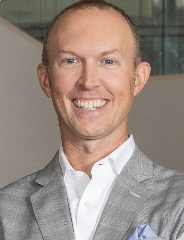 Kevin Lewis
Henderson Engineers, Lenexa
At the intersection of engineering, communication and organizational leadership, you will find Kevin Lewis, who leads one of the region’s biggest specialty design firms. He studied mechanical engineering at Kansas State, drawn to the discipline’s problem-solving and versatility, then added an MBA in finance, expanding his analytical skill set and opening doors into business strategy, operations and communication. His years on K-State’s track and field team—competing in the 400 and 800 meters, plus cross-country—were equally influential. Training year-round while managing academics taught him focus, resilience and how to work across different personalities. “Being captain wasn’t about being the fastest,” he says. “It was about bringing people together and creating accountability.” Those lessons now shape the way he leads teams at Henderson. Lewis launched his career at Ellerbe Becket, contributing to major sports-venue projects. The experience sharpened both his technical thinking and his understanding of how large-scale development impacts regional growth. It also reinforced a belief he carries today: “Even in engineering, the difference between good and great is how well people work together.” Now, he’s elevating Henderson’s brand, amplifying employee voices and supporting a firm whose work fuels economic development across the region.
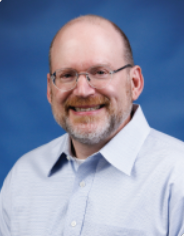 Bruce Lieberman
University of Kansas, Lawrence
Kansas holds an incredibly important and unique place in paleontology, thanks to the eons it spent underwater. And within that place is a unique figure: Bruce Lieberman, a distinguished professor and paleontologist at the University of Kansas. As a professor, he channels his expertise into teaching subjects like the history of life, invertebrate paleontology, and the large-scale patterns of evolution, known as macroevolution. Complementing his teaching, Lieberman is also deeply involved in museum work as director of KU’s Paleontological Institute, leading major digitization projects like the Paleoniches and Cretaceous World initiatives. These projects create detailed digital records of fossils, making vast paleontological data available online for global research. This work directly supports his own scientific investigations. Lieberman’s research seeks to understand the grand patterns of evolution by studying ancient life, particularly invertebrates like trilobites. He uses the fossil record to investigate how processes like climate change and mass extinction events have shaped the diversity of life over millions of years. By examining how species’ geographic ranges have changed over time, he gains insights into the forces that drive evolution. In this way, Lieberman’s work connects Kansas’s rich fossil heritage—from the giant reptiles of its ancient seaway to its older marine life—to the grand, universal narrative of life on Earth.
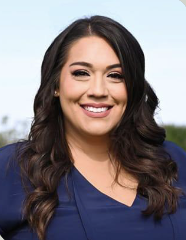 Sarah Lopez
HumanKind Ministries, Wichita
What made Sarah Lopez a pillar of Wichita’s non-profit and public-service landscape? You can chalk it up to the power of resilience. A Wichita native, her path was forged early, moving out at 15 and becoming a mother at 17. That pivotal moment ignited a fierce determination to build a better life, instilling in her a leadership style defined by perseverance and deep empathy. Her career began in health care IT at Ascension, but her commitment to community soon called. A personal experience advocating for her child before the local school board revealed the power of a citizen’s voice. When the COVID-19 pandemic hit, she ran for the Sedgwick County Commission to ensure her community, particularly the often-overlooked south Wichita area, had a strong voice in policy discussions. Her most significant contribution was championing the South Central Regional Mental Health Hospital, a project that married her passions. Today, as director fo donor relations for HumanKind Ministries, Lopez has found a perfect alignment of mission and personal values. She is focused on a key goal: “to expand transitional housing on our campus,” a critical initiative to bridge the gap between emergency shelter and permanent stability. For Lopez, Wichita’s appeal is its collaborative spirit, and she is a driving force within it, working to ensure the city’s most vulnerable residents are seen, heard, and lifted.
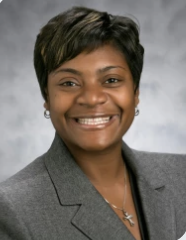 Teresa Lovelady
HealthCore Clinic, Wichita
Teresa Lovelady’s journey to becoming the president and CEO of HealthCore Clinic is a unique story of personal and professional evolution. Her initial connection to the clinic began in 2003— as a patient. A single mother without insurance, she relied on it for her son’s asthma care, experiencing its mission to serve everyone, regardless of ability to pay. That led her to join the clinic’s consumer board in 2009. While pursuing dual master’s degrees in social work and business administration at Newman University, she expressed interest in further supporting the clinic, and joined its board, then became CEO in 2011, remarkably beginning her tenure just weeks before giving birth to her second son. Under her leadership, HealthCore Clinic has undergone significant growth. Lovelady successfully secured $10.7 million in New Market Tax Credit funding to finance a major 40,000-square-foot expansion. That dramatically increased the clinic’s capacity, adding exam rooms, behavioral health spaces, a dental area, a pharmacy, and a fitness center. She also guided the organization to save a substantial nest egg, leveraging community donations to complete the project with less debt. As the leader of a Federally Qualified Health Center, Lovelady continues to navigate the persistent challenges of providing accessible, integrated care that addresses both physical and mental health for the entire community, regardless of a patient’s insurance status.
 Kyle Merklein
Holladay Distillery, Atchison
Kyle Merklein didn’t follow the usual path into bourbon making. “Most master distillers come from multigenerational Kentucky families,” he says. “My story couldn’t be more different.” He grew up on his family’s farm in Phillipsburg, where his parents rarely drank, but the experience shaped him in other ways. After watching his dad endure several bad wheat harvests, he saw how unpredictable farming could be. “My dad encouraged us to look at other careers,” he says. Teachers who noticed his strength in math and science pushed him toward engineering, eventually leading him to K-State. Merklein earned both his B.S. and M.S. in Biological and Agricultural Engineering, focusing on fermentation systems. “I never imagined making bourbon was even an option,” he says. He simply wanted to stay connected to agriculture and continue fermentation research. His first job producing bulk neutral grain spirits introduced him to distillation and the beverage alcohol industry. When Holladay Distillery, across the river in Weston, offered him a role, “it brought all my passions together—agriculture, engineering and fermentation.” He sees real challenges ahead for craft distillers. “It’s a tough time for small producers,” he says, citing scale, regulation and distribution pressures. He expects those who “manage debt well and win their local market” will be best positioned to survive.
 John Moncke
Cordish Cos., Stillwell
Kansas City’s hospitality sector—like the nation’s—was still stabilizing in the wake of the pandemic when John Moncke took on leadership of the Kansas City Power & Light District. A longtime area resident, he stepped into the role after a decade with Sporting Kansas City, where he led major initiatives in fan experience, brand development and venue innovation. With his deep community ties and track record in building successful high-energy destinations, Moncke was well prepared to lead the district’s evolution. Since it opened in 2007, it’s been a central catalyst in Downtown Kansas City’s renewal. The 12-block mixed-use neighborhood blends lifestyle, retail, entertainment, and hospitality spaces and is home to more than 50 tenants. The district helped spark a movement leading to more than $10 billion in additional Downtown development following its inception, and it’s been a cornerstone of Downtown’s resurgence, as the residential population has increased from roughly 13,000 to more than 33,000. That momentum accelerated with One Light, Downtown’s first new-construction residential tower in more than 50 years, followed by Two Light, Three Light and The Historic Midland Lofts. The district’s influence extends beyond physical development; KC Live! is one of the most influential event platforms in the Midwest, and FIFA World Cup watch parties there contributed to the city’s 2026 host-city designation for that event.
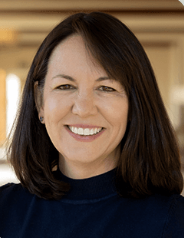 Shelagh Montgomery
QTS Data Centers, Overland Park
Shelagh Montgomery has been instrumental over the past four years in helping QTS secure the human capital to build a data-center leader that reaches all the way to Europe. The unusual thing about her career is that HR wasn’t the initial goal—she was a rock star in sales before becoming chief people officer. Her career started, she says, with “a quest to figure out where my talents would best be focused” back in her 20s. The win/lose nature of sales and the ability to determine with ease if you were doing your job well or not were prime attractions. “Once I started in sales, I never lost that passion and in reality, no matter what function any of us have, sales is always a part of it.” Now, she’s selling QTS—to the work force. “I had never considered HR as a career and frankly did not appreciate how much is involved in it, but when I was approached about considering the role, I was immediately struck with two thoughts: that I love this company and its people and that I thought I could make an impact. In some ways I’m grateful I didn’t know what I didn’t know as it would have been so daunting!” Overland Park, she says, “is one of our largest people centers in the U.S., despite not having significant data-center representation in the region. For our company, Kansas does have an excellent work force for our project managers, accounting and treasury positions, marketing, legal and people services. The trades ecosystem that supports data centers like electricians, HVAC and construction workers will be a significant area of opportunity for people across the U.S.”
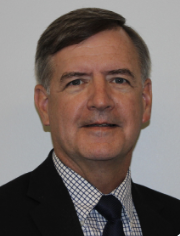 Robert Moser
University of Kansas Health System, Salina
The path of a country doctor, blazed by his great-grandfather in the Oklahoma territory, called Robert Moser back to his rural roots. After completing his medical training, he returned to his hometown of Tribune to practice family medicine for 22 years, solidifying a lifelong commitment to Kansans facing the greatest barrier to access for their health needs. His career is a testament to that commitment. From private practice, he ascended to leadership, serving as president of the Kansas Academy of Family Physicians and advocating for rural health on state and national committees. In 2011, Gov. Sam Brownback appointed him Secretary of the Kansas Department of Health and Environment, where he oversaw the creation of the landmark KanCare program. Following his state service, Moser brought his expertise to The University of Kansas Health System as executive director of its Kansas Care Collaborative, a network dedicated to improving heart and stroke care across the state. For four years, he fueled his passion for teaching by shaping the next generation of physicians as the dean of the KU School of Medicine-Salina campus. “I just enjoy the enthusiasm, commitment to serve others that radiates off them,” Moser says of his students, “and smile that I can be part of their lives.” From the high plains in Tribune to the halls of academia, Moser remains a dedicated champion for health in Kansas.
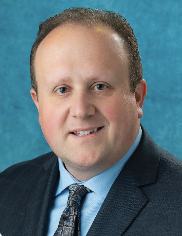 Justin Mouzoukos
Mazuma Credit Union, Lenexa
Justin Mouzoukos is a results-driven leader whose strategic and financial acumen has been instrumental in the historic growth of Mazuma Credit Union. As the CFO, he has masterfully managed its asset growth to surpass the $1 billion threshold, an elite status held by only one other credit union in Kansas. His tenure is marked by significant top-line revenue expansion and a strengthened net worth, achieved through sophisticated balance-sheet management and strategic investments. His impact extends far beyond financial metrics. Recognized by Ingram’s 40 Under Forty in 2023, Mouzoukos built the firm’s finance, risk management, and facilities departments from the ground up, developing strategic plans for each business unit. He championed the organizational culture and creation of the Mazuma Corporate Social Responsibility program and foundation, which has galvanized thousands of hours of volunteer work and provided grants to nonprofits across the region. This record of achievement is underpinned by an unusually robust and continuous executive education history. Beyond his MBA from the University of Kansas, he has completed a prestigious, multi-year leadership journey through the CUES CEO Institute, earning certificates from the Wharton School, Cornell Johnson Graduate School of Management, and the University of Virginia Darden School of Business.
 Jeff Oakes
Flint Oak Lodge, Fall River
For more than three decades, Jeff Oakes has been a driving force behind Flint Oak Lodge, where he’s currently general manager, skillfully blending his expertise in hunting and shooting sports management with a visionary approach to hospitality. Under his leadership, the ranch (luxuriously appointed with both its living/entertainment areas and its fish and game assets) has earned a reputation as a premier destination for executive elites and pop-culture icons, culminating in prestigious accolades like being named a Federal Select Outfitter and an Orvis-Endorsed Wingshooting Lodge—honors that attest to the property’s exceptional habitat, expert guides, and world-class service. His management philosophy clearly centers on a comprehensive, high-quality guest experience. He oversees operations where hunters are paired with the best guides and dogs, and can enjoy extensive sporting clays courses. His attention to detail extends beyond the field, ensuring that evenings are capped with exceptional dining and that the lodge’s boutique offers top-tier apparel and gear. This holistic approach, praised over the years by patrons such as baseball Hall of Famer Johnny Bench and the late college basketball legend Bobby Knight, creates the “hunter’s dream” for which Flint Oak is known. Oakes has not only sustained but elevated the ranch’s standing, ensuring every guest is truly “On Point.”
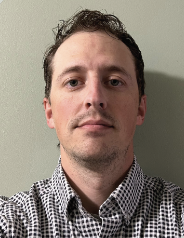 Joshua Oakley
NextEra Energy Resources, Concordia
Wind energy is big in Kansas, and it doesn’t get any bigger than High Banks wind farm, where Joshua Oakley is regional manager for NextEra Energy Resources. His is a high-impact position, directly affecting the energy that powers countless Kansas homes and businesses. His career arc is a masterclass in applying disciplined leadership to the dynamic challenges of modern energy production. Overseeing massive facilities like the High Banks wind complex—the state’s largest—Oakley navigates unique situations that demand quick thinking and seamless teamwork. “Weather is one of the biggest factors,” he notes, highlighting how his team must constantly adapt to ensure operations remain safe, efficient, and excellent despite logistical hurdles. This capacity for steady leadership was forged in the U.S. Navy, which instilled in him the resilience and mission-focus required for such a critical role. His technical foundation was then solidified with a degree in energy technology, purposefully sought to build a career with real impact. The seed for this path, however, was planted early in Bucklin, Kan., where seeing wind turbines near Spearville with his father sparked a lasting interest. His father’s assertion that “Those are the future” stuck with him, and now Oakley is at the forefront of that future, helping transform America’s energy landscape and power the dreams of a new generation.
 Jason Ochs
Plum Creek Farms, Syracuse
Jason Ochs knows wheat. In Kansas, that’s saying a lot—he and his peers on farms around the state churned out nearly 340 million bushels of it this past summer. Ochs is a prominent figure in Kansas agriculture, serving as both the vice chairman of the Kansas Wheat Commission and an active farm operator in southwest Kansas. But not all wheat is just…wheat. Ochs rolls up his sleeves in perhaps the state’s most challenging environment for a grower—the high, dry plains of Hamilton County, where annual rainfall can be half of what farms enjoy in central Kansas. He has deep experience with the specific climate, soil, and water-management issues of that region, experience that directly informs his perspective and contributions to the commission. His work there helps develop drought-tolerant varieties and sustainable farming practices, and is not just theoretical; it is tested and applied on his own land in a demanding environment. He also helps oversee initiatives at the Kansas Wheat Innovation Center, where scientists develop new wheat varieties. These varieties are bred for higher yields, drought tolerance, and disease resistance—traits that are essential for productivity and profitability in the challenging climate of western Kansas. Ochs’ dual role is a powerful synergy; his experience as a working farmer provides practical, ground-level insight that informs his policy and research decisions at the commission to keep its work relevant and effective for the farmers it serves.
 Brad Oddo
Basys, Lenexa
Brad Oddo built his career—and his company—the same way he watched his father and grandfather build theirs: with hard work, grit and respect for every person in the room. “With role models like that, my only option was to work harder than everyone else and make them proud,” he says. Those early lessons stuck. As a middle-schooler tagging along to his dad’s job in building services, he noticed something that shaped his leadership philosophy. “He treated his employees the exact same way he treated the president of the company,” Oddo recalls. “Everyone deserves to be treated with respect.” Oddo’s path wasn’t linear; he left KU just three hours shy of a degree, then returned years later to finish what he started—earning what might be the only KU diploma framed in black and gold, a nod to his Mizzou-loyal childhood. His first sales job working for his father taught him to love conversations with new people and fearlessly knock on doors—40 cold calls before lunch, 40 more after. That foundation powered a bigger leap. While home sick, he wrote a 23-page business plan for a fintech company built on one idea: take care of clients and employees first. Basys was born from that mindset. Twenty-three years later, the company has evolved from an ISO into a true tech firm, with more software engineers than sales people and industry-leading loyalty metrics. “When you take care of people,” Oddo says, “profit follows.”
 Frank Reese
Good Shepherd Conservancy, Lindsborg
In the heart of Kansas, Frank Reese is not just a farmer; he is a historian and guardian of America’s agricultural DNA. A world-renowned Standardbred poultry breeder, he has dedicated his life to the critical work of preserving the genetic diversity within the nation’s oldest flocks of poultry. His Good Shepherd Poultry Ranch has become a living ark, safeguarding breeds that had been pushed to the brink by industrial agriculture. Reese’s vision catalyzed a national movement. That work ignited a partnership that birthed Heritage Foods, successfully returning heritage turkey to the American table and growing production from zero to tens of thousands of birds annually. Yet, for Reese, this commercial success was only the beginning. To ensure these genetics endure for generations, he founded The Good Shepherd Conservancy as a non-profit. The Conservancy is the permanent steward of his mission, focusing on education, research, and training the next generation of farmers through its Fellowship Program. Its landmark achievement, the 2023 hatchery, actively seeds these birds to farms nationwide, building a resilient network of growers. That set the stage for a historic milestone just this year: the public release of their premier heritage turkey line, a testament to a lifetime of unwavering dedication to a richer, more flavorful, and biodiverse future.
 Randy Schlitter
Rans Designs, Hays
From his sister’s basement in Wichita half a century ago to a global presence in small-plane aviation, Randy Schlitter’s journey is a quintessential Kansas story. His company, Rans Designs, took root in Hays in 1974, initially crafting human-powered land sailors and recumbent bicycles. This foundation in lightweight, efficient design became the perfect prelude to a revolution. In 1983, spurred by the crude ultralights of the era, Schlitter applied his manufacturing savvy to create his first airplane, the S3. This marked the birth of a new era for private aviation, offering an affordable, kit-built alternative that made flying accessible. For Hays, Rans became a quiet industrial anchor, providing skilled manufacturing jobs and putting the city on the map for aviation enthusiasts worldwide. The company’s success in producing over 6,000 aircraft demonstrated that high-quality, innovative aircraft could be built far from traditional aerospace hubs. For private plane owners, Schlitter’s contribution was profound. He democratized aviation, creating a lineage of versatile, high-value kit planes like the popular S-6 Coyote and the modern S-21. These designs gave builders the freedom to own a capable aircraft without a factory price tag, empowering a global community of pilots to take to the skies from their own backcountry strips or cross-country routes. By further democratizing aviation, Schlitter’s legacy is etched in the Kansas sky and in the logbooks of countless pilots who found their wings through his vision.
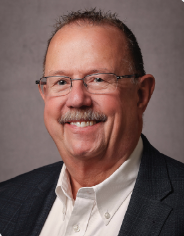 Greg Schwerdt
Schwerdt Design Group, Topeka
Greg Schwerdt wasn’t born in Kansas, but he’s lived here virtually his entire life. He arrived in Topeka at six weeks old and, aside from his years at KU, never left. Growing up with five siblings taught him follow-through and respect. His parents didn’t just talk about leadership, he says—they modeled it by keeping their word and treating people well. Coaches, teachers and honest friends added their own lessons in discipline, accountability and candor. Those influences still shape his leadership style of clear expectations, steady accountability and bringing out the best in others. Architecture became his calling gradually. He loved how buildings influence people and communities, but what kept him in the field was the chance to lead teams toward a shared vision. After graduating from KU in 1977, he joined Marvin Thomas & Associates, became licensed and eventually a partner before founding SDG in 1990. He launched the firm to create a culture centered on people, community and meaningful design. Thirty-six years later, SDG’s track record reflects that mission: projects in 47 states, strong delivery performance and a client base where more than 85 percent of work comes from repeat clients. Schwerdt sees Kansas producing strong talent but facing challenges in retention and alignment with industry needs—especially communication, collaboration and interdisciplinary skills essential to modern design practice.
 Meredith Sleichter
Eisenhower Foundation, Abilene
After stepping out of the work force for 13 years to raise her children, Meredith Sleichter didn’t hide the gap—she embraced it, and built a career rooted in service, history and civic learning. “I chose to own that chapter by sharing a ‘parenting job description’ that reflected the real skills those years gave me,” she says.“It shapes how I lead today and why I’m committed to a culture that values true work–life balance.” Non-profit work quickly became her calling. “Strong communities are only as strong as the people who pour into them,” she says. That philosophy brought her to the Eisenhower Foundation, where she saw a mission that aligned with her belief in the power of history, leadership and civic education. Sleichter helped guide the foundation through a $12 million renovation of the Eisenhower Presidential Museum, a project that later contributed to the site being named Newsweek’s “Best Presidential Attraction.” Today she leads the ambitious I LIKE IKE campaign to build a new Education Center, having already secured 80 percent of the $17 million goal, with gifts ranging from $5,000 to $5 million. Under her leadership, IKEducation now reaches more than 40,000 students across 36 states and partners with institutions from Columbia Law School to NATO. “Being in a small town doesn’t limit national impact,” she says. “It’s proof that meaningful work can start anywhere.”
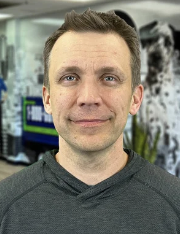 Tyler Staszak
You Move Me & 1-800-GOT-JUNK?, Mission
Tyler Staszak’s path to entrepreneurship started far from Kansas City. Born in Green Bay, Wisc., and raised in Joplin, he spent his 20s in the San Francisco bay area, where a single move changed his trajectory. At 20, he had relocated to California to live with his uncle, who worked in tech. Suddenly surrounded by founders, executives and early-stage innovators, he absorbed a mindset he’d never seen before—one where “everything was possible.” That exposure, he says, had a profound impact on how he viewed opportunity. With a background in computer science, Staszak worked as a software engineer before deciding he wanted to build something of his own. Franchising appealed to him, and home services even more so. He noticed that real opportunity existed in work others weren’t eager to do—at first, junk removal; later, moving, lawn care, home detailing, and HVAC, plumbing and electrical services. “There is opportunity in the ‘dirty jobs’ as people outsource more and more,” he says. He entered the 1-800-GOT-JUNK? system in 2007, where he and his future business partner, Josh Herron, owned neighboring franchises. They joined forces a year later, starting small, working on the trucks themselves and growing slowly and steadily. Years of hard work, experience and strong mentorship turned that modest start into a multi-brand operation that has consistently been one of the region’s fastest-growing, and now one of its biggest.
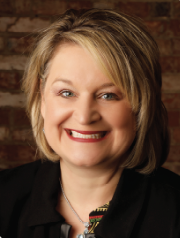 Sarah Uchytil
Sarah U Coach, Prairie Village
In moments where people most need clarity, confidence and direction, Sarah Uchytil helps them find what they need. Raised in Urbandale, Iowa, she credits her early environment for shaping her leadership philosophy. “I grew up in a community where teachers, coaches and neighbors showed up for one another,” she says. “It taught me the power of believing in people before they believe in themselves.” That insight now anchors her work as a professional coach. Uchytil earned her accounting degree at Iowa State University, drawn to the structure and problem-solving it offered. “Even though I moved beyond accounting, the skills of analysis and translating complexity into insight are tools I use with clients every day,” she says. Her corporate career—more than a decade in finance, operations and leadership roles at Accenture and Sprint—exposed her to the challenges modern professionals face: burnout, constant change and the gap between outward success and inner fulfillment. Those experiences ultimately pushed her toward her true calling: coaching individuals through career transitions, leadership growth and purpose-driven reinvention. As founder of Sarah U Coach, she works with clients navigating identity shifts, boundary-setting and the pressures of a fast-changing economy. “So many people feel they have to be everything to everyone,” she says. “My mission is to help them rise with intention and remember who they are in the process.”
 José Luis Valdez
Founder, Palacana, Kansas City, Kan.
For José Luis Valdez, ice cream isn’t just a business—it’s a lifelong calling rooted in culture, memory, and community. His journey began in Mexico, where at just seven years old he sold paletas—an early spark that would define his future long before he knew it. His family immigrated to the United States in 1989, first settling in Chicago. There, Valdez spent more than a decade working in high-end restaurants, including Trio and TRU, where he developed a deep respect for quality ingredients, operational excellence, and exceptional service. In 2004, Valdez and his family moved to the Kansas City area with a dream: to build a business that offered authentic Michoacán-style ice cream and paletas—something he felt the community was missing. Together with his wife, he launched what would eventually become Palacana. The goal was simple but ambitious: create a welcoming place where families could gather and enjoy treats made with natural ingredients and traditional flavors. Breaking into a market dominated by large national brands wasn’t easy, but success came as he expanded the menu to include fruit desserts, smoothies, and traditional meals, steadily building trust along the way. Today, Palacana thrives with a loyal team, many long-serving employees, and a culture focused on bilingual customer service and continuous training—reflecting the values that shaped Valdez from the very beginning.
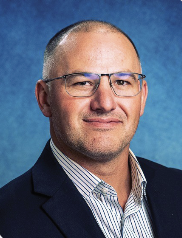 Trice Watts
Greeley County Health Care Services, Tribune
Wearing two hats as both CEO and CFO at Greeley County Health Services, Trice Watts shoulders the immense responsibility of steering a critical health-care lifeline for the two least populated counties in Kansas—Greeley and Wallace. With combined populations barely exceeding 2,600 residents, the organization’s 35 licensed beds represent a vital yet perpetually challenged rural health system. Watts is a seasoned financial professional whose role has expanded to encompass the entire operational and strategic leadership of GCHS. His mission, he says, is to “build a health-care system that promotes sustainability, confidence, and access to the care our community needs.” This is not a simple task in a region facing the challenges of acute-care rural hospitals. His work is a continuous exercise in stewardship and perseverance, managing the delicate balance between financial viability and the urgent need for accessible care. GCHS grew from a small community hospital into an integrated system serving two counties, a necessary evolution born from regional collaboration to prevent health-care collapse. Today, Watts leads this system by focusing on strategic pillars like financial strength, talent management, and strategic partnerships. He is tasked with navigating the complexities of modern health-care reimbursement while addressing pressing community needs in southwest Kansas.
 Jonathon Westbrook
KCK Police Department, Kansas City
Jonathon Westbrook has built a career defined by service, mentorship and community impact. “My parents modeled service,” says Westbrook, who was born in Wyandotte County. “My father in the military and my mother in health care—they showed me what it means to help others thrive.” Those early influences grew through church involvement and later through academic mentors who recognized his potential, encouragement that led him to earn a master’s degree in public administration from KU and become a White House Fellow in 2020–21. Westbrook joined the Police Department as a cadet in 2007, graduating from the academy the following year. He worked as an officer, led youth-engagement programs, served in the chief’s office on policy development and public information, and earned a promotion to sergeant in 2020. In directing the OK Youth Mentoring Program, he found that, “relationships healed old wounds and planted seeds of service” for young people—some of whom later became officers themselves. His commitment to civic engagement led him to the Kansas African American Affairs Commission. “It was an honor to be a voice for people historically marginalized,” he says, championing issues from access to capital to policing policy, technology gaps and food insecurity. Through each role, Westbrook continues to connect his career to “something larger than myself.”